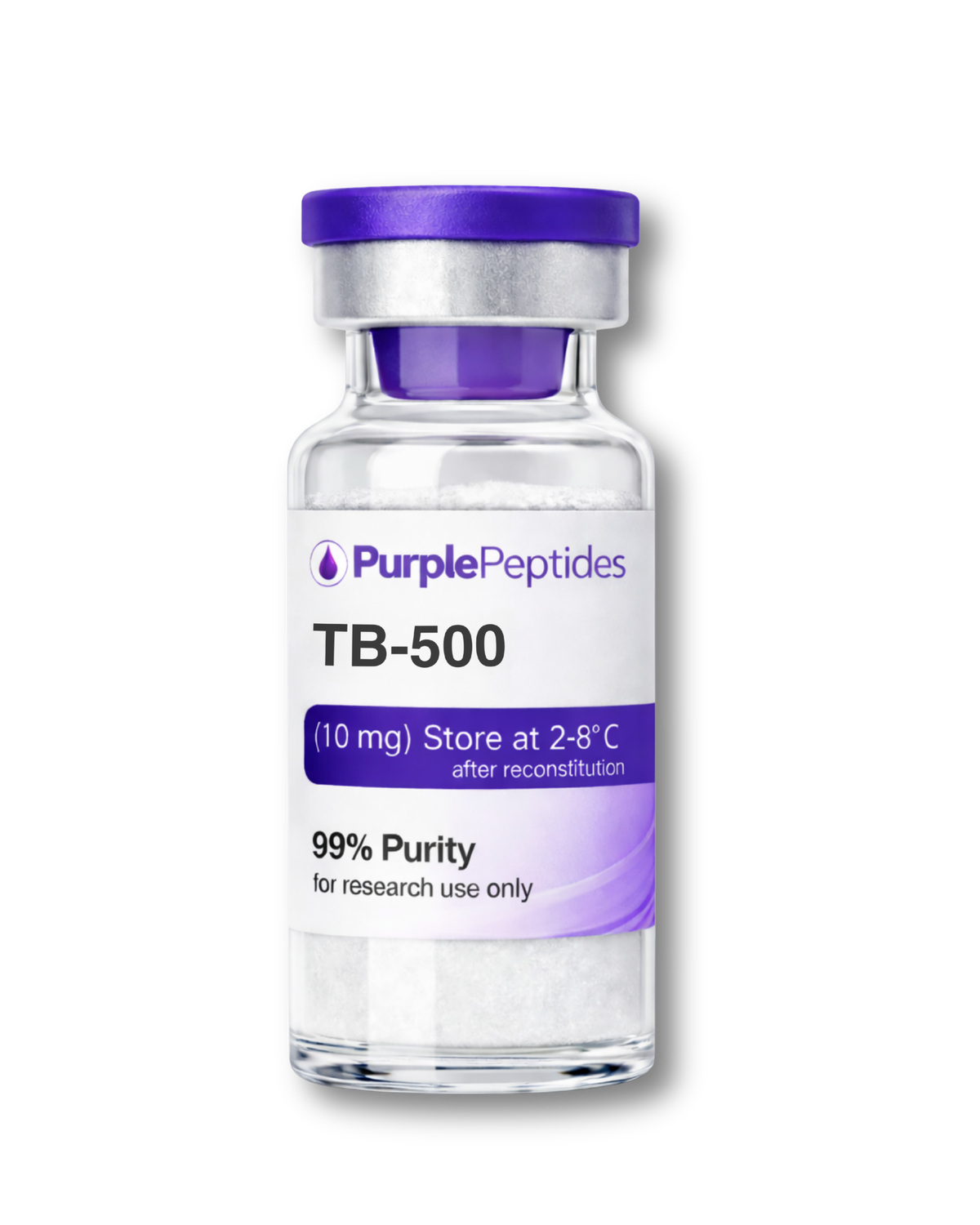
TB-500
What Is TB-500?
TB-500 is a laboratory-synthesized peptide derived from a sequence of thymosin beta-4 (Tβ4), a naturally occurring protein involved in cytoskeletal organization and cellular movement.
In controlled research environments, TB-500 is examined for its relevance to wound-healing models, angiogenic signaling, and cellular structural pathways, particularly those related to tissue remodeling and repair.
Certificate of Analysis
Third-party tested for 99% purity
TB-500 Overview
TB-500 is a synthetic peptide fragment modeled after thymosin beta-4, a protein extensively studied for its role in cell migration, tissue remodeling, and regenerative signaling.
Research has focused on TB-500’s involvement in angiogenesis, extracellular matrix dynamics, and connective-tissue recovery within laboratory and preclinical models.
Due to these characteristics, TB-500 is frequently explored in studies involving muscle recovery, connective tissue integrity, and epithelial repair pathways.
Goldstein A.L. et al., 2005History and Development
Thymosin beta-4 (Tβ4), the parent protein of TB-500, was first isolated in the 1960s during investigations into thymus-derived peptides and their biological functions.
Subsequent research revealed Tβ4’s role in actin binding, cellular migration, and angiogenic signaling.
TB-500 was later synthesized as a research analog to allow more targeted investigation into these tissue-repair and regenerative mechanisms.
Since its development, TB-500 has been examined across models of angiogenesis, muscle regeneration, wound repair, and systemic cellular resilience.
Goldstein A.L., Hannappel E. et al., 2012TB-500 Structure
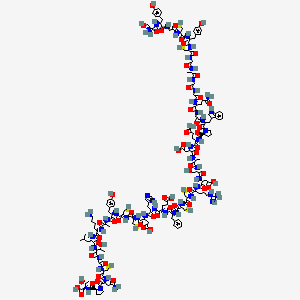
Research Findings
TB-500 has been evaluated across structural, vascular, dermatological, and systemic research models.
Published studies explore its relevance to collagen organization, extracellular matrix remodeling, angiogenesis, wound closure dynamics, and tissue recovery processes in preclinical settings.
Key Areas of Investigation
- Structural: Collagen organization, matrix remodeling, tendon and ligament models
- Vascular: Angiogenesis, nitric oxide pathways, vessel remodeling
- Dermatological: Wound closure, epithelial regeneration, inflammation modulation
- Systemic: Cellular protection, viability, recovery signaling
Together, these findings suggest broad experimental utility for TB-500 across multiple biological pathways.
By engaging structural and vascular processes while supporting epithelial and systemic responses, TB-500 provides a versatile platform for research into tissue repair, recovery, and biological resilience in laboratory models.
Hsieh M.-J. et al., 2017