What Are Research Peptides? A Plain-English Explanation
Target reader: Curious health enthusiasts, clinicians, coaches, and biohackers who keep hearing the word peptides but want a clear, grounded explanation.
Goal: Strip away hype, clean up the language, and explain what research peptides actually are — and what they are not.

If you’ve spent any time online lately, you’ve probably heard peptides talked about like they’re magic.
They’re not.
Peptides are biological messengers — and when you understand that, almost everything else starts to make sense.
So… what is a peptide?
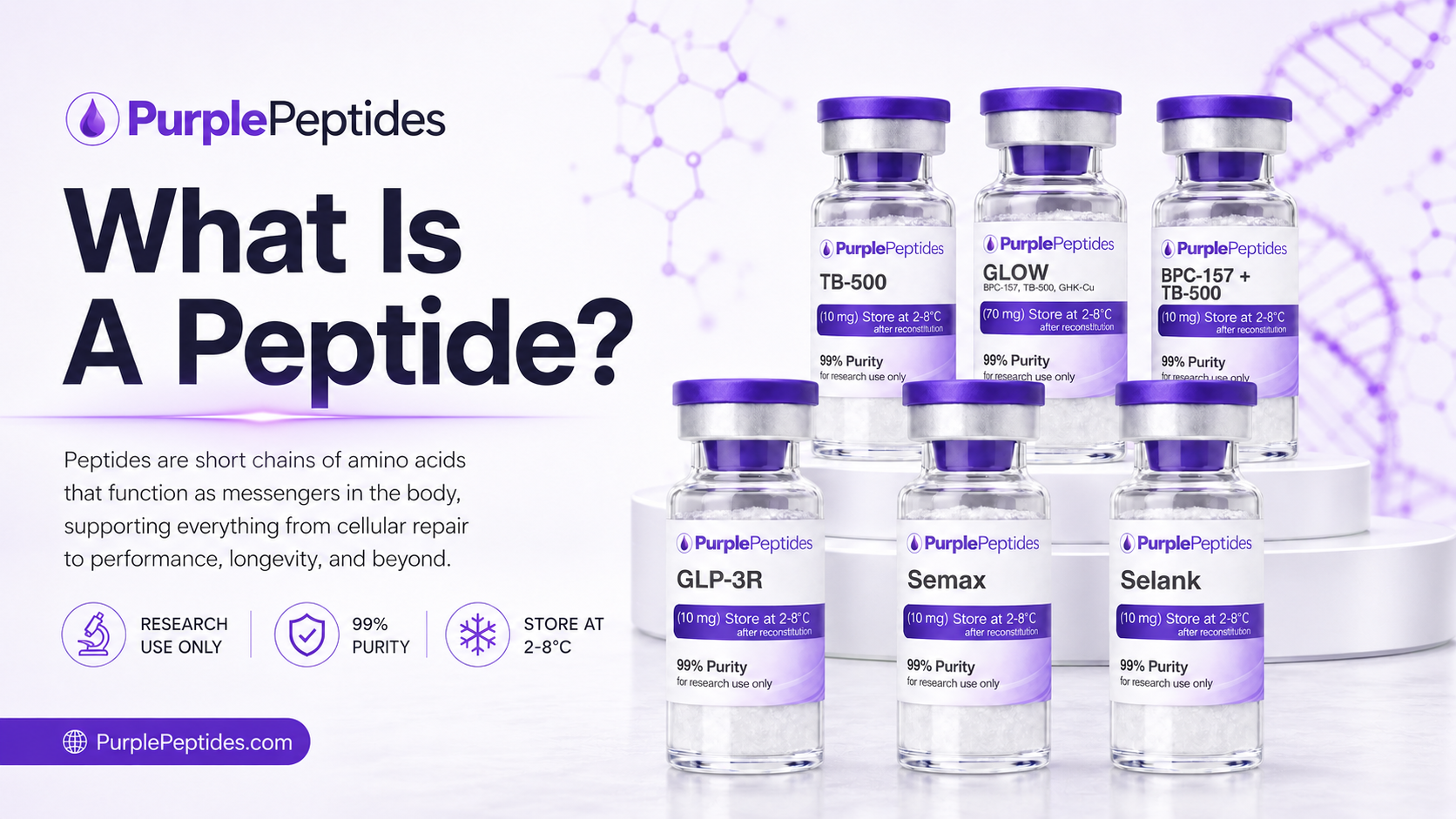
At the most basic level, peptides are short chains of amino acids. Amino acids are the same building blocks your body uses to make:
- Muscle tissue
- Hormones
- Enzymes
- Structural proteins
The difference is length and purpose. Proteins are long, complex chains that form structures or do big jobs. Peptides are much shorter chains that usually act as signals.
Proteins are construction crews.
Peptides are text messages telling the crew where and when to work.
Why peptides matter biologically

Your body runs on communication. Cells are constantly sending and receiving signals to coordinate:
- Repair
- Growth
- Inflammation
- Metabolism
- Stress responses
Peptides are one of the ways those messages get delivered. They bind to specific receptors on cells and say things like:
Signal
“Start this process.”
Signal
“Slow that down.”
Signal
“Repair here.”
Signal
“Adapt now.”
That’s it. No magic. No forcing. Just signaling.
What does “research peptide” actually mean?
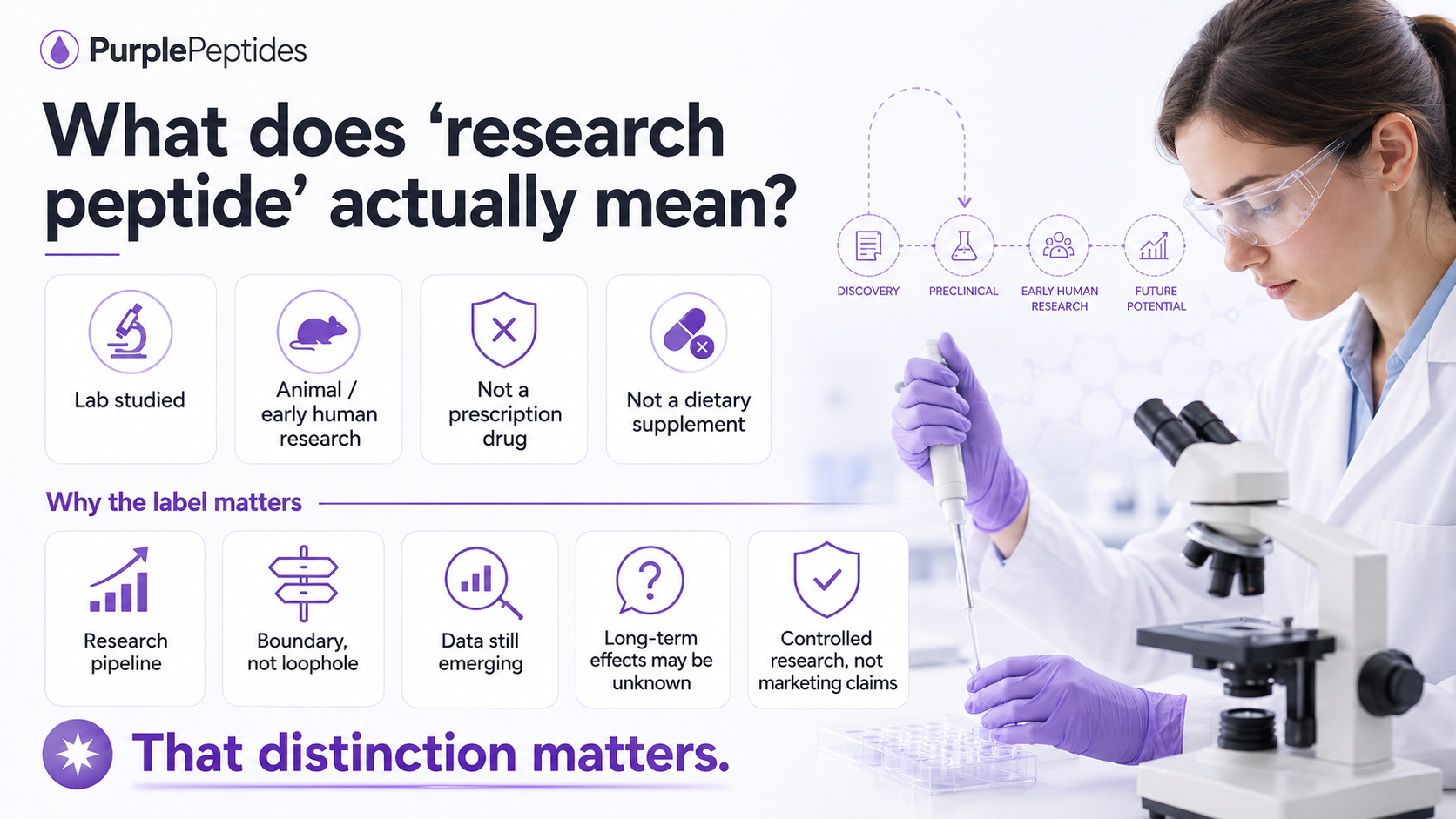
A research peptide is a peptide that is:
- Studied in laboratory settings
- Investigated in animal models and/or early human research
- Not approved as a prescription drug
- Not marketed as a dietary supplement
In other words, these compounds live inside the research pipeline — not at the pharmacy or the vitamin aisle. Calling something a research peptide isn’t a loophole — it’s a boundary.
- Data may still be emerging
- Long-term effects may be unknown
- Conclusions are based on controlled research — not marketing claims
Why have peptides exploded in research?
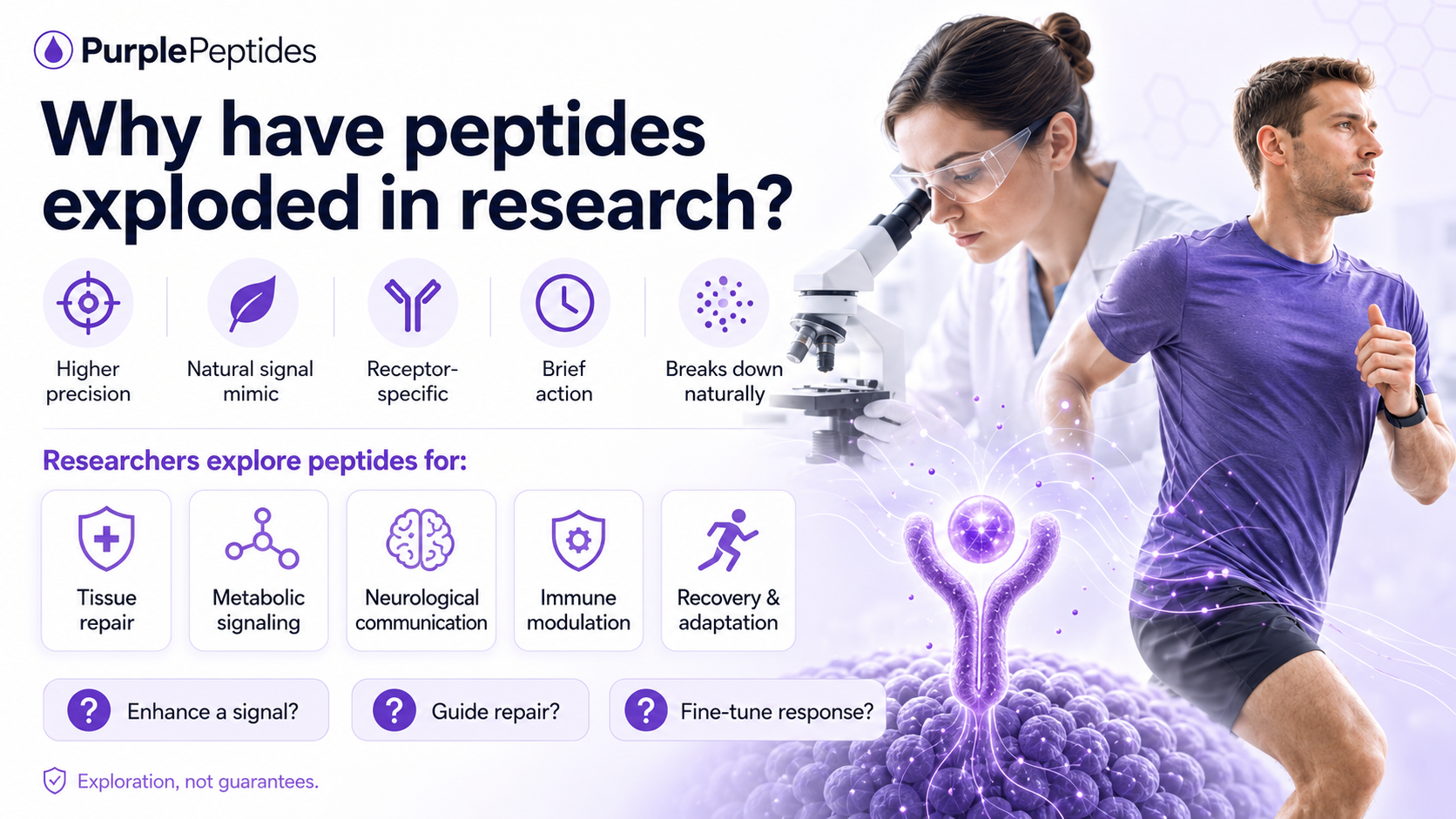
Over the last two decades, researchers have realized something important: small molecules and traditional drugs aren’t always precise.
Many drugs work by blocking pathways, forcing receptors, or suppressing symptoms. Peptides, by contrast, can be designed to:
- Mimic natural signaling molecules
- Target very specific receptors
- Act briefly and then break down naturally
From a research perspective, that’s powerful. It allows scientists to ask more nuanced questions like:
- “What happens if we enhance this signal instead of shutting everything down?”
- “What if we guide repair instead of overriding physiology?”
That’s why peptides are being explored across areas like tissue repair, metabolic signaling, neurological communication, immune modulation, recovery and adaptation — exploration, not guarantees.
Are peptides natural or synthetic?
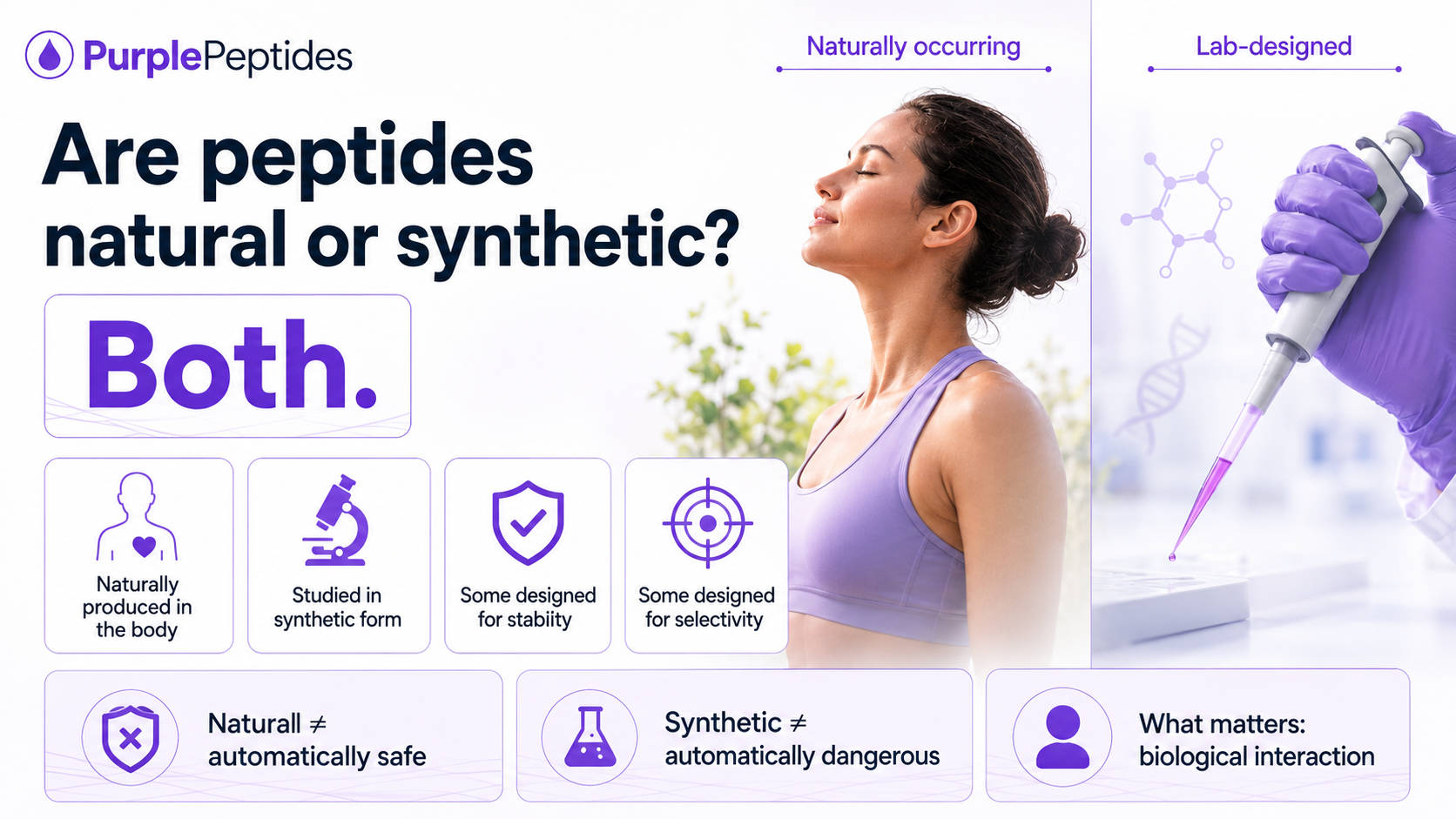
Both.
- Some peptides are naturally produced by the human body and studied in synthetic form so they can be isolated, measured, and researched.
- Others are designed to mimic or modify natural signaling pathways, created to be more stable or selective for research purposes.
“Synthetic” doesn’t automatically mean dangerous. “Natural” doesn’t automatically mean safe. What matters is how they interact with biology, not the label.
Common peptide myths (let’s clear these up)
“Peptides are steroids.”
No — completely different structures and mechanisms.
“Peptides force your body to do things.”
Most peptides studied act through receptor signaling — not brute force.
“Peptides are miracle cures.”
No credible researcher claims this — and neither do we.
“All peptides are the same.”
Different peptides have different targets, half-lives, and research purposes. Precision matters.
Where research peptides sit in the bigger picture
Peptides occupy a middle ground between nutrients, which provide raw materials, and drugs, which often override systems. They’re not replacements for either.
They’re tools researchers use to better understand biological communication — an important distinction, especially in an industry that sometimes blurs lines for attention.
Why language matters here
One of the biggest problems in the peptide space isn’t science — it’s sloppy language. When everything gets lumped together — research compounds, supplements, drugs, anecdotes — people lose the ability to make informed decisions.
Understanding what peptides are and aren’t is the foundation for every responsible conversation that follows.
Key Takeaways
- Peptides are short chains of amino acids that act as biological signals
- Research peptides are studied in labs and clinical research — not sold as drugs or supplements
- They don’t “force” outcomes; they communicate with cellular systems
- Interest in peptides has grown because of their precision and signaling role
- Clear language matters more than hype
Final thought
Peptides aren’t shortcuts. They aren’t magic. They’re messengers. And understanding the message is where real education begins.
If you want to keep learning — responsibly, clearly, and without the noise — you’re in the right place.