NAD+ Research: Cellular Energy, Mitochondria, Repair, and Longevity Pathways
A premium research-focused guide to NAD+, covering cellular energy production, mitochondrial function, DNA repair, sirtuin activity, oxidative stress, metabolic resilience, recovery research, and why NAD+ has become one of the most searched molecules in longevity science.
What Is NAD+?
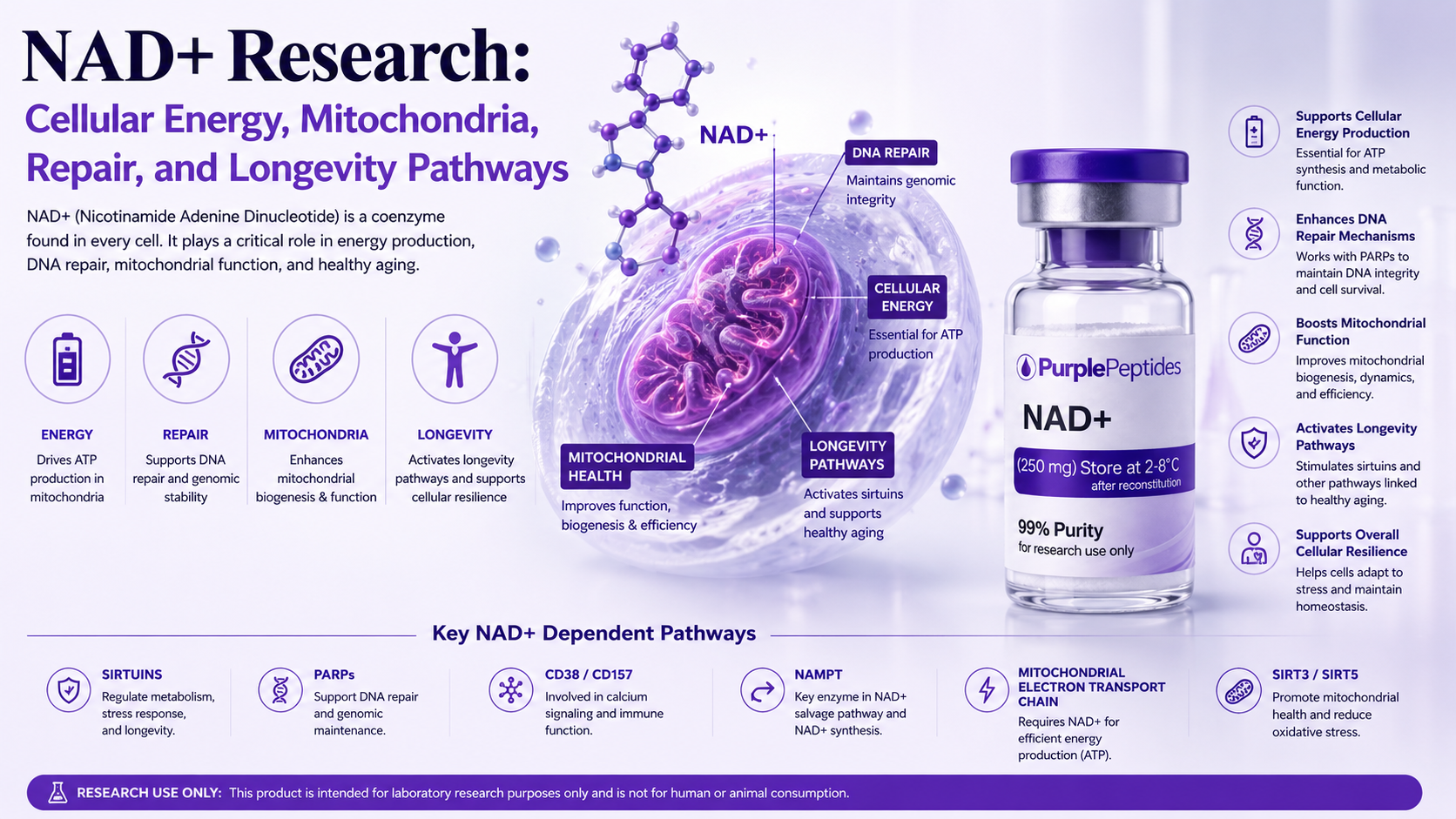
NAD+ stands for nicotinamide adenine dinucleotide. It is not a peptide, hormone, stimulant, or quick-energy compound. NAD+ is a coenzyme found in nearly every living cell, and its main role is to help cells transfer electrons during energy production.
That may sound technical, but electron transfer is one of the most important processes in biology. Your cells use electron movement to convert nutrients into usable energy, power mitochondrial activity, regulate oxidative stress, support DNA repair, and maintain cellular resilience under pressure.
In simple terms, NAD+ helps cells do the work required to stay alive, adapt, repair, and produce energy. This is why NAD+ research is strongly connected to longevity science, mitochondrial health, metabolic research, recovery biology, and cellular aging studies.
- NAD+ supports cellular energy production.
- NAD+ helps mitochondria generate ATP.
- NAD+ is involved in DNA repair pathways.
- NAD+ supports sirtuin activity and stress-response signaling.
- NAD+ is widely studied in aging, metabolism, and recovery research.
Why NAD+ Matters for Cellular Energy
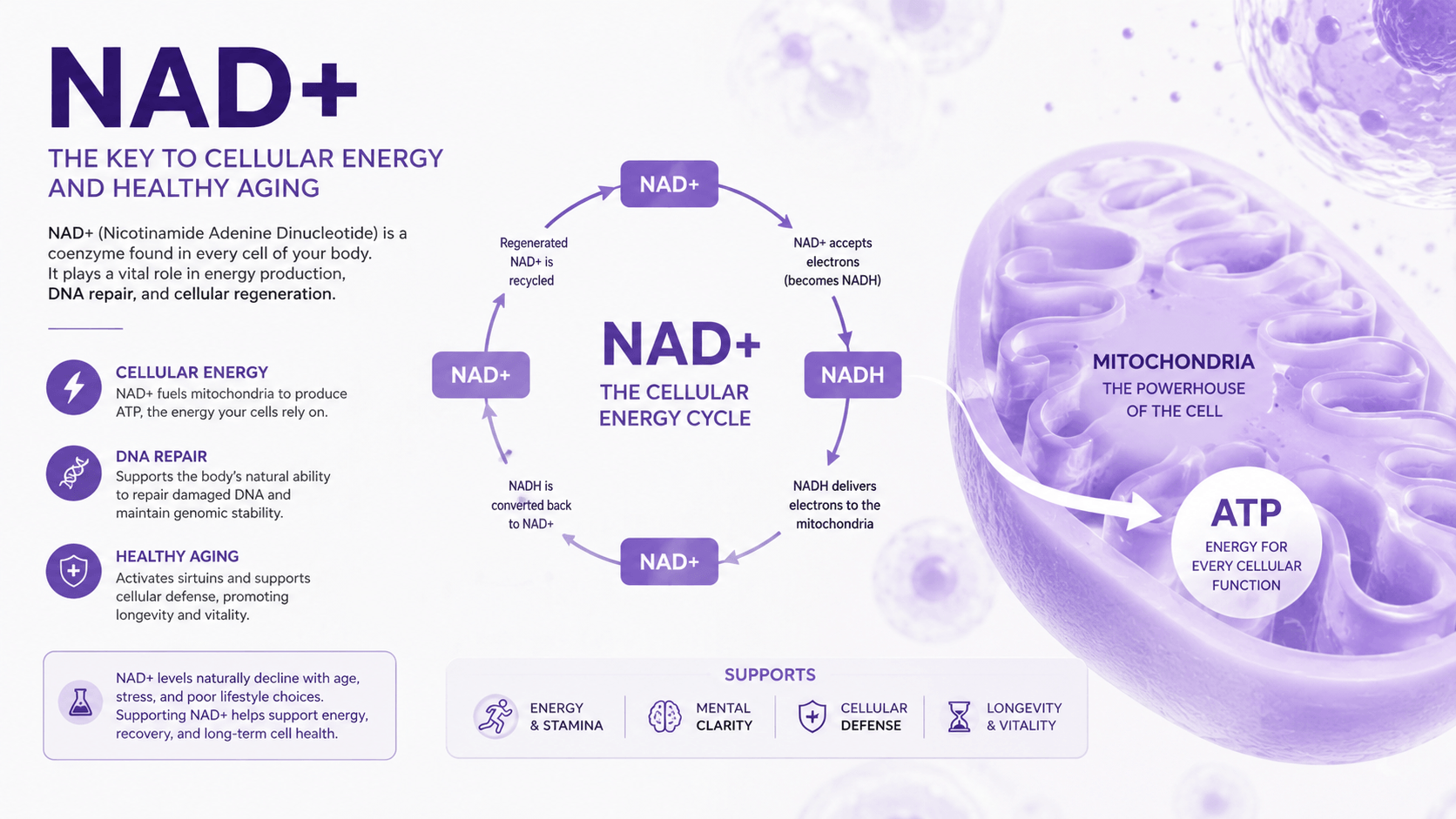
Every cell needs energy to function. That energy is mostly produced in the form of ATP, often called the cell’s energy currency. NAD+ plays a central role in this process because it moves electrons through the metabolic pathways that help mitochondria produce ATP.
NAD+ cycles between two major forms: NAD+ and NADH. NAD+ accepts electrons, becoming NADH. NADH then carries those electrons into mitochondrial energy systems, especially the electron transport chain, where ATP production takes place.
NAD+ and Mitochondrial Function
Mitochondria are the energy-producing structures inside cells. They convert nutrients from carbohydrates, fats, and proteins into ATP through a series of metabolic reactions. NAD+ is essential because it supports the redox reactions that allow this energy conversion to happen.
When NAD+ availability is low, mitochondrial efficiency may decline in research models. This can affect ATP output, oxidative balance, cellular stress response, and metabolic flexibility. That is why NAD+ is commonly discussed in mitochondrial health research and energy metabolism studies.
- Supports electron transport chain activity
- Helps maintain cellular redox balance
- Contributes to ATP production pathways
- Supports mitochondrial stress-response signaling
- Connects nutrient metabolism with cellular energy output
Why NAD+ Levels Are Studied in Aging Research
NAD+ is heavily discussed in longevity research because NAD+ availability appears to change with age in many biological models. Researchers often focus on the balance between NAD+ production, NAD+ recycling, and NAD+ consumption.
As cells experience stress, DNA damage, inflammation, and metabolic strain, NAD+ demand may rise. At the same time, enzymes that consume or degrade NAD+ may become more active. This combination can make NAD+ biology especially relevant in aging and cellular resilience studies.
1. DNA Repair Demand
DNA is constantly exposed to stress from metabolism, oxidative damage, environmental factors, and normal cellular activity. Repair enzymes use NAD+ as part of the repair process. When repair demand increases, NAD+ consumption can also increase.
2. Inflammation and CD38 Activity
Research discussions often mention CD38, an enzyme involved in NAD+ degradation. In aging and inflammatory states, CD38 activity may increase, which can affect NAD+ availability in cellular models.
3. Mitochondrial Stress
Mitochondrial dysfunction can create a cycle of lower energy efficiency, higher oxidative stress, and greater demand for repair. NAD+ sits at the center of these processes because it supports both energy production and stress-response signaling.
NAD+ and Sirtuins: The Longevity Link
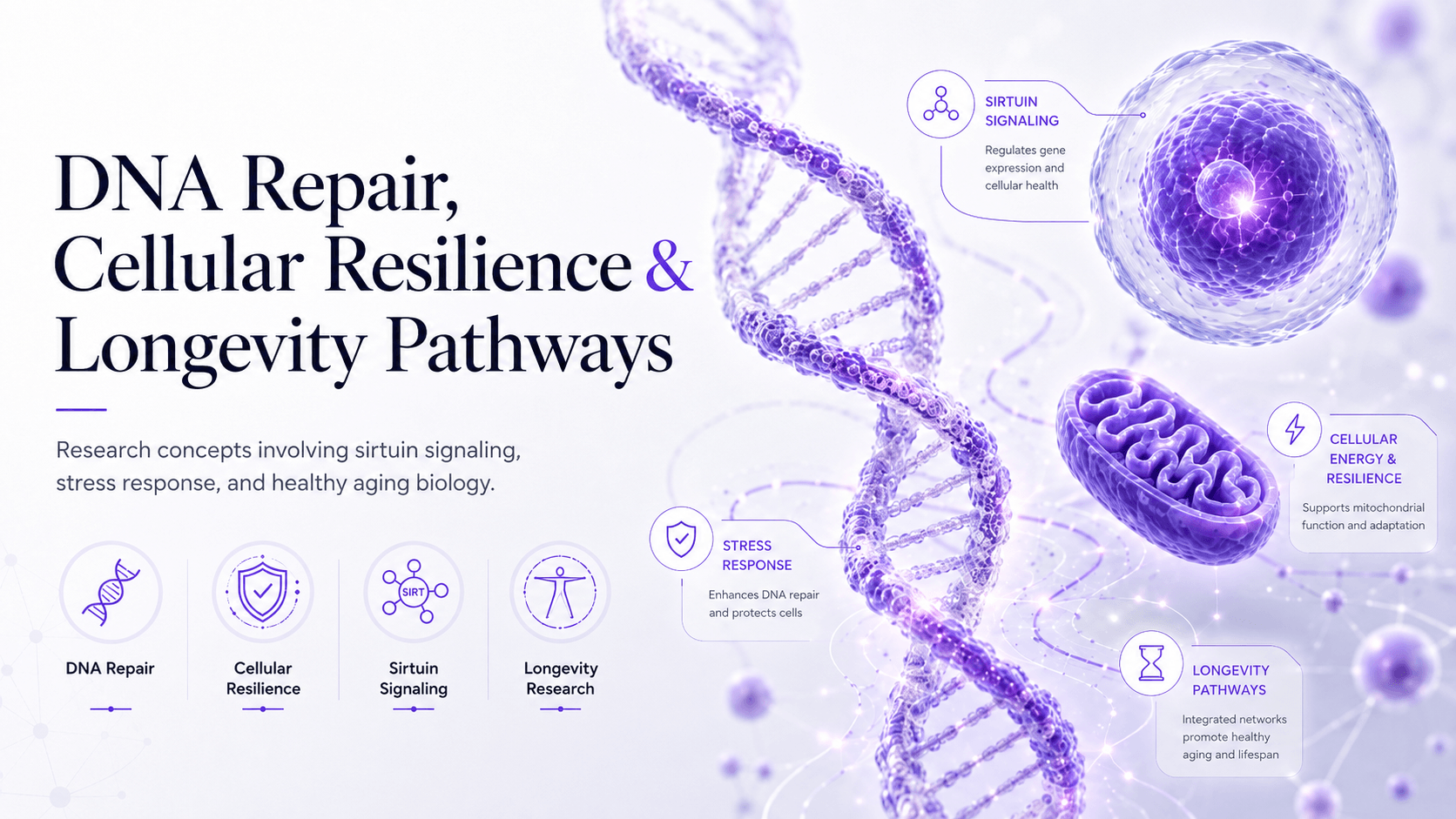
Sirtuins are proteins involved in cellular stress response, DNA repair, inflammation control, metabolic regulation, and mitochondrial biogenesis. They are often called longevity-associated proteins because they help cells respond to stress and maintain function.
A key point is that sirtuins require NAD+ to function. Without enough NAD+ availability, sirtuin activity may be reduced in research settings. This is one reason NAD+ is frequently discussed as an upstream molecule in longevity pathway research.
- SIRT1 is often discussed in metabolism and inflammation research.
- SIRT3 is commonly connected to mitochondrial function.
- SIRT6 is studied in relation to DNA repair and genomic stability.
- NAD+ supports sirtuin activity because it acts as a required cofactor.
NAD+ and DNA Repair Pathways
DNA repair is one of the most important reasons NAD+ is studied in cellular resilience research. Cells are constantly repairing damage to maintain genetic stability. Enzymes such as PARPs rely on NAD+ during repair-related processes.
This does not mean NAD+ is a magic anti-aging switch. It means NAD+ is part of the biological system cells use to respond to damage, maintain stability, and support repair capacity. Serious research separates mechanism from hype.
NAD+ and Recovery Research
Recovery requires energy. Whether the research focus is exercise recovery, cellular stress, oxidative balance, or tissue adaptation, energy metabolism matters. NAD+ is important because it supports the mitochondrial processes needed for repair and adaptation.
In recovery research, NAD+ is often discussed in connection with oxidative stress regulation, ATP availability, mitochondrial adaptation, inflammation balance, and cellular repair signaling. It does not replace sleep, nutrition, hydration, or structured training, but it is highly relevant to the biology behind recovery.
- Exercise creates oxidative and metabolic stress.
- Repair requires ATP and mitochondrial support.
- NAD+ contributes to cellular energy availability.
- NAD+ pathways overlap with stress adaptation and resilience.
NAD+ and Metabolic Health Research
NAD+ also plays a role in glucose metabolism, fat oxidation, insulin signaling research, and metabolic flexibility. Metabolic flexibility means the ability to shift between using carbohydrates and fats as energy sources.
Because mitochondria depend on redox reactions, NAD+ availability is deeply connected to fuel metabolism. This makes NAD+ an important molecule in research related to metabolic aging, energy balance, fatigue models, and cellular performance.
NAD+ vs. NADH: What Is the Difference?
| Feature | NAD+ | NADH |
|---|---|---|
| Form | Oxidized form | Reduced form |
| Main role | Accepts electrons | Carries electrons |
| Energy connection | Supports metabolic reactions | Delivers electrons to energy-producing pathways |
| Research relevance | Longevity, repair, sirtuins, metabolism | Mitochondrial ATP production and redox balance |
Is NAD+ a Peptide?
No. NAD+ is not a peptide. It is a coenzyme derived from vitamin B3 metabolism. It appears frequently in peptide and longevity circles because it overlaps with topics like cellular energy, recovery, mitochondrial function, metabolic health, and aging biology.
For clarity, peptides are chains of amino acids. NAD+ is a nucleotide-derived coenzyme. Both may be discussed in performance and longevity research, but they are not the same type of molecule.
How NAD+ Is Commonly Discussed in Research and Wellness Markets
NAD+ has become a major topic in the wellness, longevity, and performance space. It is often discussed alongside NMN, NR, niacin, mitochondrial support, redox biology, DNA repair, and sirtuin activation.
However, responsible research education should avoid exaggerated claims. NAD+ support should be discussed as a cellular pathway topic, not as a cure, treatment, or instant energy solution. The strongest way to explain NAD+ is through mechanism: energy production, repair, redox balance, and resilience.
NAD+ Research Keywords and Scientific Themes
For researchers and readers exploring this topic, the most important related concepts include NAD+ research, NAD+ cellular energy, NAD+ mitochondrial function, NAD+ longevity, NAD+ DNA repair, NAD+ sirtuins, NAD+ metabolism, NAD+ recovery research, NAD+ oxidative stress, and NAD+ redox balance.
These phrases matter because they reflect the real biology behind the molecule. NAD+ is not only a trend; it is a central part of how cells convert nutrients into energy and respond to biological stress.
Limitations and Responsible Framing
Although NAD+ is foundational to cellular biology, the research conversation still requires nuance. More NAD+ is not automatically better. Dose, route, context, baseline health, age, metabolic state, and research design all matter.
- NAD+ is not a stimulant.
- NAD+ is not a peptide.
- NAD+ does not replace sleep, nutrition, or exercise.
- NAD+ should not be framed as an anti-aging cure.
- NAD+ is best understood as a cellular energy and repair coenzyme.
Key Takeaways
- NAD+ is a critical coenzyme involved in cellular energy production.
- NAD+ supports mitochondrial ATP production through redox cycling.
- NAD+ is involved in DNA repair, sirtuin activity, and stress-response pathways.
- NAD+ research is strongly connected to longevity, recovery, metabolism, and cellular resilience.
- NAD+ is not a peptide, hormone, stimulant, or instant energy compound.
- Responsible NAD+ education should focus on mechanism, not hype.
The real value of NAD+ research is not in buzzwords. It is in understanding how cells produce energy, manage stress, repair damage, and maintain resilience over time.
That is the Purple Peptides approach: clean research education, premium presentation, and a clear separation between science and exaggeration.
NAD+ Research Product
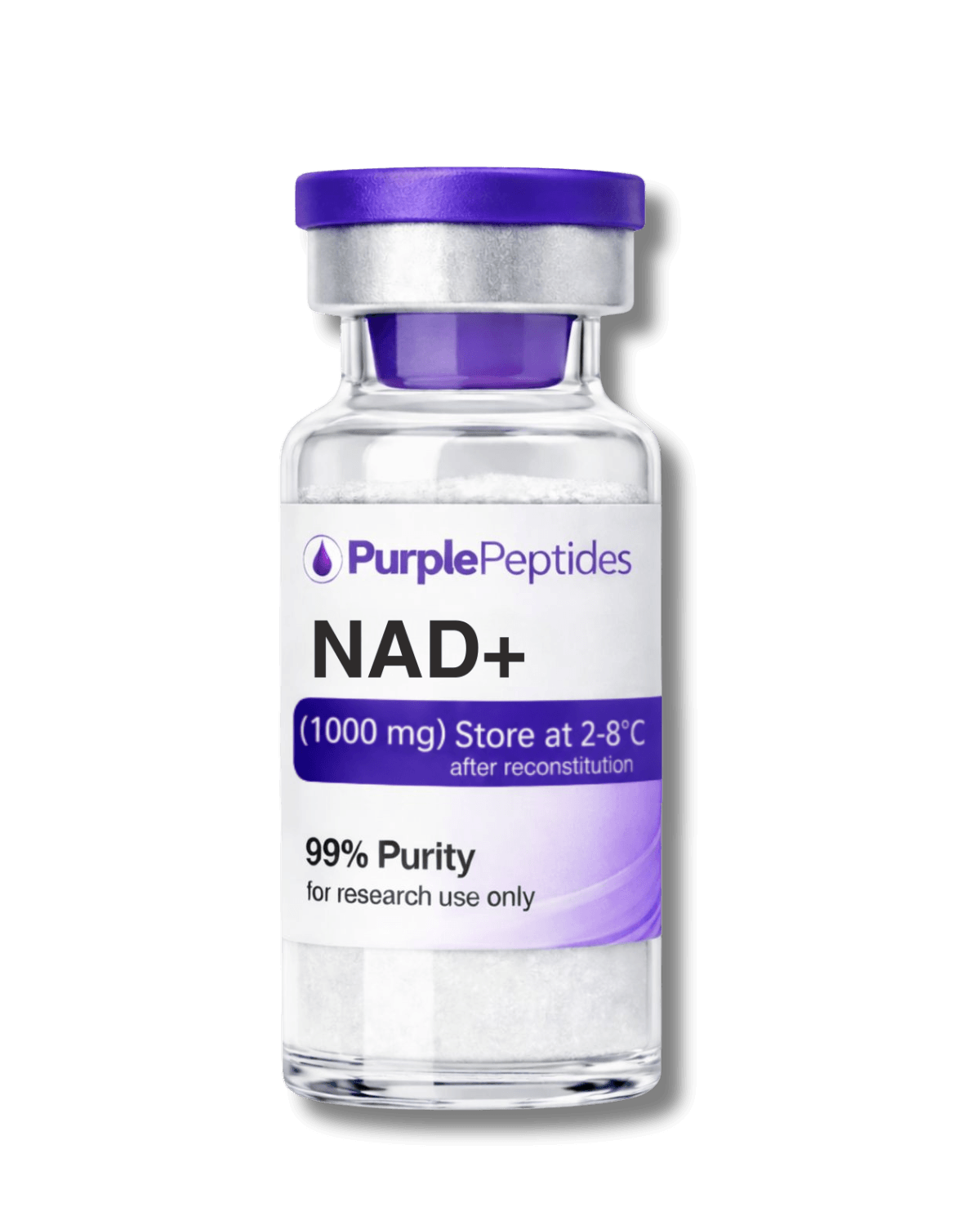
Explore Purple Peptides NAD+ for research applications involving cellular energy, mitochondrial function, NAD+/NADH redox cycling, DNA repair pathways, sirtuin activity, metabolic resilience, and longevity-focused cellular studies.
Buy Now