This site requires age verification. Please enable JavaScript to continue.

Need help? Text us, and a team member will reply in mins +1 (323) 393-3703

PURPLE PHOENIX™ | KPV Recovery Research Protocol
PURPLE PHOENIX™
KPV RECOVERY RESEARCH PROTOCOL PROTOCOL STATUS: ACTIVE
Peptide Recovery Protocol · Phase I
Research-Grade · Quality Verified
Purple Peptides · Recovery Research System

Purple
Phoenix™

Days 0 – 120

The 30–120 day biological rebuild protocol. Designed for the post-surgical athlete in the phase where training is off the table and tissue repair is the only goal.

→ Recommended Phase: Immediately post-surgery through full tissue consolidation

Research-Grade · 4 Compounds
4
Active Compounds
0–120
Day Recovery Window
100%
Purity Verified
4
Research Compounds
30–60
Day Rebuild Cycle
100%
Purity Verified
Phase I
Research Protocol

Surgery is Day Zero.
Phoenix starts on Day One.

Think about the knee injury. The surgery happens. The surgeon closes the wound, the team helps you to the car, and the hardest part — the invisible part — begins. The biological rebuild.

The window immediately following surgery is the most critical and most undersupported phase of any athlete's recovery. Purple Phoenix™ was built specifically for these days — when the body needs coordinated biological signaling across every domain involved in tissue repair, not just rest and hope.

Once tissue is consolidated and the athlete returns to training — that's when Wolverine takes over.

PRE
Before Surgery
Preparation & Baseline
Training, competition, baseline tissue health. The life before injury you're working to return to.
RX
Surgery Day
The Operation
Surgical intervention. The biological cascade of tissue disruption, inflammation, and repair signaling begins immediately post-op.
I
Days 0–120 · Phase I
Purple Phoenix™ Protocol
Coordinated biological signaling across connective tissue, cellular migration, collagen matrix, and inflammatory resolution.
Currently Active Protocol
Wolverine™ Protocol
When tissue is consolidated and training resumes. Performance-phase biological support for the athlete back under load.
Next Phase
Four Systems.
One Coordinated
Signal.

Post-surgical tissue recovery doesn't happen in one system. It happens across every biological domain simultaneously. Purple Phoenix™ addresses all four — in coordination, not isolation.

01 / 04
Connective Tissue Signaling
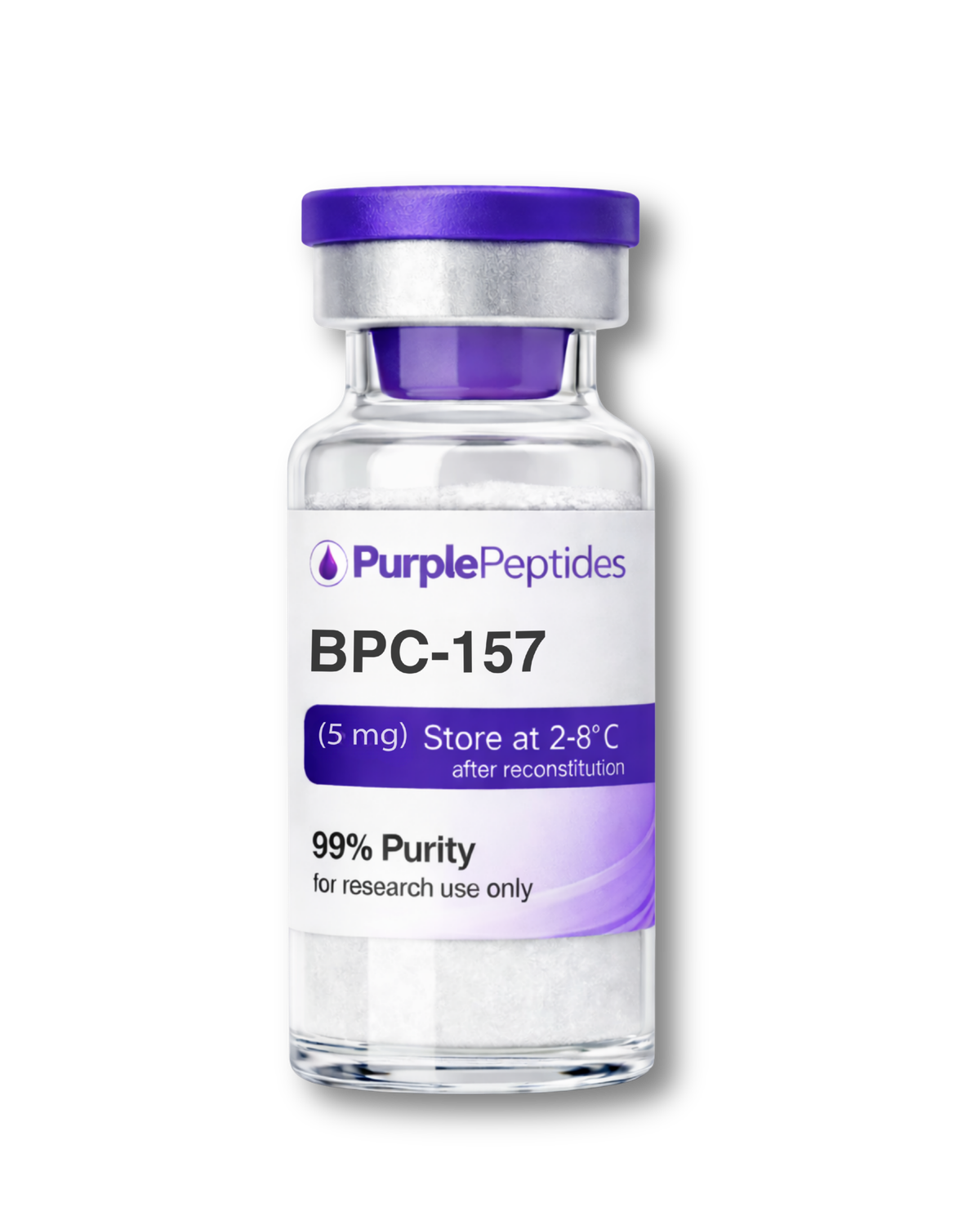
Tendons, ligaments, fascia, muscle-tendon junctions. BPC-157 is positioned as the connective-tissue signaling component of the research framework.
02 / 04
Cellular Migration & Remodeling
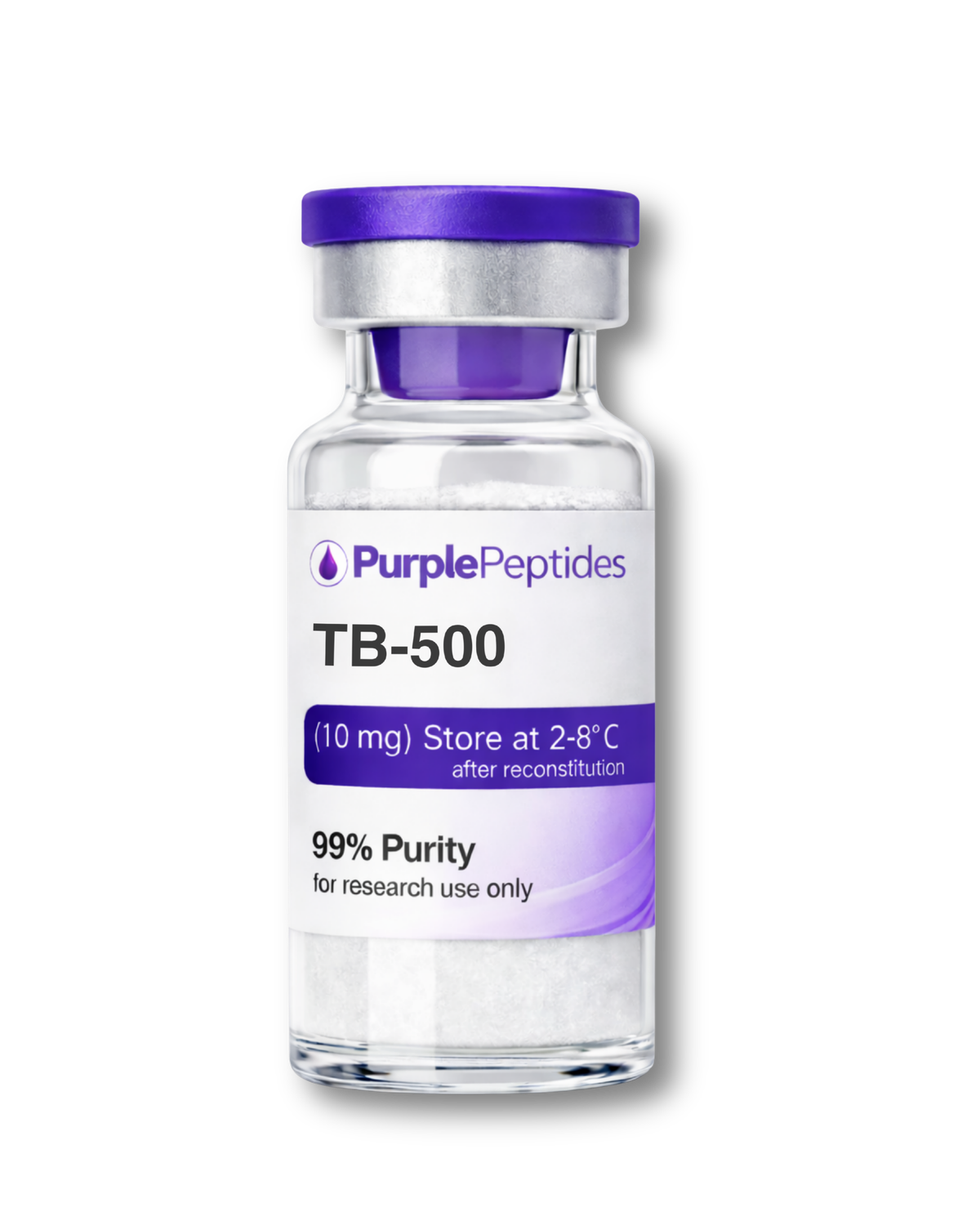
TB-500 is positioned around cellular migration, actin regulation, and angiogenic signaling pathways studied in tissue-remodeling models.
03 / 04
Collagen & Matrix Communication
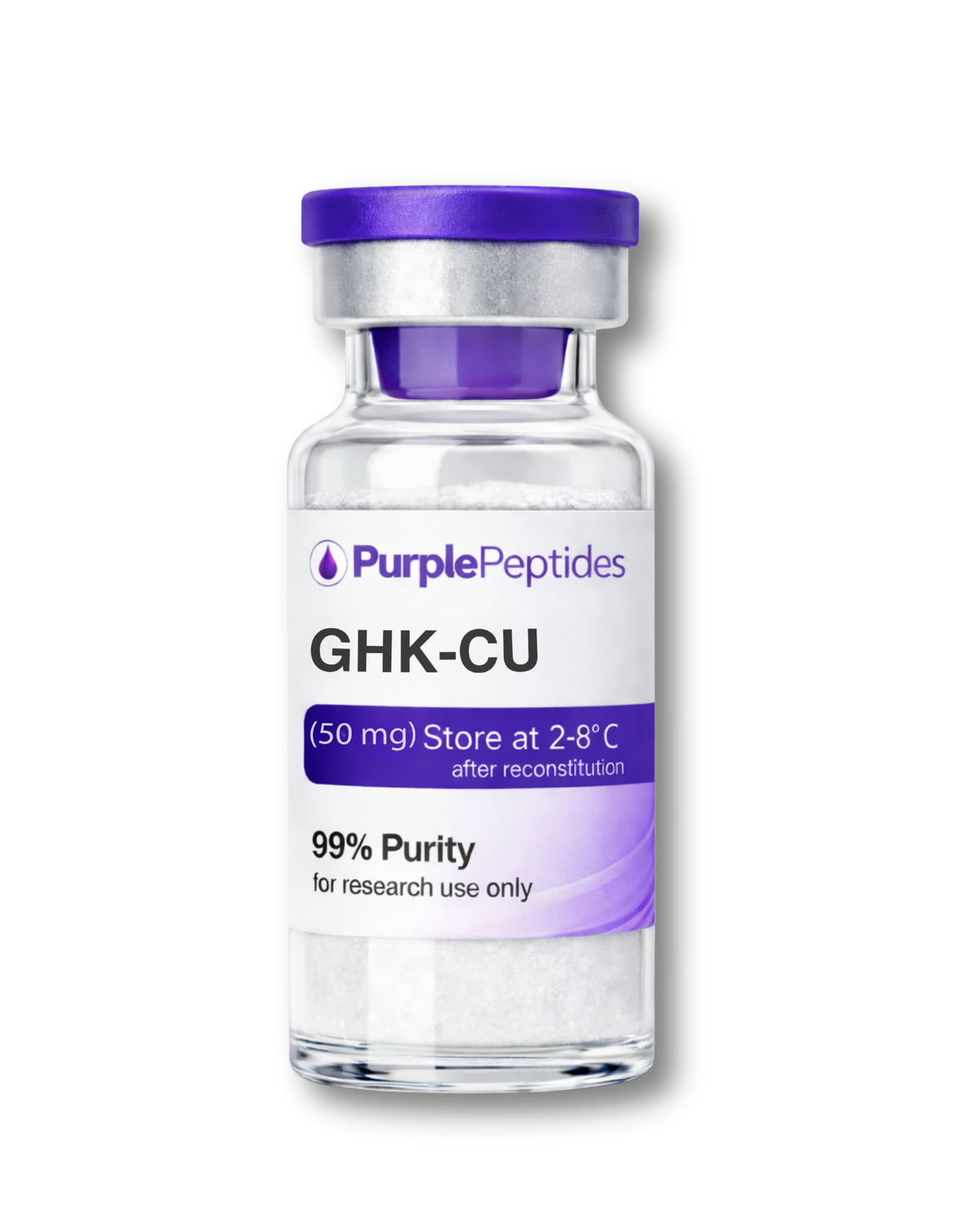
GHK-Cu is studied for collagen expression, extracellular matrix organization, copper-dependent signaling, and structural matrix communication.
04 / 04
Inflammatory Response & Barrier Signaling
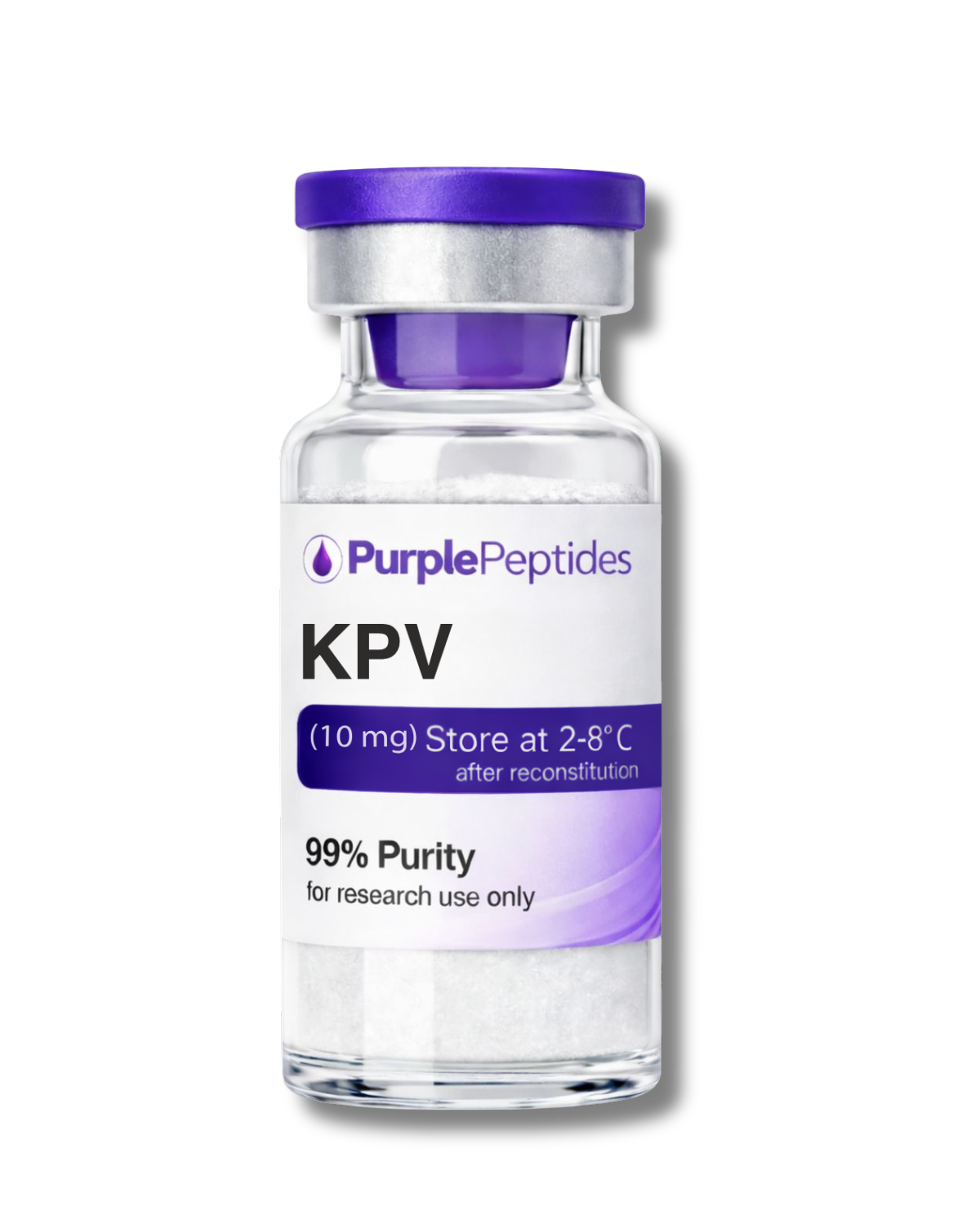
KPV 10mg is studied for inflammatory-response signaling, epithelial barrier models, cytokine pathway interaction, and immune communication during tissue-stress research.
✦ Coordinated Signal
When BPC-157 drives connective tissue signaling, TB-500 coordinates cellular migration, GHK-Cu rebuilds the collagen matrix, and KPV supports inflammatory-response signaling and epithelial barrier communication — every biological system involved in recovery operates in synchrony. That is the Purple Phoenix™ difference.

Four Compounds.
One Rising.

COMPOUND 01 / 04Structural Domain
BPC-157

BPC-157

Connective Tissue Signaling. Structural Recovery.

A gastric pentadecapeptide studied extensively for its interaction with tendon, ligament, muscle, and joint signaling pathways. Investigated in preclinical models for extracellular matrix communication and structural tissue adaptation under injury stress conditions.

Domain Target: Connective tissue signaling · Structural tissue communication
↗ PubMed Research
COMPOUND 02 / 04Cellular Domain
TB-500

TB-500

Cellular Migration. Angiogenic Remodeling.

A thymosin beta-4 fragment analog studied for cellular migration, actin regulation, and angiogenic signaling pathways. Research explores its involvement in wound-healing models and tissue remodeling mechanisms.

Domain Target: Cellular migration pathways · Angiogenic signaling
↗ PubMed Research
COMPOUND 03 / 04Collagen Domain
GHK-Cu

GHK-Cu

Collagen Signal. Structural Matrix Communication.

A naturally occurring copper-binding tripeptide widely studied for collagen expression, extracellular matrix organization, and connective tissue signaling. Investigated in research models for wound contraction and structural matrix remodeling.

Domain Target: Collagen expression · Extracellular matrix organization
↗ PubMed Research
COMPOUND 04 / 04 Inflammatory Domain
KPV 10mg

KPV

Inflammatory Response. Barrier Signaling.

KPV, short for Lys-Pro-Val, is a tripeptide fragment derived from the C-terminal region of alpha-melanocyte-stimulating hormone. It is studied in laboratory and preclinical models for inflammatory-response signaling, immune pathway communication, epithelial integrity, mucosal barrier function, and cytokine-related pathway activity.

Domain Target: Inflammatory-response signaling · Epithelial barrier research
↗ PubMed Research
The Biological Foundation
Before Returning to the Field
Systemic Tissue Reconstruction · Days 0–120

Choose Your
Path to Rise.

Best Offer
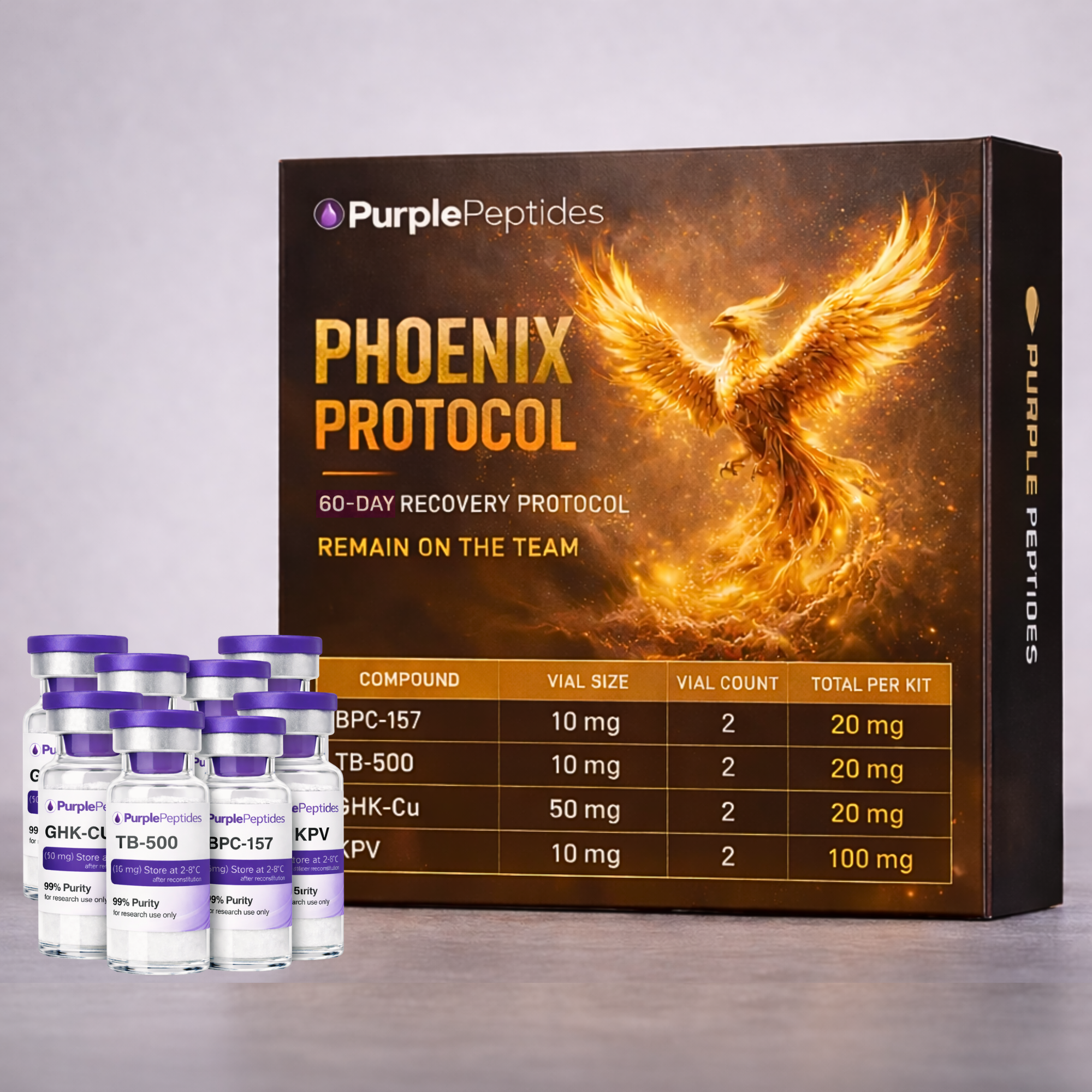
60 Day Protocol
Two Kits · Full 60-Day KPV Rebuild
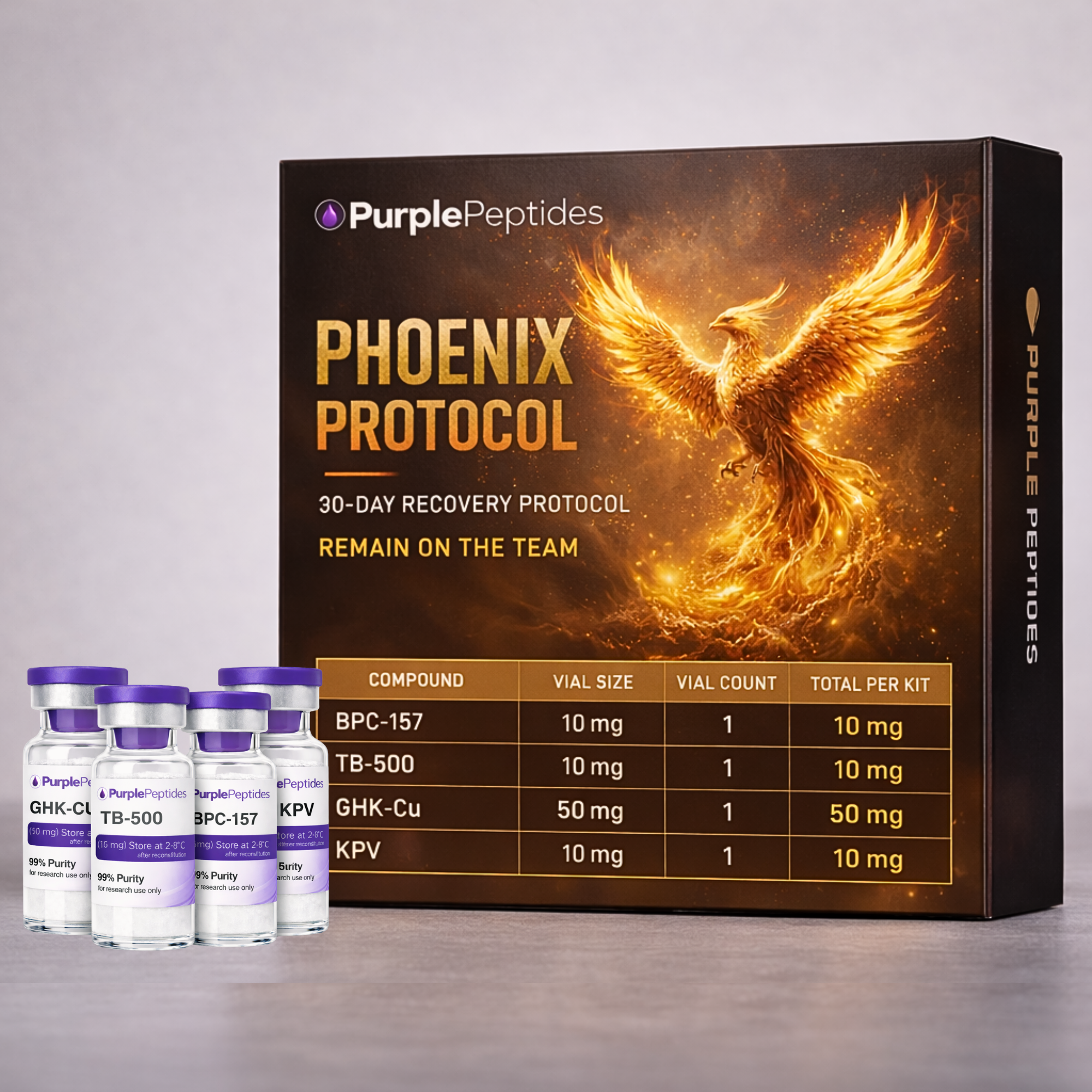
30 Day Protocol
Single 30-Day KPV Recovery Kit
Purple Phoenix 60 Day Protocol
Protocol Contents — 60 Day
BPC-15710mg · ×2 Vials
TB-50010mg · ×2 Vials
GHK-Cu50mg · ×2 Vials
KPV10mg · ×2 Vials
$472 Retail
$279
Purple Phoenix 30 Day Protocol
Protocol Contents — 30 Day
BPC-15710mg · ×1 Vial
TB-50010mg · ×1 Vial
GHK-Cu50mg · ×1 Vial
KPV10mg · ×1 Vial
$236 Retail
$197

Two Paths.
One Rising.

Purple Phoenix 30 Day Protocol

Purple Phoenix™

30 Day Protocol

Single Kit · 30-Day KPV Start

Protocol Yield
BPC-15710mg (1 Vial)
TB-50010mg (1 Vial)
GHK-Cu50mg (1 Vial)
KPV10mg (1 Vial)
$236 Retail
$197

This Protocol Is.
This Protocol Is Not.

✦ Purple Phoenix™ Is
Built for the Rebuild
Research-informed. Systems-biology approach to recovery.
Designed for the post-surgical, post-injury tissue repair phase.
Coordinated signaling across four coordinated biological domains.
Phase I of a structured two-phase athletic recovery system.
The foundation before returning to field — before Wolverine begins.
100% purity-verified research peptides.
↓ Purple Phoenix™ Is Not
A Shortcut
A medical treatment or approved clinical therapy.
A guaranteed outcome or recovery promise.
Approved for human consumption.
A substitute for professional medical guidance.
A performance or training enhancement product.
A long-term maintenance supplement.

What Happens
Week by Week.

I
Days 1–7 · Initiation Phase

The First Signal

BPC-157 begins initiating connective-tissue signaling pathways. TB-500 starts engaging cellular migration mechanisms. GHK-Cu starts interacting with collagen and matrix signaling. KPV 10mg is positioned around inflammatory-response and epithelial-barrier signaling research. The rebuild is invisible on Day 1 — but the biological signal has begun.

II
Days 8–21 · Active Remodeling

Coordinated Repair

All four biological domains are active simultaneously. Cellular remodeling pathways are fully engaged. Inflammatory-response and epithelial-barrier signaling are being observed alongside collagen and structural communication pathways. This is the critical two-week window where protocol consistency defines rebuild quality.

III
Days 22–60+ · Consolidation

Structural Consolidation

Four to eight weeks of coordinated biological signaling across every domain simultaneously. Structural, cellular, collagen, and inflammatory-response systems are operating in synchrony. Tissue reorganizes at a structural level. The foundation for Phase II is set.

Day 90–120+ · Phase Transition

Wolverine Phase Begins

Tissue consolidation complete. Return to training, gym, and field. Phase II — the Wolverine Protocol — takes over. Performance-phase biological support for the athlete back under load. The rebuild is done. The rise begins.

Frequently
Asked.

Who is Purple Phoenix™ designed for? +
Purple Phoenix™ is designed as a research-informed recovery protocol page for the 30 to 120-day post-injury or post-surgical tissue-repair discussion. It is not a training supplement and not a medical treatment.
Why is this different from a standard recovery supplement? +
Standard recovery supplements usually focus on broad downstream support. Purple Phoenix™ is framed as a research protocol around upstream biological communication pathways: connective-tissue remodeling, cellular migration, collagen matrix organization, and inflammatory-response signaling.
What does each compound do? +
BPC-157 targets connective tissue signaling — tendons, ligaments, muscles, and joints. TB-500 supports cellular migration and angiogenic signaling pathways. GHK-Cu interacts with collagen expression and extracellular matrix organization. KPV supports inflammatory-response signaling, epithelial barrier integrity, and cytokine-pathway interaction.
30 Day or 60 Day — which should I choose? +
The 30-day protocol at $197 provides strong initial biological support for the early recovery phase. The 60-day protocol at $279 covers the full two-month rebuild cycle — which most serious post-surgical recovery protocols require to reach the compounding phase of tissue adaptation and consolidation. The 60-day protocol represents the best overall value.
What happens after Phoenix? What is Wolverine? +
Wolverine is Phase II of the Purple Peptides recovery system. Once tissue is consolidated and the athlete returns to training, the gym, or the field, Wolverine provides performance-phase biological support for the body back under load. Phoenix builds the foundation. Wolverine rebuilds the athlete.
Is this for human use? +
No. Purple Phoenix™ peptides are provided strictly for research and educational purposes only. They are not approved drugs and are not intended to diagnose, treat, cure, or prevent any disease or medical condition. Always consult a qualified healthcare professional regarding your recovery plan.