
What Is Retatrutide?
Retatrutide — commonly called Reta — is an investigational peptide-based compound studied for its simultaneous interaction with three distinct metabolic signaling pathways: GLP-1, GIP, and glucagon receptor activity.
Unlike previous generations of metabolic research compounds that narrowly targeted a single receptor, Reta opens up a much broader research question: how do multiple metabolic signals work together across appetite regulation, energy balance, and body composition?

Why Triple Agonism Matters
Most metabolic research has centered on GLP-1 compounds for their well-established link to appetite and satiety signaling. Retatrutide goes further by engaging three separate receptor systems simultaneously.
| Receptor Pathway | Primary Research Focus |
|---|---|
| GLP-1 | Appetite regulation, satiety signaling, and glucose homeostasis pathways |
| GIP | Insulin response, nutrient partitioning, and metabolic balance models |
| Glucagon | Energy expenditure, hepatic (liver) metabolism, and fat oxidation pathways |
This tri-receptor design lets researchers study appetite, nutrient handling, and energy expenditure as an interconnected system rather than isolated variables — which is precisely why Reta is attracting so much attention in the metabolic research community.

Retatrutide vs Traditional GLP-1 Research
Retatrutide is fundamentally not a GLP-1 compound. The distinction is significant.
Traditional GLP-1 Research Focuses On:
- Satiety and appetite suppression signaling
- Glucose-related metabolic pathways
- Single-receptor modulation models
Retatrutide Research Expands Into:
- Multi-pathway receptor activation simultaneously
- Energy expenditure and thermogenic models
- Nutrient handling and metabolic partitioning
- Body composition changes over extended research periods
- Liver fat reduction in metabolic dysfunction models (MASLD)

Phase 2 Research Results
In a Phase 2 obesity trial, Retatrutide produced headline body-weight reduction data over 48 weeks that drew significant attention across the metabolic research community.
Research findings only. Not a guaranteed outcome. Results depend on study design, dosing protocols, population, and clinical context. Retatrutide remains investigational.
That result is one reason Retatrutide has become one of the most discussed compounds in metabolic research. However, trial outcomes are not generalizable — they exist within a controlled research context and do not translate directly to consumer outcomes.

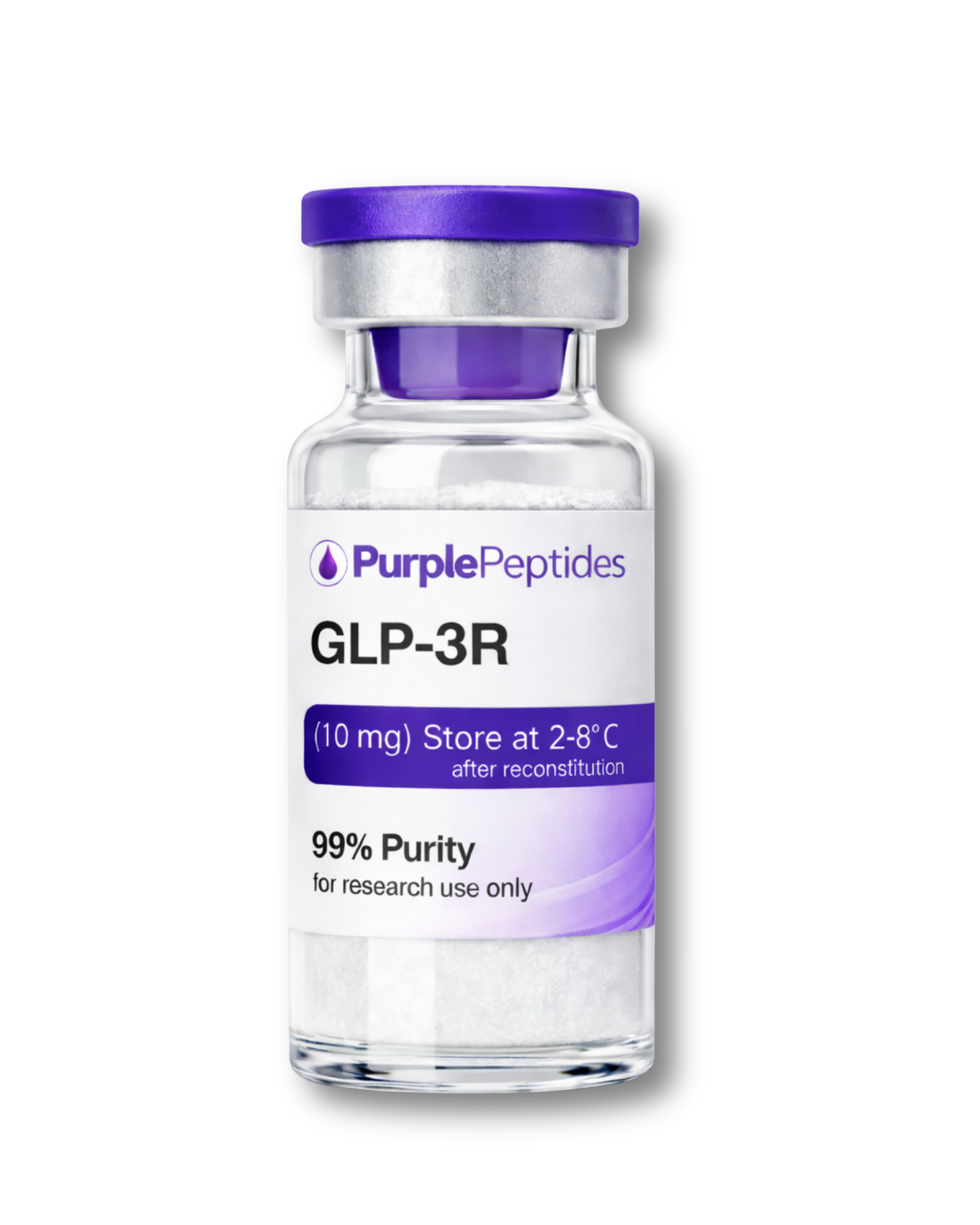
Reta GLP-3R Research Compound
Available in 10 mg and 30 mg research sizes. Built for structured metabolic research workflows with a clean Purple Peptides presentation.
Body Composition Research
Body composition research goes well beyond overall body weight. Researchers studying Retatrutide are examining how its multi-receptor activity may influence:
- Fat mass changes and redistribution patterns
- Lean mass preservation considerations during caloric deficit research models
- Liver fat markers in metabolic dysfunction-associated steatotic liver disease (MASLD)
- Long-term metabolic efficiency trajectories
- Broader body composition changes across extended research periods
A dedicated substudy of the Phase 2 obesity trial explored liver fat reduction in participants with MASLD — significantly broadening Retatrutide's relevance beyond purely weight-focused research models.

Why Researchers Are Paying Attention
The real story behind Retatrutide is not simply "weight loss" — it is the concept of coordinated multi-pathway metabolic signaling. Researchers are interested in Reta because it may help advance understanding of:
- How multiple metabolic receptors interact and amplify each other's effects
- Appetite and satiety regulation at a systems level
- Energy expenditure models beyond appetite suppression alone
- Liver fat and metabolic dysfunction research (MASLD, MASH)
- Long-term body composition trajectories in metabolic research subjects

Appetite Signaling and Satiety Research
GLP-1 receptor activity is the most widely recognized pathway in metabolic research, strongly associated with appetite regulation and satiety signaling. Retatrutide includes this GLP-1 component, but its research model extends considerably further.
The addition of GIP and glucagon receptor activity creates a research framework for studying appetite, nutrient handling, and energy regulation as a unified system — rather than examining each variable in isolation.

Metabolic Efficiency and Energy Expenditure
The glucagon receptor pathway is arguably the most distinctive element of Retatrutide's research profile. Glucagon signaling is closely connected to hepatic (liver) metabolism, thermogenic energy expenditure, and fat oxidation pathways.
In precise research terms: Reta is being studied to understand how glucagon receptor activity may contribute to energy-balance models when combined with GLP-1 and GIP signaling — a research question that single-pathway compounds simply cannot address.

Safety and Research-Only Notice
Retatrutide remains investigational and is not FDA-approved for general consumer use. This is a non-negotiable point in any responsible discussion of this compound.
Unauthorized or unregulated versions sold online before regulatory approval may raise serious concerns around safety, sourcing, purity, and legal compliance.

What Reta Is — and What It Isn't
✔ Retatrutide Is
- A triple-receptor metabolic research compound
- Studied in obesity and metabolic dysfunction research
- Connected to GLP-1, GIP & glucagon receptor pathways
- Relevant to appetite, metabolism & body composition models
- An investigational peptide studied in controlled research settings
✘ Retatrutide Is Not
- FDA-approved for public weight-loss treatment
- A guaranteed fat-loss solution
- A replacement for medical care or professional consultation
- Suitable for discussion with direct treatment claims
- A consumer product approved for general use

📌 Key Takeaways
- Retatrutide is being studied as a triple receptor agonist targeting GLP-1, GIP, and glucagon pathways simultaneously.
- Its research interest extends far beyond appetite signaling alone — encompassing energy expenditure, liver fat, and body composition models.
- The triple-pathway approach creates a research model no single-pathway compound can replicate.
- Phase 2 research reported up to 24.2% mean body-weight reduction at 48 weeks, though Retatrutide remains investigational.
- Retatrutide is not FDA-approved for public weight-loss treatment or general consumer use.
- Responsible discussion must remain educational, research-focused, and transparent about investigational status.

Reta GLP-3R Research Compound
Available in 10 mg and 30 mg research sizes. Built for structured metabolic research workflows with a clean Purple Peptides presentation.
Frequently Asked Questions
Retatrutide is one of the most closely watched compounds in metabolic research because it brings together three major signaling pathways — GLP-1, GIP, and glucagon receptor activity — in a single investigational framework.
That is the real story behind Reta. Not hype. Not shortcuts. Not guaranteed outcomes.
It is a research compound helping scientists explore how appetite, energy balance, nutrient handling, and body composition pathways may interact over time.
That's how we approach it at Purple Peptides.