CJC-1295 + Ipamorelin: The Dual Peptide Researchers Are Watching for GH Pulse Signaling
A premium research-focused guide to CJC-1295 with Ipamorelin, covering growth hormone secretagogue science, GHRH signaling, ghrelin receptor activity, recovery pathways, body composition research, and why this combination is widely discussed in peptide research.
What Is CJC-1295 + Ipamorelin?
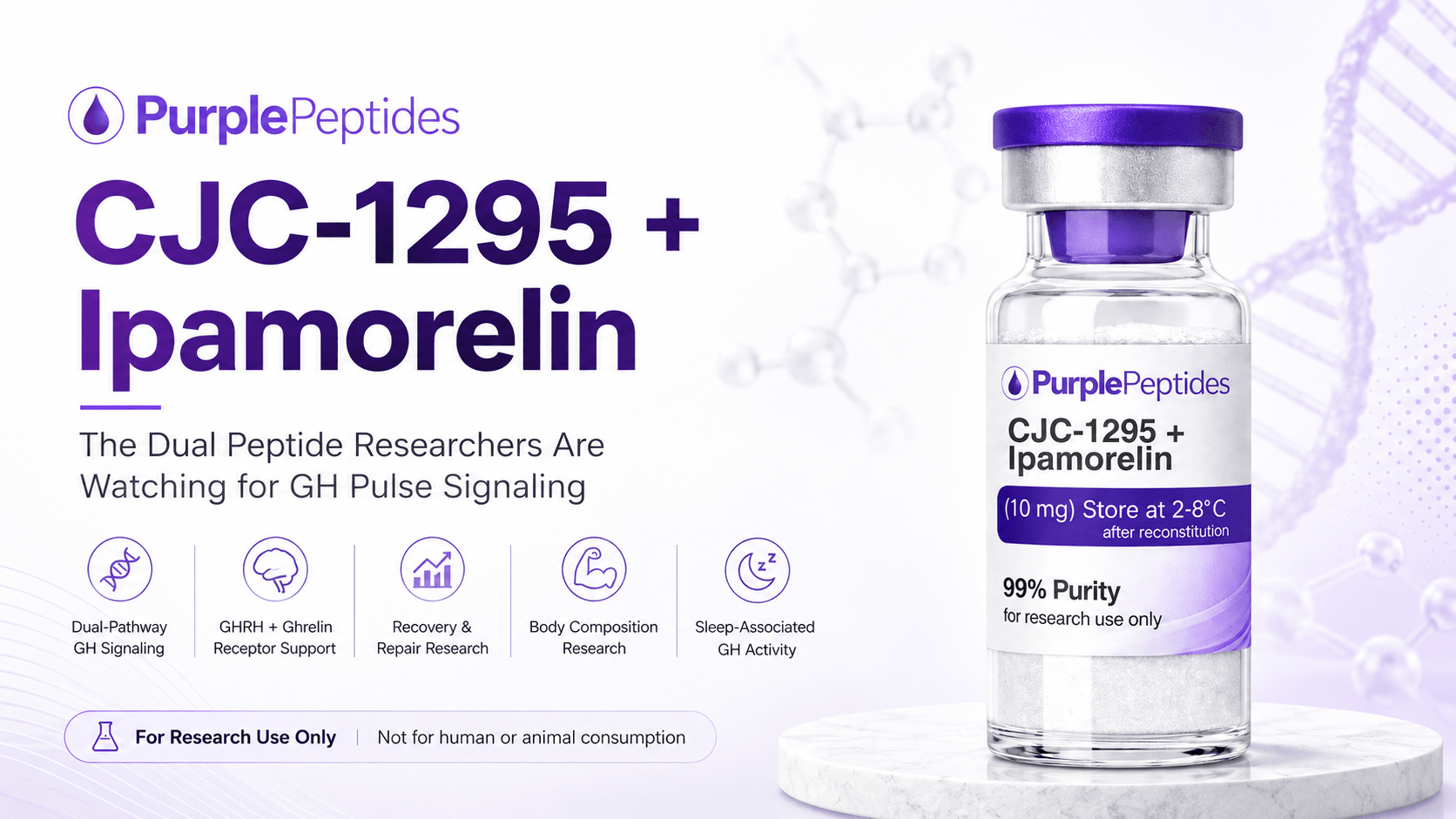
CJC-1295 + Ipamorelin is one of the most discussed peptide combinations in growth hormone research because both compounds target the GH axis from different biological angles.
CJC-1295 is commonly described as a growth hormone-releasing hormone analog, while Ipamorelin is classified as a growth hormone secretagogue. In simple terms, researchers study this pairing because CJC-1295 supports the GHRH pathway, while Ipamorelin activates the ghrelin receptor pathway involved in pulsatile growth hormone release.
That dual-pathway design is why the CJC-1295 Ipamorelin peptide combination appears frequently in research discussions around recovery signaling, lean mass research, connective tissue models, sleep-associated GH activity, and body composition pathways.
Why Researchers Pair CJC-1295 with Ipamorelin
The interest in this combination comes from pathway synergy. CJC-1295 and Ipamorelin do not work through the exact same receptor system. Instead, they approach the GH pulse network from complementary directions.
- CJC-1295 is associated with the GHRH receptor pathway.
- Ipamorelin is associated with the ghrelin receptor, also called GHS-R1a.
- Together, they are studied for more complete GH pulse signaling models.
- The combination is often discussed for recovery, repair, and metabolic research contexts.
CJC-1295: The GHRH Side of the Stack
CJC-1295 is a synthetic peptide analog related to growth hormone-releasing hormone. In research language, GHRH signaling helps communicate with the pituitary gland, encouraging growth hormone release through a natural regulatory pathway.
This makes CJC-1295 interesting in studies involving GH axis activity, pituitary signaling, IGF-1 response, tissue repair models, and age-related growth hormone decline research.
Key Research Areas for CJC-1295
- Growth hormone pulse regulation
- GHRH receptor pathway activity
- IGF-1 signaling research
- Recovery and tissue repair models
- Body composition and metabolic pathway studies
Ipamorelin: The Ghrelin Receptor Side
Ipamorelin is widely discussed as a selective growth hormone secretagogue. It is associated with the ghrelin receptor pathway, specifically GHS-R1a, which plays a role in stimulating growth hormone release from the pituitary.
Compared with older GHRP-style compounds, Ipamorelin is often discussed for its cleaner signaling profile in research contexts, especially because it is commonly associated with selective GH pulse stimulation rather than broad endocrine disruption.
Key Research Areas for Ipamorelin
- Ghrelin receptor signaling
- Pulsatile GH release models
- Recovery pathway research
- Connective tissue and collagen-related studies
- Sleep-associated GH pulse discussions
How the Combination Works in Research Terms
The CJC-1295 Ipamorelin combination is often studied because growth hormone biology is not controlled by one simple switch. It involves rhythm, timing, receptor sensitivity, pituitary responsiveness, and downstream IGF-1 signaling.
CJC-1295 interacts with the GHRH side of the system. Ipamorelin interacts with the ghrelin receptor side. When researchers examine both pathways together, the model becomes more complete than studying either compound alone.
- CJC-1295 supports GHRH-based pituitary signaling research.
- Ipamorelin supports ghrelin receptor-based GH secretagogue research.
- GH pulses may influence IGF-1-related downstream signaling.
- These pathways are often studied in recovery, repair, and metabolic models.
CJC-1295 + Ipamorelin vs. Single Peptide Research
| Feature | CJC-1295 | Ipamorelin | Combination |
|---|---|---|---|
| Primary pathway | GHRH receptor pathway | Ghrelin receptor / GHS-R1a pathway | Dual GH-axis signaling model |
| Research focus | Pituitary GH release signaling | GH secretagogue pulse activity | Coordinated GH pulse research |
| Common discussion area | IGF-1 and GH axis research | Recovery and GH pulse models | Recovery, body composition, repair signaling |
| Why it matters | Supports the GHRH side | Supports the ghrelin receptor side | Creates a complementary research pathway |
Recovery Research and Tissue Repair Signaling
One reason CJC-1295 with Ipamorelin receives attention is its connection to recovery-focused research. Growth hormone and downstream IGF-1 signaling are commonly discussed in relation to collagen synthesis, connective tissue remodeling, protein turnover, and repair-related pathways.
This does not mean the combination is a shortcut or a direct tissue-building solution. In research terms, it is better understood as a signaling model that may influence the biological environment involved in recovery and adaptation.
- Collagen synthesis research
- Connective tissue remodeling models
- Exercise recovery pathway discussions
- Protein turnover and adaptation research
- Sleep-associated growth hormone pulse studies
Body Composition and Metabolic Research
CJC-1295 + Ipamorelin is also frequently discussed in body composition research because the GH axis intersects with lipolysis, energy use, lean tissue signaling, and metabolic regulation.
For SEO and research education, it is important to understand the distinction: this peptide combination is not a “fat loss product” or a “muscle-building shortcut.” It is a research compound pairing studied for GH-axis signaling and related metabolic pathways.
Sleep, GH Pulses, and Circadian Rhythm
Natural growth hormone release is strongly connected to sleep architecture, especially deep sleep. That is why CJC-1295 Ipamorelin research often overlaps with discussions about circadian rhythm, nighttime GH pulses, and recovery biology.
From a scientific perspective, GH signaling is rhythmic. Researchers studying the GH axis often look at timing, pulse amplitude, receptor response, and downstream IGF-1 activity rather than only total GH output.
What CJC-1295 + Ipamorelin Is Not
To keep the discussion accurate and responsible, this combination should not be framed as a miracle solution. It is not a steroid, not a direct replacement for growth hormone, and not a substitute for sleep, nutrition, training, or clinical oversight.
- Not a steroid
- Not a direct muscle builder
- Not a replacement for proper recovery fundamentals
- Not intended for human or animal consumption when sold for research use
- Not medical advice or a treatment recommendation
Why Purple Peptides Researchers Are Watching This Combination
CJC-1295 with Ipamorelin sits at the center of peptide research because it combines two important GH-axis pathways into one research model. The combination is widely searched by researchers looking for information on GH secretagogues, GHRH analogs, Ipamorelin peptide research, CJC-1295 peptide research, recovery signaling, and metabolic pathway studies.
For research-focused buyers, clarity matters. Clean labeling, clear compound identity, transparent research positioning, and educational content help separate serious peptide research from hype-driven marketing.
Key Takeaways
- CJC-1295 is commonly associated with GHRH receptor pathway research.
- Ipamorelin is commonly associated with ghrelin receptor and GHS-R1a signaling.
- The combination is studied for dual GH-axis stimulation models.
- Researchers discuss it in relation to GH pulses, IGF-1 signaling, recovery pathways, and body composition research.
- It should be presented responsibly as a research-use peptide combination, not as a medical treatment or human-use product.
The science behind CJC-1295 + Ipamorelin is not about hype. It is about understanding receptor biology, pituitary signaling, growth hormone pulse dynamics, and the downstream pathways that researchers continue to study.
That is the Purple Peptides approach: clean research education, premium presentation, and clear separation between science and exaggeration.
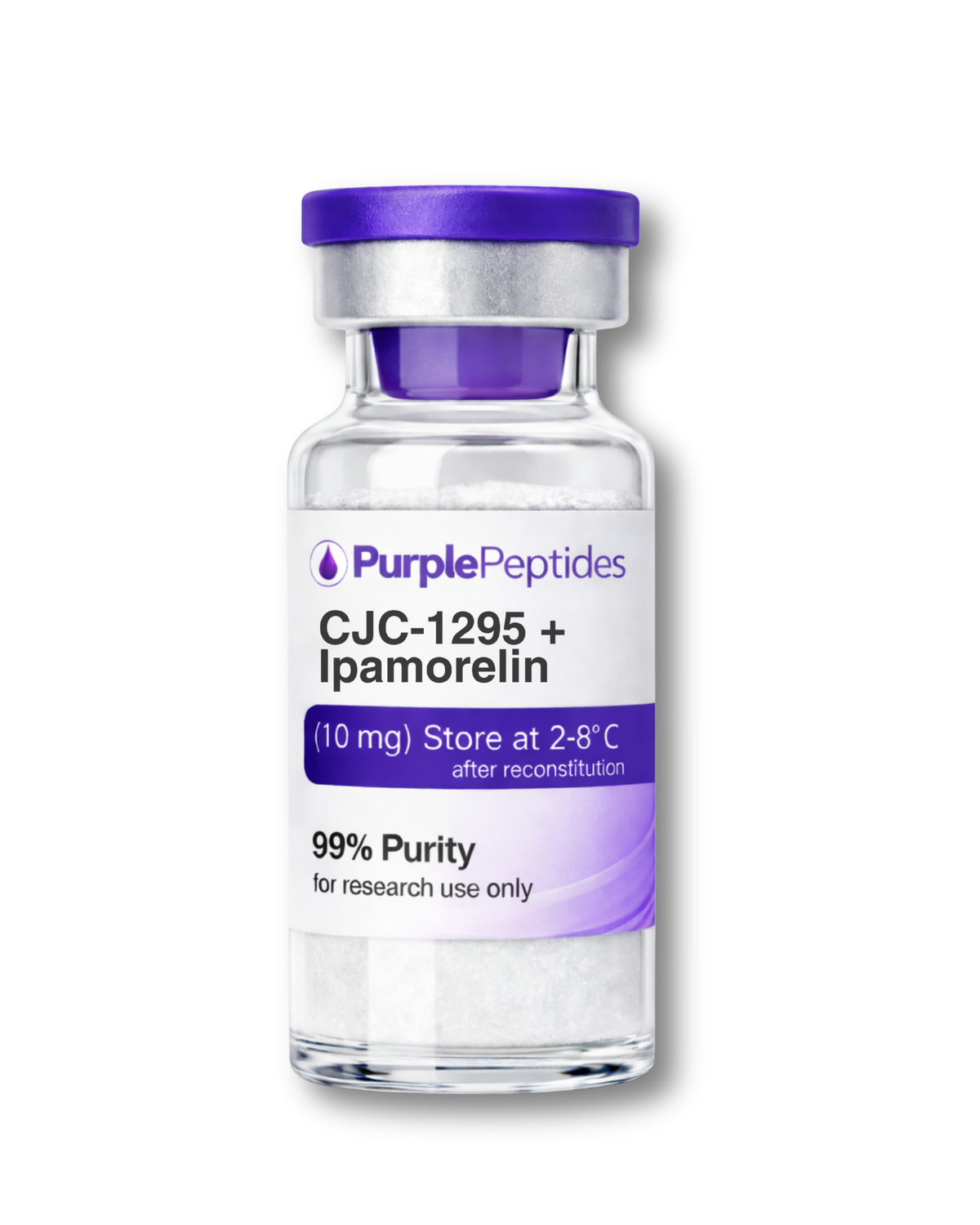
CJC-1295 + Ipamorelin Research Peptide
Explore Purple Peptides CJC-1295 + Ipamorelin for research applications involving GHRH signaling, ghrelin receptor activity, GH pulse research, recovery pathways, and peptide-based metabolic studies.
Buy Now