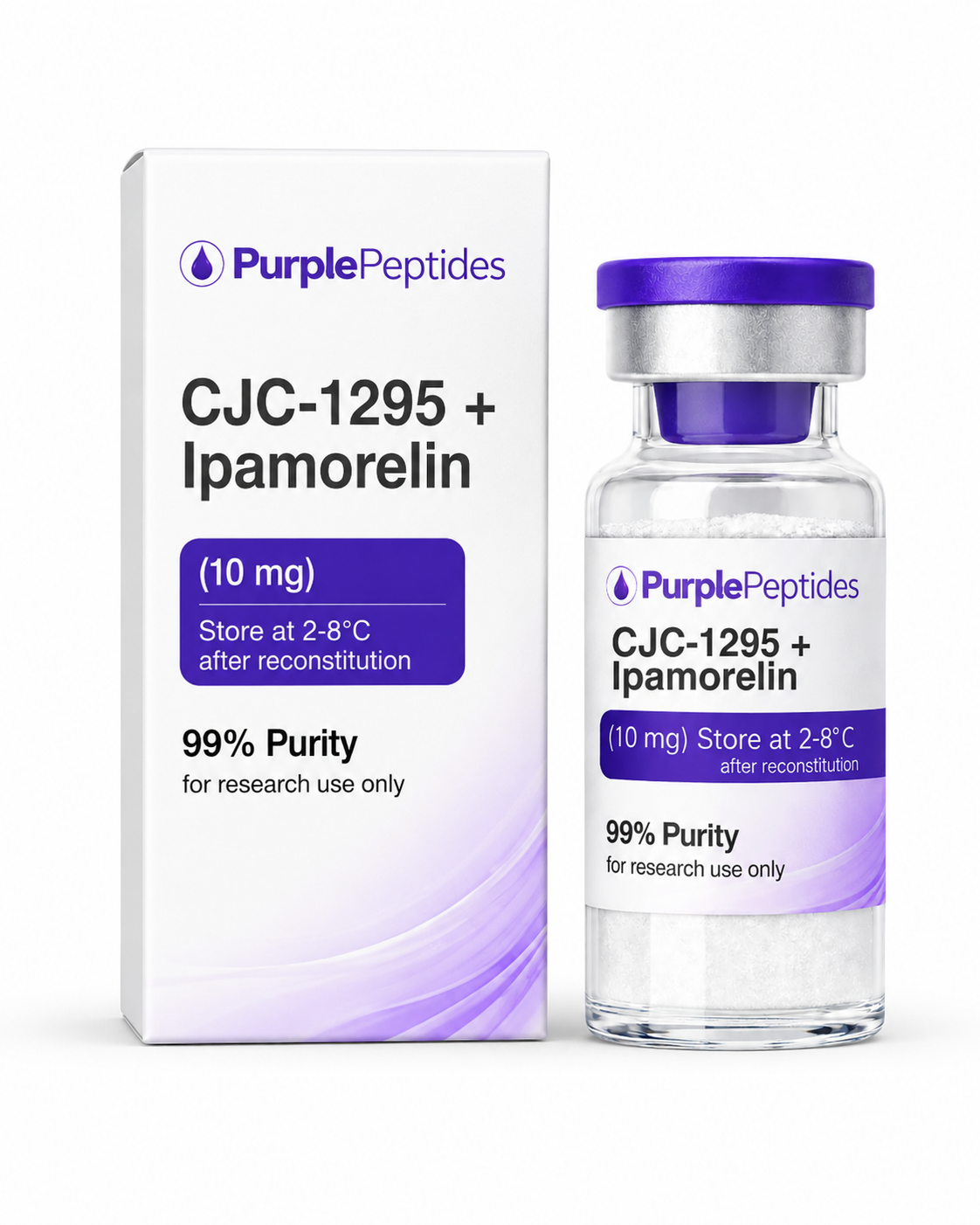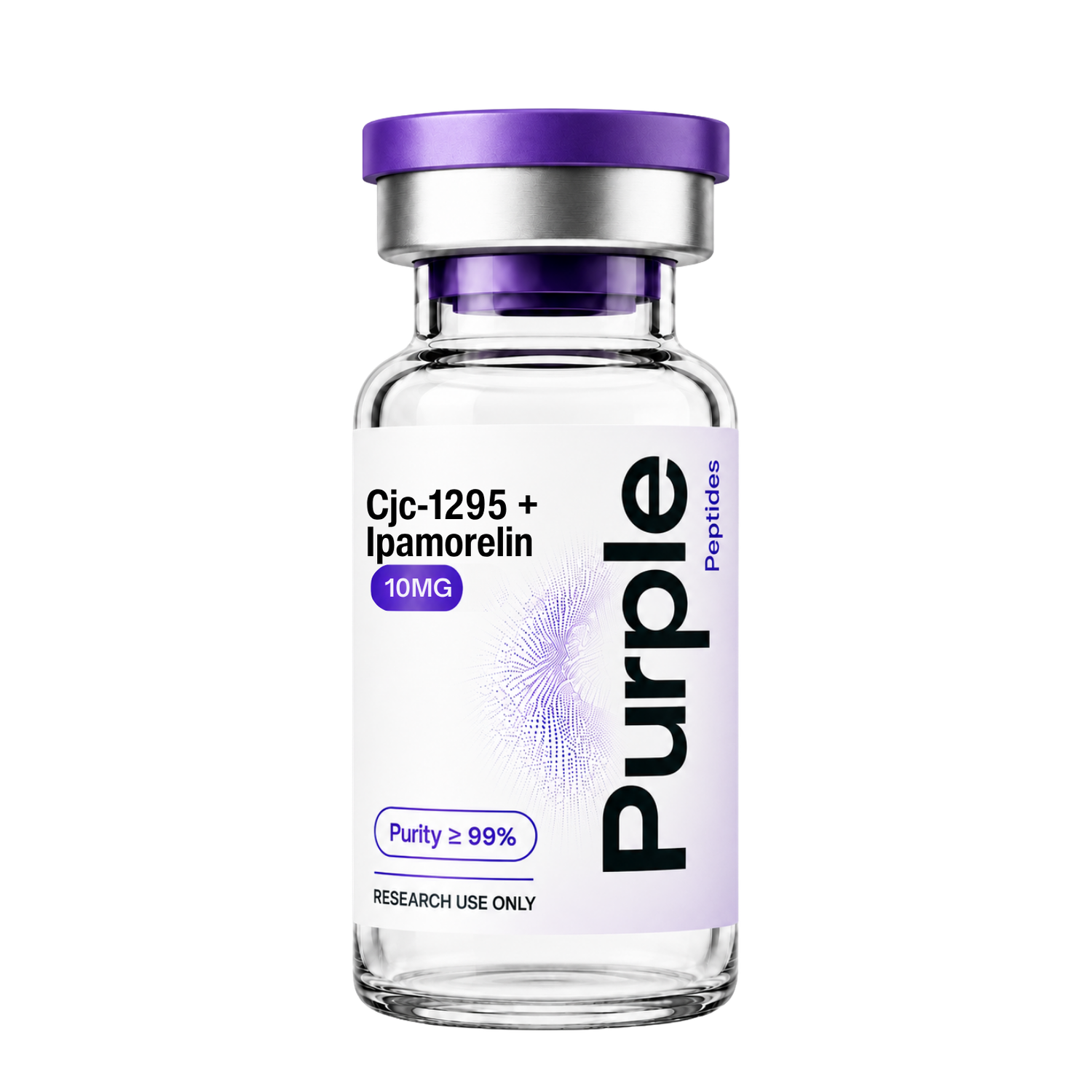
CJC-1295 + Ipamorelin
What Is the CJC-1295 & Ipamorelin Blend?
The CJC-1295 + Ipamorelin blend is a research peptide combination commonly examined in laboratory and scientific models related to growth hormone signaling, endocrine regulation, IGF-1 pathway activity, and metabolic-response research.
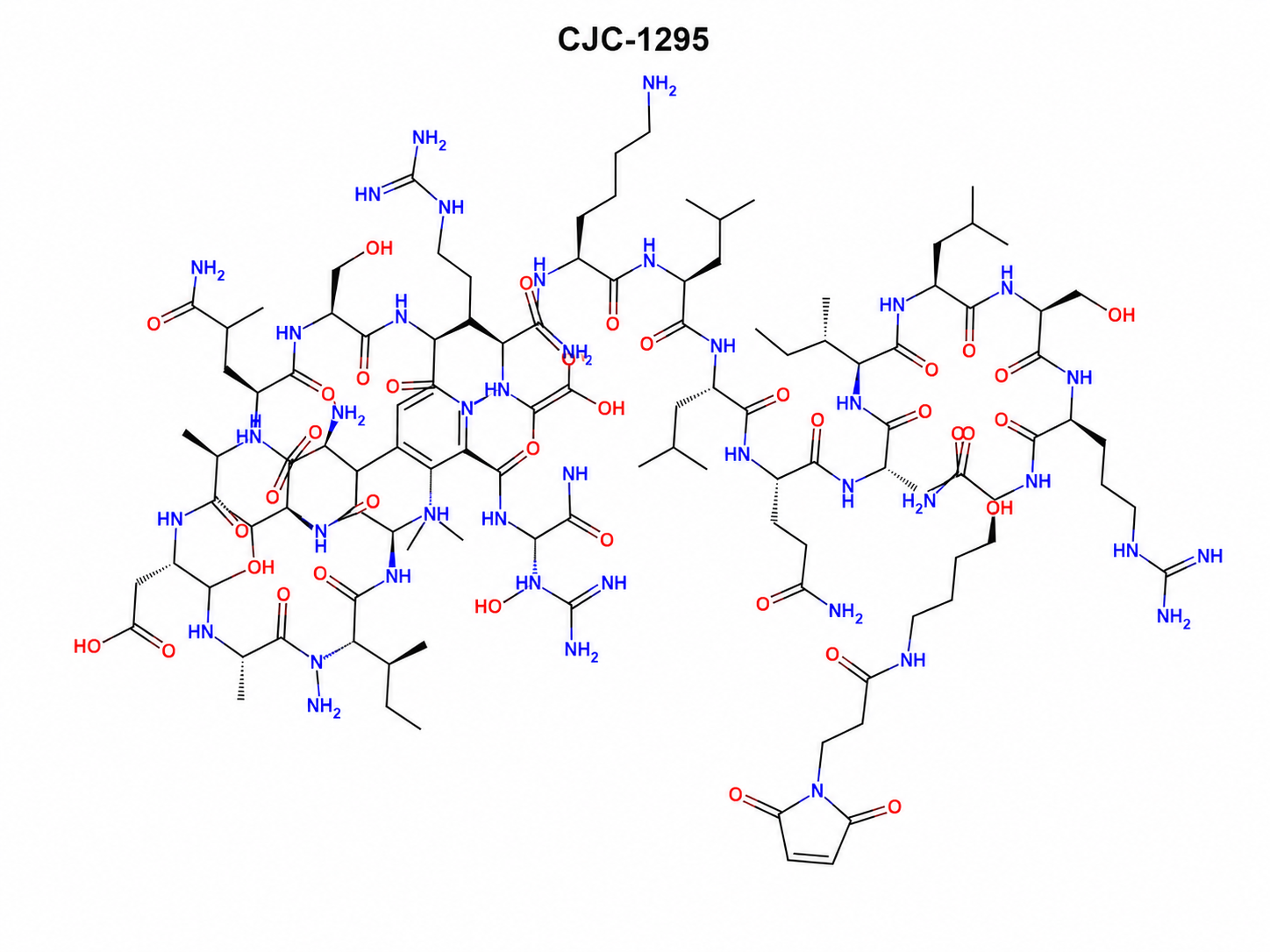
CJC-1295 is a synthetic analog of growth hormone–releasing hormone (GHRH). It is studied for its ability to support prolonged investigation of GH and IGF-1 signaling compared with shorter-acting GHRH fragments.
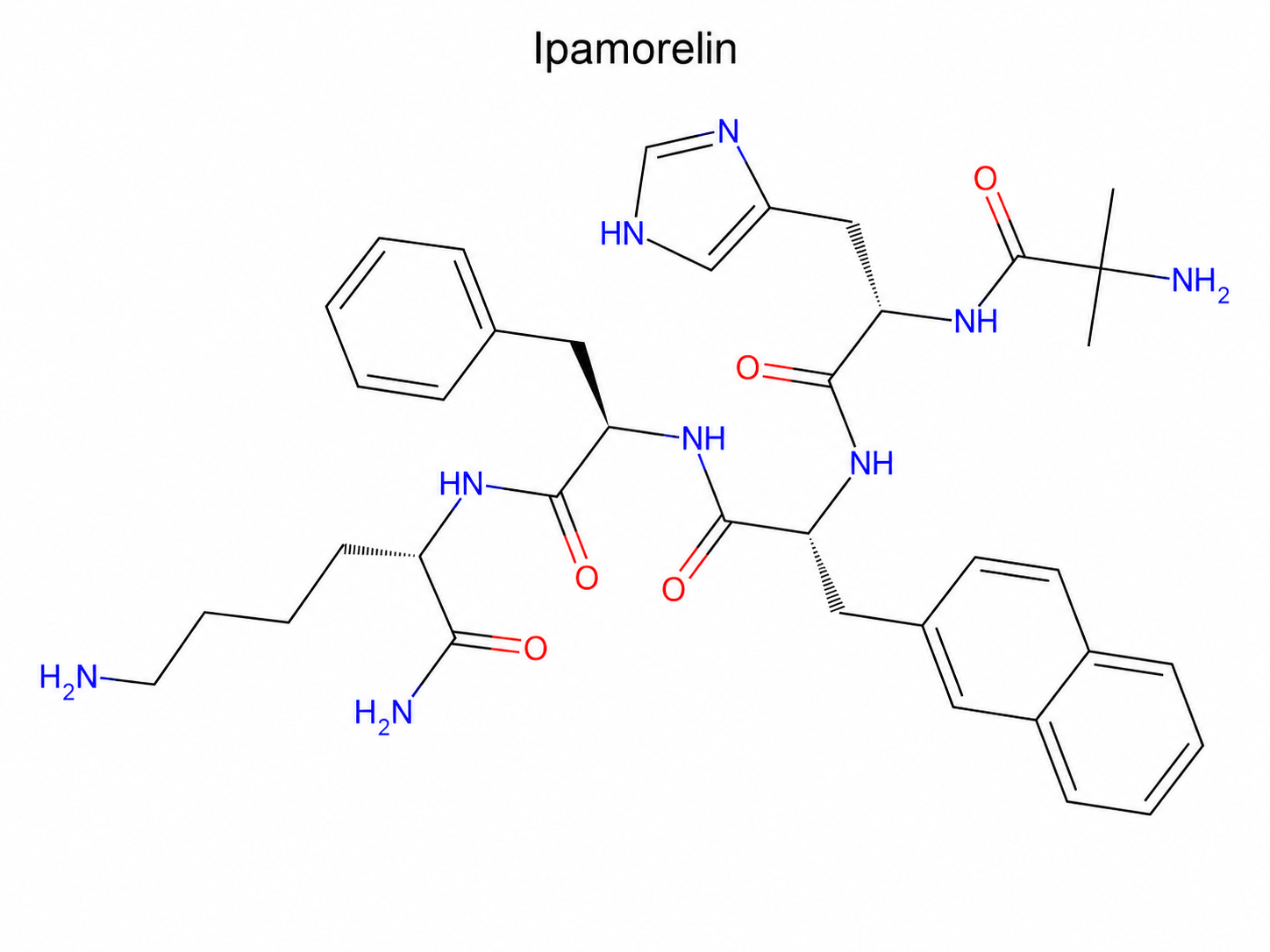
Ipamorelin is a synthetic pentapeptide growth hormone secretagogue. It is studied for its selective activity at the ghrelin/growth hormone secretagogue receptor pathway and its ability to stimulate GH release while showing limited activity on other pituitary hormone pathways in research models.
Together, CJC-1295 and Ipamorelin are commonly explored as a dual-pathway research model: CJC-1295 supports the GHRH side of GH signaling, while Ipamorelin supports the growth hormone secretagogue pathway. This makes the blend useful for studying GH pulsatility, IGF-1 response, endocrine timing, recovery signaling, and metabolic regulation in controlled laboratory settings.
Certificate of Analysis
Third-party testing documentation available for purity and endotoxin review.
CJC-1295 + Ipamorelin Research Overview
The CJC-1295 + Ipamorelin blend combines two peptides that are frequently discussed in growth hormone and endocrine research.
CJC-1295 has been investigated for sustained GH and IGF-1 pathway activation. Research has examined its ability to increase GH exposure over time while preserving aspects of pulsatile GH secretion, making it relevant to studies on endocrine rhythm, pituitary signaling, and downstream IGF-1 activity.
Ipamorelin has been studied as a selective GH secretagogue. Research has focused on its ability to trigger GH release while demonstrating minimal stimulation of cortisol, ACTH, or prolactin compared with older growth hormone–releasing peptides.
When evaluated together in research contexts, these peptides are commonly discussed for their complementary mechanisms. CJC-1295 works through GHRH-receptor-related signaling, while Ipamorelin works through growth hormone secretagogue receptor activity. This pairing provides a useful platform for studying GH-axis regulation, IGF-1 signaling, metabolic adaptation, tissue-response pathways, and aging-related endocrine dynamics.
History and Development
The development of CJC-1295 and Ipamorelin comes from two important areas of peptide endocrinology.
CJC-1295 was developed as a longer-acting GHRH analog designed to overcome the short activity window of native GHRH. Its structure was modified to extend its research usefulness in models examining sustained GH and IGF-1 signaling.
Ipamorelin was developed during research into growth hormone secretagogues and ghrelin-mimetic compounds. It became notable because of its selective GH-releasing profile and reduced off-target activity compared with earlier GHRP compounds.
The combination of these peptides became of interest because they target different but related parts of the GH-axis. This makes the blend relevant for laboratory research into endocrine signaling, metabolic regulation, recovery-response models, and physiological resilience.
CJC-1295 + Ipamorelin Blend Profile
CJC-1295 Structure
Ipamorelin Structure
Research Findings
CJC-1295 and Ipamorelin have been studied across endocrine, metabolic, cellular, and systemic research models. The main research interest centers on how these peptides influence GH-axis signaling and downstream biological pathways.
Key Areas of Investigation
- Endocrine Research: Growth hormone release, GH pulsatility, IGF-1 signaling, pituitary response, and hormone-timing models.
- Metabolic Research: Lipid metabolism, lean-tissue signaling, glucose-balance models, and nutrient-partitioning pathways.
- Cellular Research: Cell survival signaling, repair-response pathways, protein turnover, and recovery-related biological models.
- Systemic Research: Aging-related endocrine dynamics, tissue viability, cardiovascular-relevance models, and physiological resilience research.
Mechanism-Based Research Interest
CJC-1295 and Ipamorelin are often studied together because they approach GH-axis activity from different angles.
- CJC-1295: Associated with GHRH-receptor signaling and prolonged GH/IGF-1 pathway investigation.
- Ipamorelin: Associated with growth hormone secretagogue receptor activity and selective GH-release research.
This dual-pathway model allows researchers to study how GHRH-like signaling and secretagogue-based signaling may interact in controlled experimental settings.
Investigational Research Context
CJC-1295 and Ipamorelin should be considered investigational research compounds. Available research includes laboratory, preclinical, and clinical-context data, but these compounds are not intended for human consumption, medical treatment, veterinary use, or self-experimentation.
Scientific References
View References
- Teichman S.L. et al. (2006) — Prolonged stimulation of growth hormone and insulin-like growth factor I secretion by CJC-1295.
- Ionescu M. et al. (2006) — Pulsatile secretion of growth hormone persists during continuous stimulation by CJC-1295.
- Alba M. et al. (2006) — Once-daily administration of CJC-1295, a long-acting growth hormone-releasing hormone analog.
- Sackmann-Sala L. et al. (2009) — Activation of the GH/IGF-1 axis by CJC-1295.
- Raun K. et al. (1998) — Ipamorelin, the first selective growth hormone secretagogue.
- Gobburu J.V.S. et al. (1999) — Pharmacokinetic-pharmacodynamic modeling of Ipamorelin.
- Johansen P.B. et al. (1999) — Ipamorelin induces longitudinal bone growth in rats.
- Svensson J. et al. (2000) — Ipamorelin and GHRP-6 increase bone mineral content in adult female rats.
Need Help?