Epithalon
What Is Epithalon?
Epithalon, also known as Epitalon, is a synthetic tetrapeptide studied in laboratory and preclinical research for its relationship with cellular aging pathways, telomere biology, genomic stability, circadian rhythm signaling, and neuroendocrine regulation.
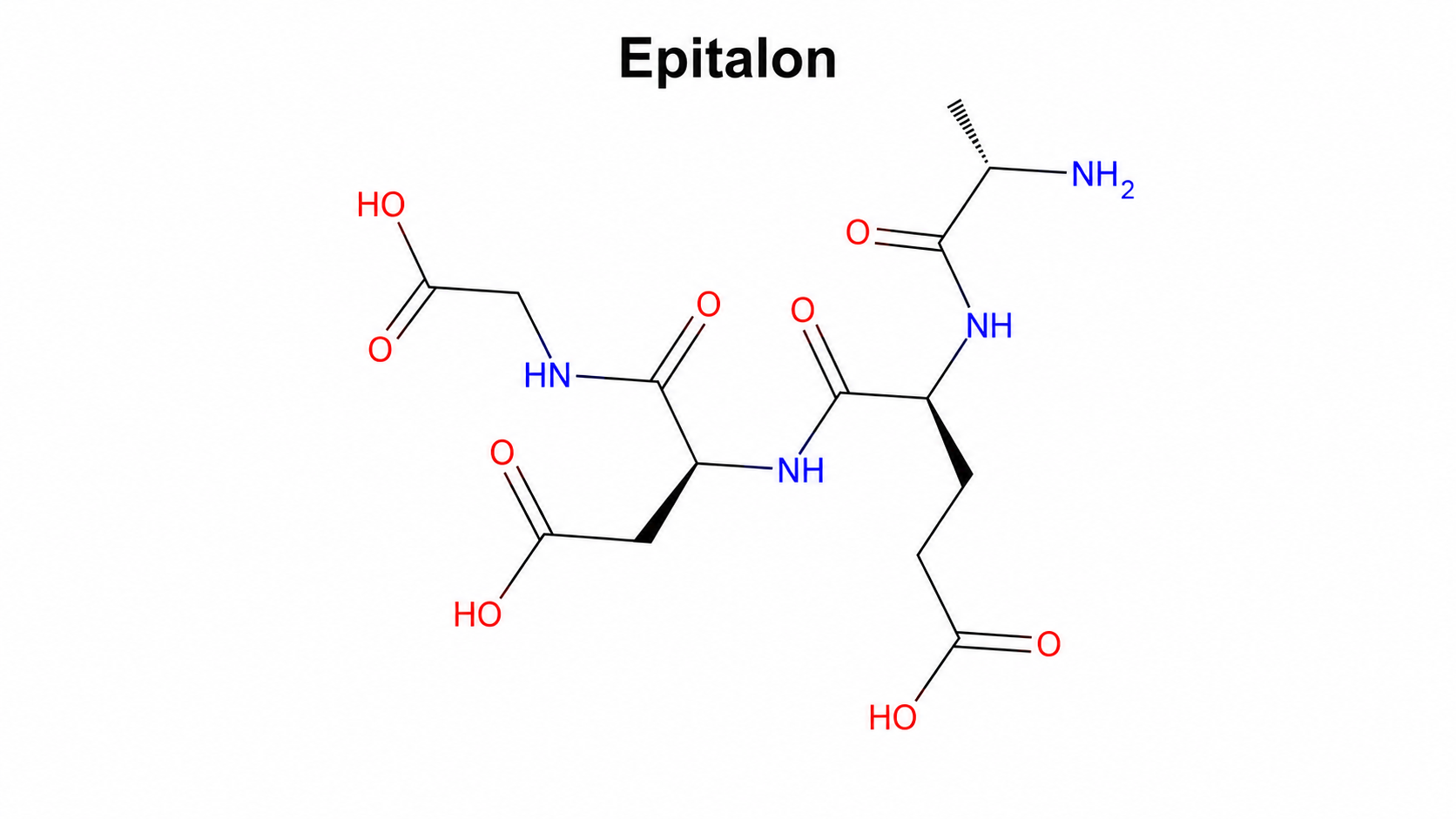
Epithalon is composed of four amino acids with the sequence Ala-Glu-Asp-Gly, also written as AEDG. It was developed from research into pineal gland peptides and epithalamin, a peptide complex studied in aging-related biological models.
In controlled research settings, Epithalon has been investigated for its possible influence on telomerase activity, telomere dynamics, chromosomal stability, gene-expression patterns, melatonin-related signaling, and biological rhythm coordination.
Because of its connection to cellular aging mechanisms and pineal-regulatory pathways, Epithalon remains a compound of interest in longevity research, genomic-maintenance models, circadian biology, and neuroendocrine communication studies.
Certificate of Analysis
Third-party testing documentation available for purity and analytical verification.
Epithalon Research Overview
Epithalon is most commonly discussed in research involving aging biology, telomere regulation, pineal gland signaling, and biological rhythm control.
Laboratory studies have examined Epithalon for its relationship with telomerase activation, telomere elongation, cellular lifespan, DNA stability, and age-associated changes in cellular function.
Additional research has explored Epithalon’s connection to circadian rhythm regulation, melatonin signaling, pineal gland activity, and neuroendocrine communication.
In aging-related research models, Epithalon is often studied as a peptide tool for understanding how short regulatory peptides may influence gene expression, cellular repair signaling, and biological timing systems.
History and Development
Epithalon originated from decades of research into pineal gland peptides and their possible role in aging regulation.
Early investigations focused on epithalamin, a peptide extract derived from the pineal gland. Epithalamin was studied for its relationship with melatonin production, circadian rhythm regulation, immune response, antioxidant activity, and lifespan-related biological markers.
Epithalon was later synthesized as a defined tetrapeptide sequence, Ala-Glu-Asp-Gly, allowing researchers to study a more specific peptide structure in models related to telomere biology, gene regulation, pineal signaling, and aging-associated cellular changes.
Since its development, Epithalon has become a recurring topic in experimental research focused on longevity biology, genomic maintenance, neuroendocrine balance, and cellular aging pathways.
Epithalon Profile
Epithalon Structure
Research Findings
Epithalon has been studied across cellular, genetic, endocrine, and systemic research models. The main areas of interest involve telomere biology, gene-expression regulation, chromosomal stability, biological rhythm coordination, and aging-associated cellular pathways.
Key Areas of Investigation
- Genomic Research: Telomerase activity, telomere length, chromosomal stability, DNA integrity, and age-related genomic maintenance.
- Cellular Research: Cell lifespan, cellular aging models, oxidative-stress response, repair signaling, and peptide-regulated gene expression.
- Circadian Research: Biological rhythm coordination, melatonin-related signaling, pineal gland activity, and sleep-wake cycle research models.
- Neuroendocrine Research: Pineal regulation, hormone-signaling rhythm, stress-response pathways, and endocrine communication.
- Longevity Research: Aging biomarkers, lifespan-related animal models, cellular senescence pathways, and systemic aging biology.
Mechanism-Based Research Interest
Epithalon is studied because of its potential relationship with several aging-associated biological systems.
Researchers investigate Epithalon for its connection to:
- Telomerase activation in cellular models
- Telomere length regulation
- Chromosomal stability and genomic maintenance
- Pineal gland and melatonin-related signaling
- Circadian rhythm coordination
- Peptide-regulated gene expression
- Cellular aging and longevity research models
This makes Epithalon a valuable research compound for studying how short regulatory peptides may interact with aging-related cellular and neuroendocrine pathways.
Investigational Research Context
Epithalon should be considered an investigational research compound. Available studies include laboratory, animal, and limited clinical-context research. Findings should not be interpreted as approved therapeutic outcomes.
This product is supplied for laboratory research only and is not intended for human consumption, clinical use, veterinary use, or self-experimentation.
Scientific References
View References
- Khavinson V.K. et al. (2003) — Epithalon peptide induces telomerase activity and telomere elongation in human somatic cells.
- Anisimov V.N. et al. (2003) — Effect of Epitalon on biomarkers of aging, life span and spontaneous tumor incidence in female Swiss-derived SHR mice.
- Vinogradova I.A. et al. (2007) — Effect of Ala-Glu-Asp-Gly peptide on life span and development of spontaneous tumors in female rats exposed to different illumination regimes.
- Korkushko O.V. et al. (2007) — Normalizing effect of pineal gland peptides on daily melatonin rhythm in old monkeys and elderly people.
- Khavinson V.K. (2002) — Peptides and ageing.
- Khavinson V.K. et al. (2020) — AEDG peptide stimulates gene expression and protein synthesis during neurogenesis: possible epigenetic mechanism.
- Araj S.K. et al. (2025) — Overview of Epitalon: highly bioactive pineal tetrapeptide with promising properties.
- Al-Dulaimi S. et al. (2025) — Epitalon increases telomere length in human cell lines through telomerase upregulation or ALT activity.
Need Help?