GLOW: Why So Many People Are Talking About This Peptide Stack
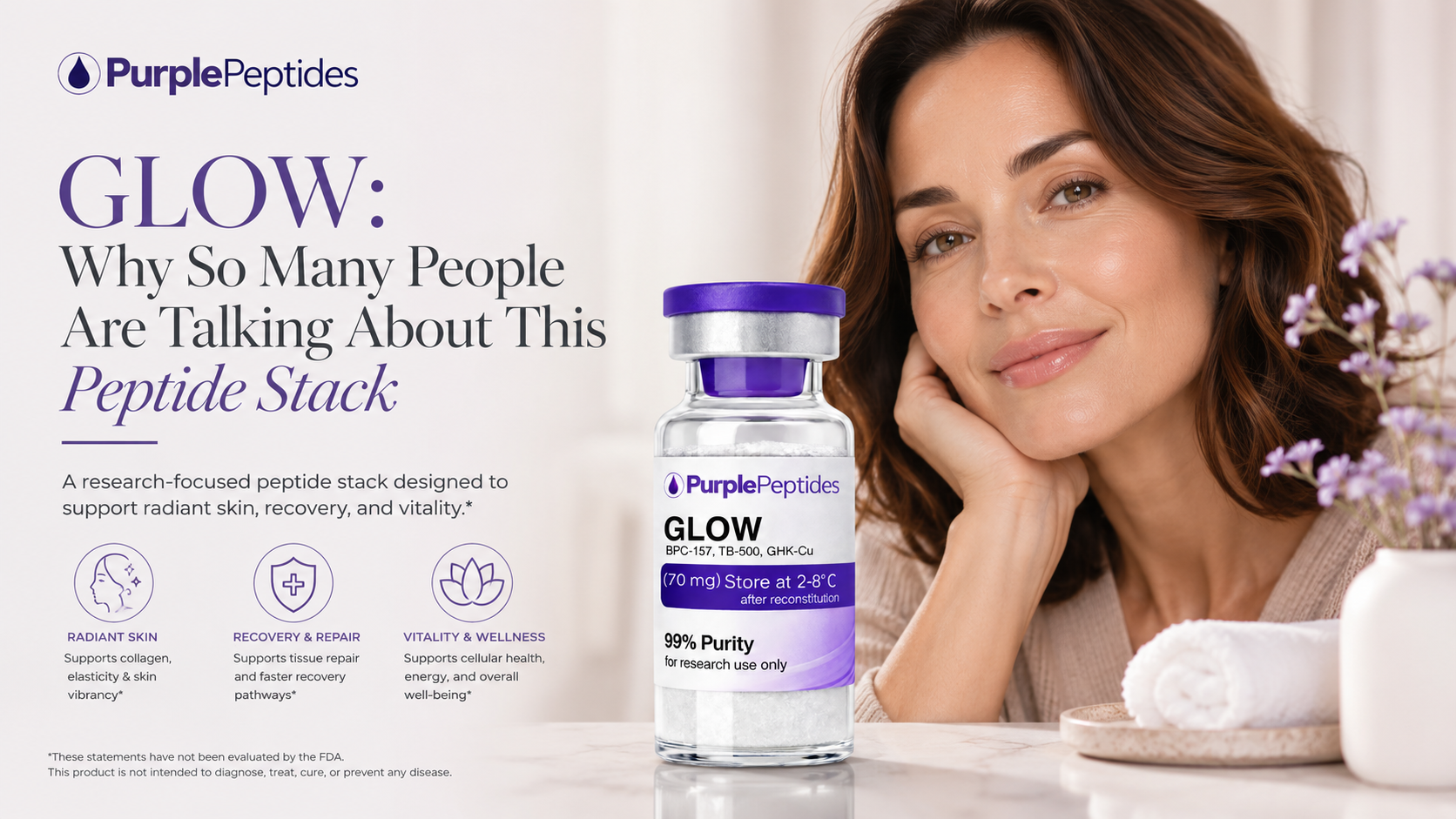
The GLOW peptide stack has become one of the most talked-about research combinations in the peptide community because it sits at the intersection of skin science, tissue repair research, collagen signaling, recovery biology, and cellular resilience. It is not about chasing a miracle. It is about understanding why researchers and wellness-focused audiences are paying attention to the biology behind GHK-Cu, BPC-157, and TB-500-related research.
Why the Word “GLOW” Caught Attention
Many people first hear about GLOW through skin-focused conversations. They may be looking for better tone, smoother texture, healthier-looking skin, or a more refreshed appearance. But the deeper reason this stack gets attention is not just cosmetic. The real conversation is about cellular support, tissue repair signaling, collagen remodeling, and recovery pathways.
Think about someone who trains, eats clean, drinks water, uses skincare, and still feels like something looks or feels slightly flat. Skin may appear less vibrant. Recovery may take longer. Soft tissue may feel less resilient. That is where the GLOW conversation begins: not as a replacement for fundamentals, but as an educational discussion around the biological systems that influence repair, skin quality, and resilience.
GLOW is popular because it connects visible skin interest with deeper cellular biology.
Important: This article is educational only. GLOW is not an FDA-approved therapy, not medical advice, not a dosage guide, and not a human-use protocol. This content explains the research conversation and biological mechanisms behind the stack.
What Is the GLOW Peptide Stack?
In many research communities, “GLOW” refers to a peptide stack typically built around three compounds: GHK-Cu, BPC-157, and Thymosin Beta-4/TB-500-related research. Each component is discussed for a different biological reason, which is why the stack has become associated with multi-pathway support.
The name “GLOW” comes from the outcome people tend to associate with the stack: a more vibrant, recovered, refreshed look. But responsible education should avoid exaggerated claims. The better explanation is that the stack is discussed because it brings together research areas involving skin remodeling, inflammatory modulation, angiogenesis signaling, extracellular matrix support, and tissue integrity.
What Each Compound Is Researched For
The GLOW stack is best understood by looking at each component separately. The combination is popular because each compound is associated with a different research category, creating a broader “repair and resilience” narrative.
| Component | Primary Research Focus | Why It Appears in GLOW |
|---|---|---|
| GHK-Cu | Collagen signaling, skin remodeling, wound repair, dermal matrix research | It anchors the skin-support conversation through collagen and tissue remodeling pathways. |
| BPC-157 | Soft tissue repair signaling, angiogenesis, inflammatory modulation, gut barrier models | It adds a recovery and connective-tissue angle to the stack. |
| TB-500 / Thymosin Beta-4 Research | Cell migration, angiogenesis signaling, tissue regeneration pathways, inflammatory balance | It supports the regenerative signaling narrative in preclinical research discussions. |
Why GHK-Cu Is Central to the GLOW Stack
GHK-Cu is often viewed as the anchor of the GLOW stack because of its connection to skin and collagen research. GHK stands for glycyl-L-histidyl-L-lysine, and when it binds copper, it forms the copper peptide complex known as GHK-Cu.
In research literature, GHK-Cu is associated with collagen production, glycosaminoglycan activity, wound healing pathways, antioxidant-related activity, and tissue remodeling. These mechanisms are why it appears so often in conversations about skin texture, elasticity, and visible aging.
GHK-Cu is commonly researched for:
- Collagen and extracellular matrix signaling.
- Skin texture and firmness-related pathways.
- Wound healing and tissue remodeling models.
- Inflammatory balance and antioxidant-related activity.
- Age-associated changes in skin repair biology.
Reference: Pickart & Margolina, BioMed Research International
Why BPC-157 Appears in GLOW Research
BPC-157 is commonly discussed in the peptide research community because of its connection to soft tissue repair models, tendon and ligament research, gut barrier support pathways, angiogenesis signaling, and inflammatory modulation.
In the context of GLOW, BPC-157 is not included for skin alone. It is included because visible skin quality can be influenced by the broader recovery environment of the body. Chronic stress, poor repair, inflammation, and connective tissue strain can all affect how the body looks and feels.
BPC-157 is commonly researched for:
- Soft tissue repair and connective tissue signaling.
- Angiogenesis and blood vessel formation pathways.
- Inflammatory response modulation in preclinical models.
- Gut barrier and gastrointestinal tissue research.
- Recovery-related biological pathways.
Reference: Sikiric et al. research review
The TB-500 / Thymosin Beta-4 Research Angle
TB-500 is commonly discussed in relation to Thymosin Beta-4 research. In preclinical models, Thymosin Beta-4 has been associated with cell migration, angiogenesis, inflammatory modulation, and tissue repair mechanisms. This gives the GLOW stack a broader regenerative signaling angle.
When people describe GLOW as more than a skin stack, this is part of what they mean. The theory is that skin appearance is not separate from the internal repair environment. Collagen signaling, tissue remodeling, blood flow support pathways, and recovery biology all influence how resilient the body appears and feels.
TB-500-related research is commonly associated with:
- Cell migration pathways.
- Angiogenesis signaling.
- Tissue repair and regeneration models.
- Inflammatory balance research.
- Recovery and resilience-focused mechanisms.
Reference: Goldstein et al., Annals of the New York Academy of Sciences
Why People Are Flocking to GLOW
The popularity of GLOW comes from a cultural shift. Many people are moving away from surface-only cosmetic solutions and becoming more interested in biology-first aging, longevity, recovery, and cellular health. They are not only asking, “How can I look better?” They are asking, “What systems make skin and tissue look more resilient?”
GLOW resonates because it connects several high-interest topics: skin quality, collagen support, training recovery, tissue repair, inflammation, regenerative signaling, and visible vitality. That makes it appealing to women over 40, athletes, wellness-focused professionals, and biohackers who want to understand the internal-to-external connection.
- It connects beauty with biology.
- It focuses on skin quality instead of dramatic cosmetic change.
- It fits the recovery and longevity conversation.
- It feels more subtle than filler, Botox, or surgical approaches.
- It gives people a pathway-based way to think about resilience.
The appeal is simple: support the cell, and let the surface reflect it.
Is GLOW a Miracle Stack?
No. GLOW should not be presented as a miracle, a facelift in a vial, or a guaranteed anti-aging solution. Responsible education matters because the full stack does not have large randomized human trials proving cosmetic or recovery outcomes as a combination.
The strongest conversation around GLOW is mechanistic: collagen signaling from GHK-Cu, repair-focused research around BPC-157, and regenerative pathway interest around Thymosin Beta-4/TB-500-related research. That does not equal guaranteed human outcomes.
- Combination use lacks large randomized human clinical trials.
- Long-term systemic safety data is limited.
- BPC-157 and TB-500-related research is largely preclinical.
- GHK-Cu has strong cosmetic relevance, especially in topical skin science.
- The GLOW stack is not FDA-approved for anti-aging or wrinkle reduction.
Ground truth: The GLOW conversation is driven by mechanism, preclinical data, cosmetic science interest, and anecdotal reports. It should be discussed as research education, not as a guaranteed result.
What to Remember About GLOW
- GLOW usually refers to a research stack built around GHK-Cu, BPC-157, and TB-500-related research.
- GHK-Cu is central because of its connection to collagen signaling, skin remodeling, and tissue repair research.
- BPC-157 adds a soft tissue repair and inflammatory modulation research angle.
- TB-500-related research adds a regenerative signaling and cell migration pathway angle.
- The stack is popular because it combines beauty, recovery, resilience, and cellular support into one story.
- Responsible education is important because the full combination remains investigational.
Explore the GLOW Research Stack
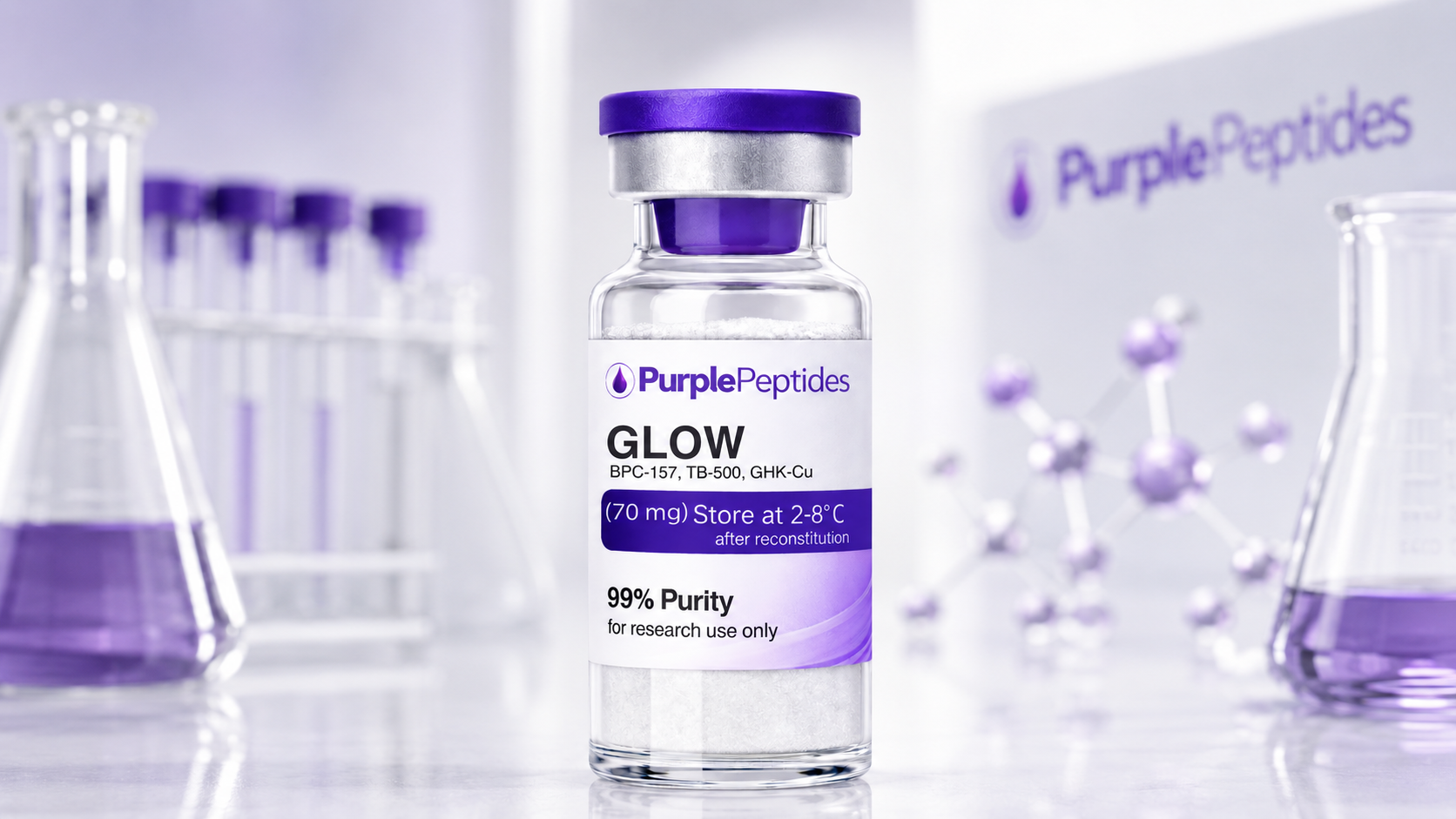
The GLOW stack brings together three research-focused compounds commonly discussed for collagen signaling, repair biology, inflammatory modulation, and regenerative pathway interest: GHK-Cu, BPC-157, and TB-500-related research.
GLOW
A research-focused peptide stack featuring BPC-157, TB-500-related research, and GHK-Cu. Built around the biology of collagen signaling, tissue repair pathways, recovery support research, and cellular resilience.
Buy NowEducational content only. This article is not medical advice, diagnosis, treatment guidance, or a usage protocol. Products discussed are for research purposes only and are not intended for human or animal consumption. Always follow applicable laws, regulations, and ::contentReference[oaicite:2]{index=2} product labeling requirements.