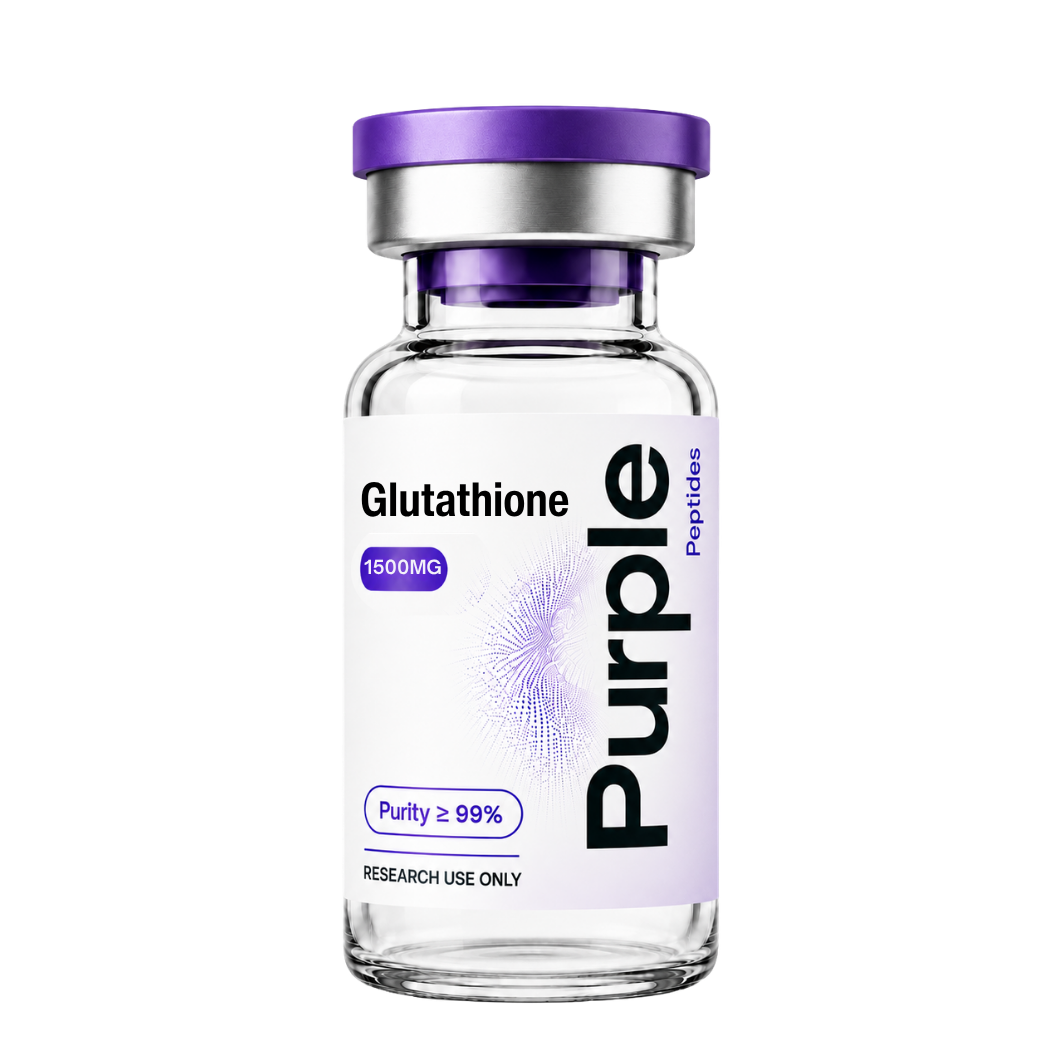
Glutathione
What Is Glutathione?
Glutathione is a naturally occurring tripeptide composed of three amino acids: glutamate, cysteine, and glycine. It is widely recognized as one of the body's most important intracellular antioxidants.
Present in nearly every cell, glutathione plays a central role in maintaining cellular redox balance, supporting detoxification pathways, protecting against oxidative stress, and regulating numerous metabolic and signaling processes.
Because of its widespread biological importance, glutathione has become one of the most extensively studied endogenous peptides in biomedical research. Scientists continue to investigate its influence on cellular defense systems, mitochondrial function, immune communication, and healthy aging.
Glutathione 1500mg Profile
Naturally occurring tripeptide
1500mg
Reduced Glutathione (GSH)
70-18-8
C₁₀H₁₇N₃O₆S
307.32 g/mol
124886
Laboratory research only
Primary Research Focus: Cellular antioxidant defense, intracellular redox regulation, oxidative stress biology, mitochondrial function, detoxification pathways, and cellular metabolism.
Glutathione Overview
Glutathione is synthesized naturally within cells and exists primarily in two forms: reduced glutathione (GSH), the biologically active form, and oxidized glutathione (GSSG), which is recycled back into its active state through specialized enzymatic systems.
Maintaining an appropriate balance between these two forms is essential for normal cellular function and resilience.
Unlike many peptides that target a specific receptor or signaling pathway, glutathione participates in hundreds of biochemical reactions throughout the body. Current areas of investigation include:
- Oxidative stress regulation
- Cellular antioxidant defense
- Mitochondrial function
- Detoxification pathways
- Immune system communication
- Cellular metabolism
- Protein regulation
- Healthy aging biology
The Science Behind Glutathione
Every cell continuously produces reactive oxygen species as a natural consequence of metabolism. While these molecules play important physiological roles, excessive oxidative stress can disrupt cellular communication, damage proteins and DNA, and impair normal biological function.
Glutathione serves as one of the body's primary antioxidant defense molecules, helping maintain redox homeostasis by neutralizing reactive oxygen species and supporting numerous enzymatic antioxidant systems.
Beyond its antioxidant activity, glutathione also participates in detoxification through conjugation pathways, regulation of protein function, mitochondrial energy production, and intracellular signaling.
Ongoing investigations continue to examine its interaction with:
- Redox signaling pathways
- Mitochondrial metabolism
- Glutathione peroxidase systems
- Cellular detoxification enzymes
- Immune cell communication
- Protein folding and stability
- Oxidative stress adaptation
- Cellular aging pathways
History & Development
Glutathione was first identified in the late nineteenth century, but its significance was not fully appreciated until researchers recognized its central role in cellular antioxidant defense during the twentieth century.
Since then, thousands of scientific publications have examined its contribution to metabolism, detoxification, immune regulation, and cellular homeostasis.
Advances in molecular biology have demonstrated that glutathione functions as far more than an antioxidant. It is now understood to be an important regulator of intracellular signaling, enzyme activity, mitochondrial integrity, and cellular resilience.
Glutathione Structure
Reduced Glutathione (GSH)
70-18-8
C₁₀H₁₇N₃O₆S
307.32 g/mol
124886
Glutamate, Cysteine & Glycine
Current Areas of Research
Published scientific literature continues to investigate glutathione across many areas of biomedical science.
Cellular Biology Research
- Redox homeostasis
- Antioxidant defense systems
- Protein protection
- Cellular signaling
- Oxidative stress regulation
Mitochondrial Research
- Cellular energy production
- Mitochondrial resilience
- Reactive oxygen species regulation
- Bioenergetics
Immunology Research
- Immune cell communication
- Inflammatory signaling
- Cellular defense mechanisms
- Immune homeostasis
Metabolic Research
- Detoxification pathways
- Xenobiotic metabolism
- Liver physiology
- Cellular metabolism
Healthy Aging Research
- Oxidative stress biology
- Cellular resilience
- Age-related physiological changes
- Longevity-associated pathways
Why Researchers Continue Studying Glutathione
Few naturally occurring molecules have been studied as extensively as glutathione. Its involvement in virtually every cell and numerous major physiological systems makes it a cornerstone of modern biomedical research.
Rather than acting through a single receptor or isolated biological pathway, glutathione supports the biochemical environment involved in cellular communication, energy production, antioxidant defense, and metabolic regulation.
As scientific understanding of redox biology continues to evolve, glutathione remains an important compound for studying the interconnected nature of cellular health and physiological homeostasis.
Purple Peptides Research Snapshot
Cellular antioxidant defense and redox biology
Intracellular redox regulation and oxidative stress protection
Yes
Yes
Extensive
Late 1800s
Extensive
1500mg
Key Biological Pathways
- Redox Homeostasis
- Antioxidant Defense
- Mitochondrial Function
- Cellular Detoxification
- Oxidative Stress Regulation
- Immune Communication
Scientific References
View References
- Meister A, Anderson ME. Annual Review of Biochemistry. 1983;52:711-760.
- Wu G, Fang YZ, Yang S, et al. Journal of Nutrition. 2004;134(3):489-492.
- Lu SC. Molecular Aspects of Medicine. 2009;30(1-2):42-59.
- Forman HJ, Zhang H, Rinna A. Molecular Aspects of Medicine. 2009;30(1-2):1-12.
- Jones DP. Free Radical Biology & Medicine. 2006;41(10):1449-1455.
Research Use Only
For Laboratory Research Purposes Only
This product is intended exclusively for laboratory research and analytical applications.
- Not for human consumption
- Not intended for diagnostic or therapeutic use
- Not intended to prevent, treat, or cure disease
Products sold by Purple Peptides are intended exclusively for qualified research professionals and laboratory investigators for research use only.