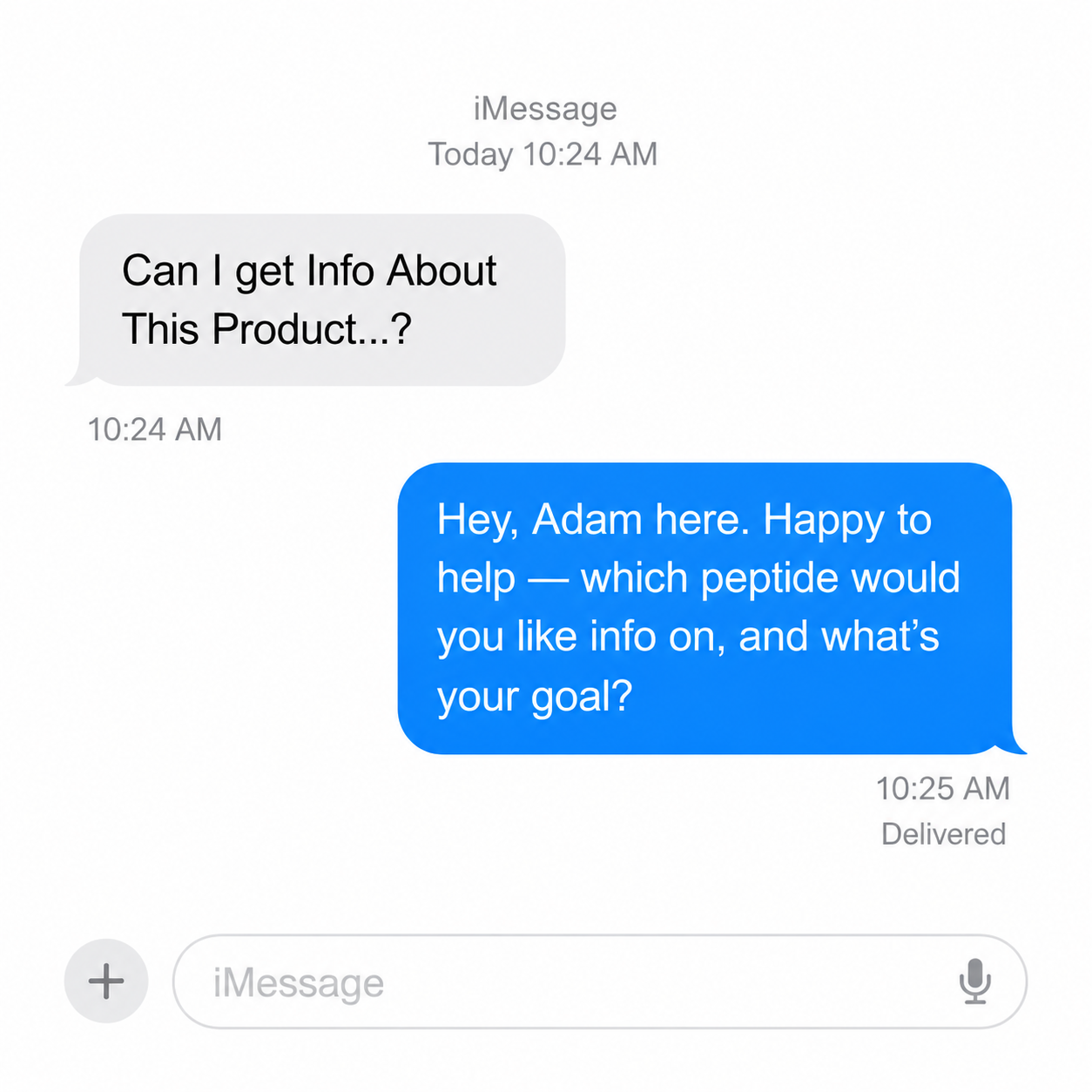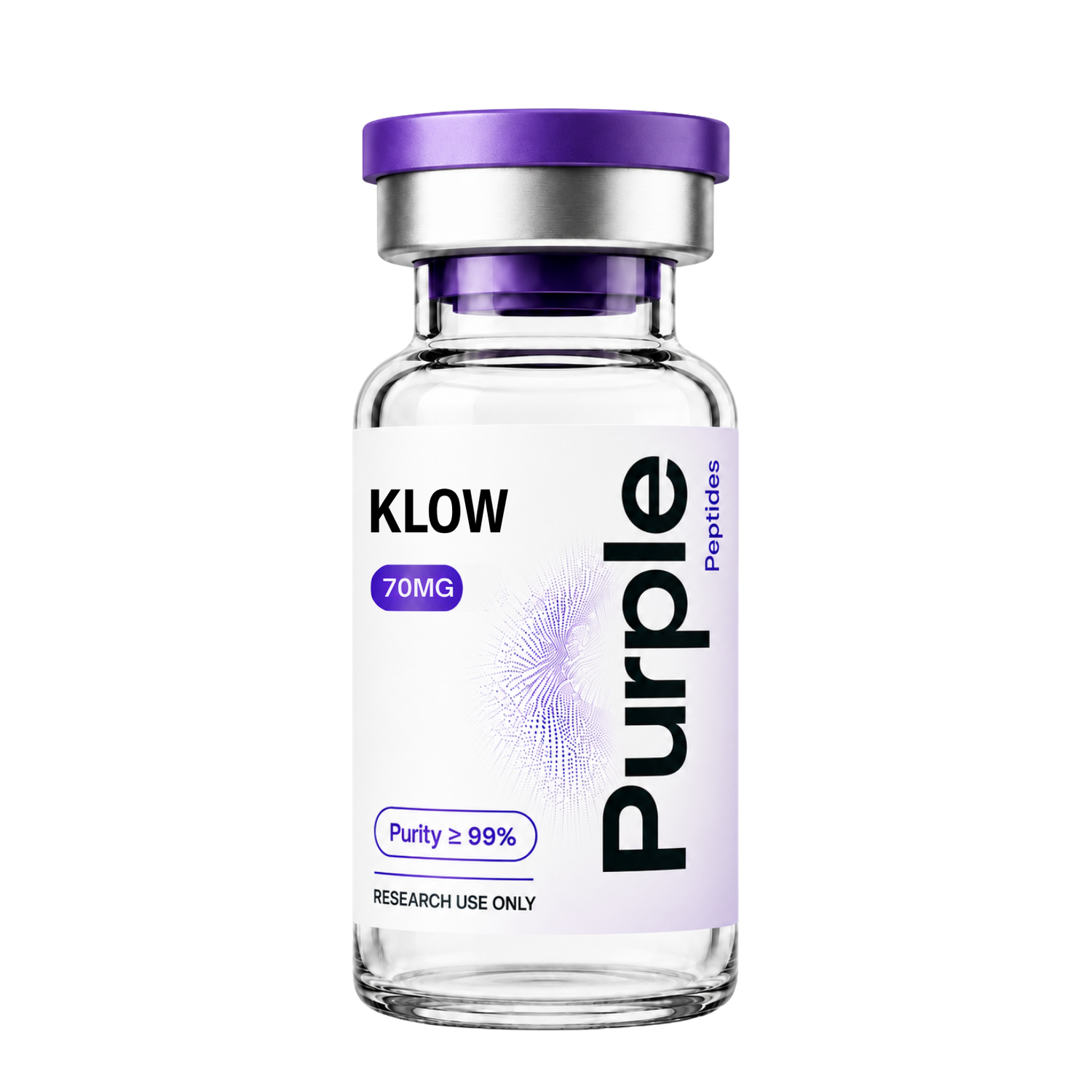
KLOW
What Is KLOW™?
KLOW™ is a multi-peptide research formulation composed of GHK-Cu, BPC-157, TB-500, and KPV. It is studied in controlled laboratory settings for research involving cellular recovery pathways, inflammatory-response signaling, extracellular matrix communication, tissue-remodeling models, angiogenic signaling, epithelial integrity, and peptide-driven repair mechanisms.
Rather than focusing on one isolated biological pathway, KLOW™ brings together peptides studied across complementary domains of regenerative biology, connective-tissue signaling, vascular response, immune pathway modulation, and epithelial barrier research.
Research applications commonly focus on post-stress tissue models, extracellular matrix dynamics, angiogenic signaling, cellular migration, inflammatory-response regulation, collagen communication, and epithelial tissue integrity.
Because of this multi-pathway research profile, KLOW™ remains a compound blend of interest in laboratory models focused on repair signaling, inflammatory balance, tissue resilience, and coordinated peptide communication.
KLOW™ Blend Profile
Primary Research Focus: Tissue-remodeling pathways, collagen signaling, angiogenesis, epithelial integrity, cellular migration, immune signaling, and connective-tissue research.
Certificate of Analysis
Third-party testing documentation available for purity and analytical verification.
KLOW™ Blend Overview
The KLOW™ Blend combines GHK-Cu, BPC-157, TB-500, and KPV into one coordinated research formulation designed for studying cellular repair signaling, inflammatory-response pathways, extracellular matrix activity, and tissue-level remodeling models.
Across laboratory and preclinical research, the individual peptides included in this blend have been investigated for their relationship with:
- Peptide-driven cellular recovery pathways
- Inflammatory and immune signaling modulation
- Angiogenic and vascular-response models
- Connective-tissue and collagen research
- Extracellular matrix remodeling
- Epithelial integrity and barrier-function models
- Cellular migration and tissue remodeling
- Structural resilience and repair-related signaling
Together, these compounds create a broad research platform for exploring regenerative signaling, vascular biology, immune-response pathways, epithelial communication, and connective-tissue dynamics.
History and Development
KLOW™ is derived from several decades of peptide research across regenerative biology, connective-tissue science, melanocortin biology, and cellular repair models.
GHK-Cu was first identified in human plasma and later studied for its relationship with copper transport, collagen regulation, extracellular matrix remodeling, fibroblast activity, gene-expression modulation, and tissue-response models.
BPC-157 is a synthetic pentadecapeptide studied in preclinical models for its relationship with tissue integrity, angiogenic signaling, nitric-oxide pathway interaction, connective-tissue response, inflammatory-response pathways, and cytoprotective signaling.
TB-500 is commonly discussed as a thymosin beta-4-related synthetic peptide fragment studied for actin regulation, cellular migration, cytoskeletal remodeling, angiogenesis, and tissue-remodeling models.
KPV is a tripeptide sequence derived from the C-terminal region of alpha-melanocyte-stimulating hormone. It is studied for its relationship with inflammatory-response signaling, epithelial tissue models, immune pathway communication, and barrier-function research.
KLOW™ Molecular Information
KLOW™ is a multi-compound formulation, so it should not be treated as a single molecule with one molecular formula or one molecular weight. Molecular information is best listed by individual component.
Common Name: Copper Tripeptide-1
Sequence: Gly-His-Lys copper complex
Peptide Type: Copper-binding tripeptide complex
Research Focus: Collagen regulation, fibroblast activity, extracellular matrix remodeling, angiogenic signaling, and gene-expression research
Note: Molecular weight and formula may vary depending on salt form, copper coordination, and database listing.
CAS Number: 137525-51-0
Molecular Formula: C₆₂H₉₈N₁₆O₂₂
Molecular Weight: 1419.5 g/mol
PubChem CID: 9941957
Research Focus: Tissue-integrity signaling, angiogenesis, nitric-oxide pathway interaction, connective-tissue models, and inflammatory-response research
Common Research Description: Synthetic thymosin beta-4-related peptide fragment
Common Fragment Sequence: Ac-LKKTETQ
Molecular Formula: C₃₈H₆₈N₁₀O₁₄
Molecular Weight: 889.0 g/mol
PubChem CID: 62707662
Research Focus: Actin regulation, cellular migration, cytoskeletal remodeling, angiogenic signaling, and tissue-remodeling models
Note: TB-500 is often confused with full-length thymosin beta-4. Product documentation should match the specific compound shown on the COA.
Full Sequence: Lys-Pro-Val
Peptide Type: C-terminal α-MSH tripeptide fragment
CAS Number: 67727-97-3
Molecular Formula: C₁₆H₃₀N₄O₄
Molecular Weight: 342.43 g/mol
PubChem CID: 125672
Research Focus: Inflammatory-response signaling, epithelial barrier research, immune pathway modulation, and melanocortin-related pathway research
Research Domains Addressed
Cellular Recovery Pathways
KLOW™ includes peptides studied for cellular migration, tissue-response signaling, cytoskeletal remodeling, fibroblast activity, and structural repair-related biological models.
Inflammatory-Response Signaling
KPV and BPC-157 are frequently discussed in research involving inflammatory-response pathways, immune communication, epithelial models, and tissue-stress signaling.
Extracellular Matrix & Collagen Communication
GHK-Cu is studied for its relationship with collagen regulation, elastin signaling, glycosaminoglycan synthesis, fibroblast activity, and extracellular matrix remodeling.
Angiogenic & Vascular Signaling
BPC-157, TB-500, and GHK-Cu have been studied in models involving angiogenic signaling, endothelial response, vascular remodeling, and tissue-repair-associated communication.
Epithelial Integrity & Barrier Models
KPV is studied in epithelial and mucosal research models for its relationship with barrier integrity, immune pathway interaction, and inflammatory-response signaling.
Research Findings
The KLOW™ Blend brings together peptides that have been studied across structural, vascular, dermatological, epithelial, and systemic research models.
Published research involving the individual components highlights peptide activity related to:
- Collagen formation and extracellular matrix organization
- Cellular migration and cytoskeletal remodeling
- Angiogenic signaling and vascular-response pathways
- Fibroblast activity and tissue-remodeling models
- Epithelial integrity and barrier-function research
- Inflammatory-response pathway modulation
- Connective-tissue communication
- Repair-related cellular signaling
The blend is intended to provide researchers with a coordinated platform for studying how multiple peptide pathways may interact across repair, resilience, immune signaling, and tissue-remodeling models.
Key Areas of Investigation
- Structural Research: Collagen signaling, connective-tissue dynamics, extracellular matrix organization, and structural remodeling.
- Vascular Research: Angiogenesis, endothelial response, nitric-oxide pathway interaction, vascular remodeling, and tissue-response signaling.
- Dermatological Research: Skin biology, fibroblast activity, collagen turnover, epithelial models, and wound-response research.
- Cellular Research: Cellular migration, actin regulation, cytoskeletal remodeling, gene-expression modulation, and cellular repair signaling.
- Immune & Inflammatory Research: KPV-related inflammatory-response signaling, epithelial immune communication, and immune pathway modulation.
Mechanism-Based Research Interest
KLOW™ is studied because it brings together several important biological research pathways, including:
- Collagen and extracellular matrix regulation
- Fibroblast activity and tissue-remodeling models
- Cellular migration and actin remodeling
- Angiogenic signaling and vascular-response pathways
- Inflammatory-response modulation
- Epithelial barrier-function research
- Copper-dependent cellular signaling
- Nitric-oxide pathway interaction
- Melanocortin-related immune signaling
- Repair-related peptide communication
This makes KLOW™ a useful investigational blend for studying regenerative biology, immune signaling, epithelial integrity, connective-tissue response, and tissue-remodeling mechanisms in controlled laboratory settings.
Research Applications
KLOW™ may be useful in controlled research models focused on:
- Cellular repair signaling
- Tissue-remodeling pathway studies
- Extracellular matrix research
- Collagen and fibroblast activity models
- Angiogenesis and vascular-response research
- Epithelial integrity and barrier-function models
- Inflammatory-response pathway studies
- Immune signaling research
- Connective-tissue response models
- Regenerative biology research
What Researchers May Document
In controlled research environments, researchers may document broad patterns related to:
- Cellular migration markers
- Collagen and matrix-related observations
- Fibroblast activity models
- Angiogenic signaling notes
- Inflammatory-response pathway activity
- Epithelial barrier-response observations
- Tissue-remodeling research patterns
- Compound handling and reconstitution observations
- Protocol consistency
- Blend-response observations across multiple pathways
The purpose of KLOW™ research is not to promise outcomes. The purpose is to provide a structured formulation for studying coordinated peptide signaling across recovery, inflammation, epithelial integrity, and tissue-remodeling research domains.
The Purple Standard™
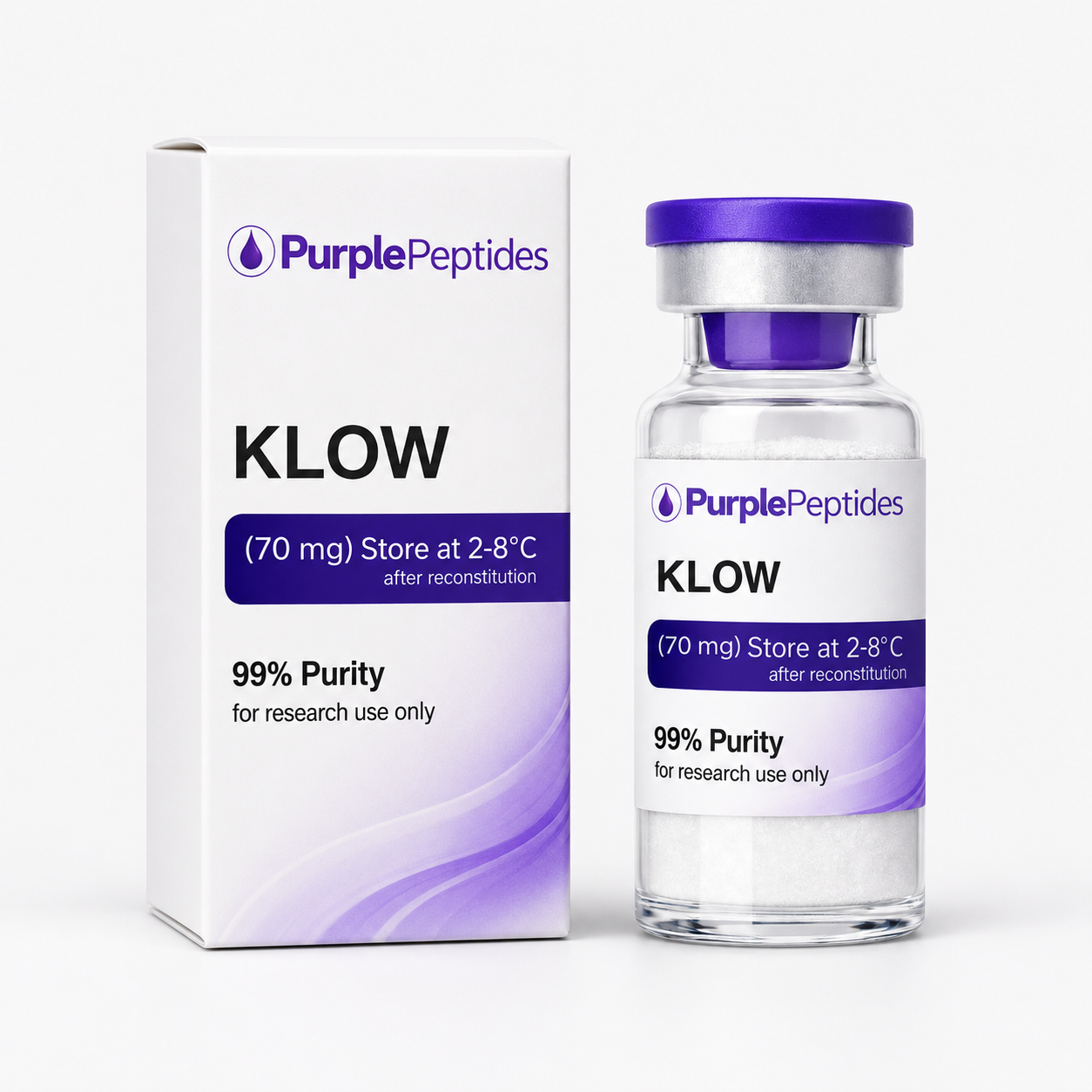
Every vial supplied by Purple Peptides is handled according to the Purple Standard™. This includes third-party testing, purity verification, controlled storage practices, batch tracking, and internal rejection of any lot that does not meet required quality thresholds.
The Purple Standard™ exists to support consistency, documentation, and research confidence across every Purple Peptides product.
Investigational Research Context
KLOW™ should be considered an investigational research blend. Available scientific literature primarily examines the included peptides individually or in related research contexts. Findings should not be interpreted as approved therapeutic, clinical, veterinary, cosmetic, dermatological, performance, recovery, or human-use outcomes for this blend.
This product is supplied for laboratory research only and is not intended for human consumption, clinical use, veterinary use, diagnostic use, cosmetic use, supplementation, or self-experimentation.
Scientific References
View References
GHK-Cu Research
- Pickart L. et al. (2015) — GHK peptide as a natural modulator of multiple cellular pathways in skin regeneration.
- Pickart L. & Margolina A. (2018) — Regenerative and protective actions of the GHK-Cu peptide in the light of new gene data.
- Wegrowski Y. et al. (1992) — Stimulation of sulfated glycosaminoglycan synthesis by the tripeptide-copper complex glycyl-L-histidyl-L-lysine-Cu²⁺.
- Siméon A. et al. (2000) — Expression of glycosaminoglycans and small proteoglycans in wounds: modulation by the tripeptide-copper complex GHK-Cu.
BPC-157 Research
- Chang C-H. et al. (2011) — The promoting effect of pentadecapeptide BPC 157 on tendon healing involves tendon outgrowth, cell survival, and cell migration.
- Huang T. et al. (2015) — Body protective compound-157 enhances wound-healing-related models and promotes proliferation, migration, and angiogenesis in vitro.
- Seiwerth S. et al. (2021) — Stable gastric pentadecapeptide BPC 157 and wound healing.
TB-500 / Thymosin Beta-4 Research
- Esposito S. et al. (2012) — Synthesis and characterization of the N-terminal acetylated 17–23 fragment of thymosin beta-4 identified in TB-500.
- Malinda K.M. et al. (1999) — Thymosin beta-4 accelerates wound healing.
- Philp D. et al. (2003) — The actin-binding site on thymosin beta-4 promotes angiogenesis.
- Goldstein A.L. & Hannappel E. (2012) — Thymosin beta-4: a multi-functional regenerative peptide.
KPV Research
- Dalmasso G. et al. (2008) — PepT1-mediated tripeptide KPV uptake reduces intestinal inflammation.
- Brzoska T. et al. (2008) — Alpha-melanocyte-stimulating hormone and related tripeptides: biochemistry, anti-inflammatory and protective effects in vitro and in vivo.
- Kannengiesser K. et al. (2008) — KPV and melanocortin-related tripeptide research in intestinal inflammation models.
- Moss J. et al. (2020) — Anti-inflammatory activity of KPV in experimental inflammatory-response models.
Need Help?
If you have questions regarding certificates of analysis, product documentation, or general research inquiries, our support team is here to assist.