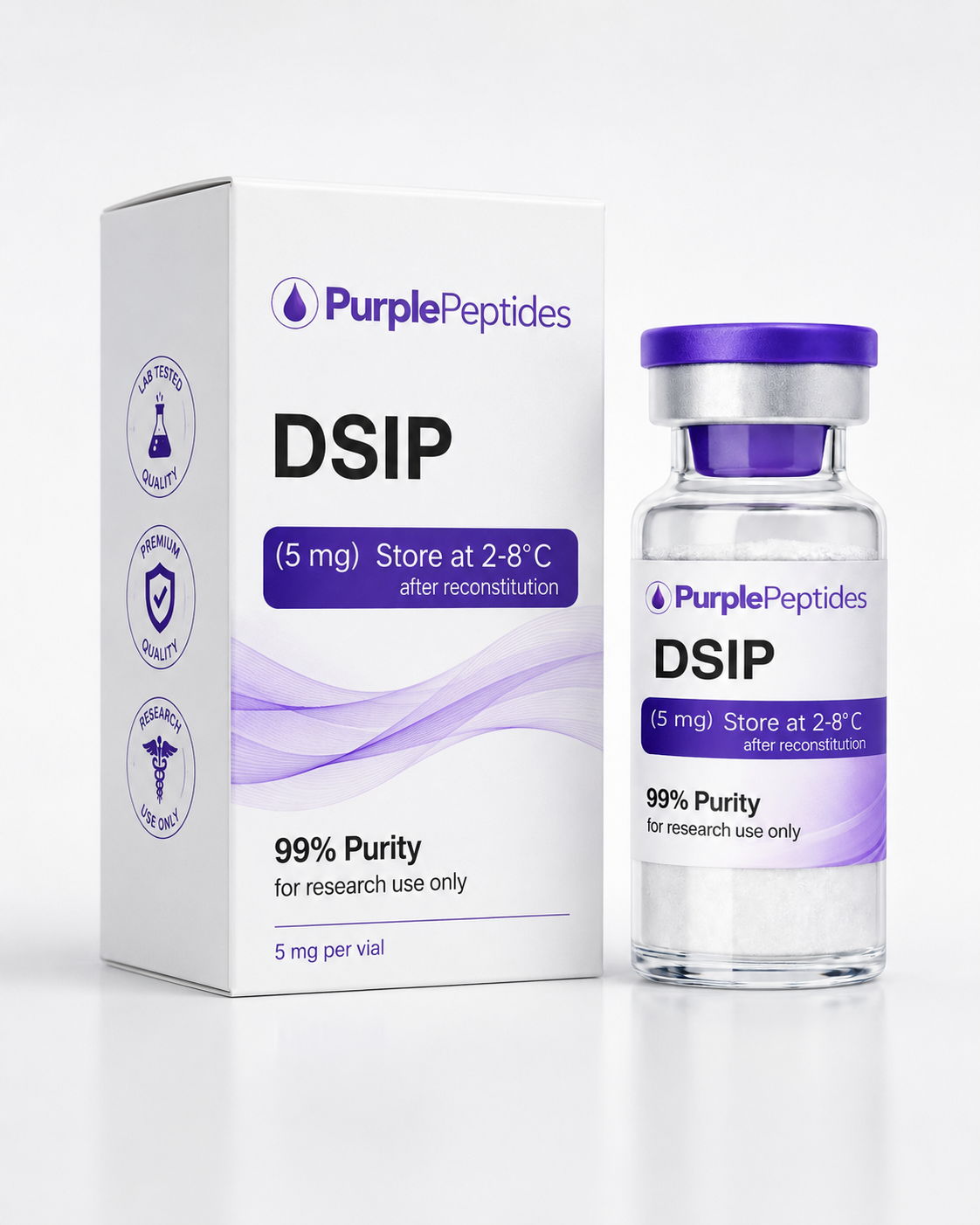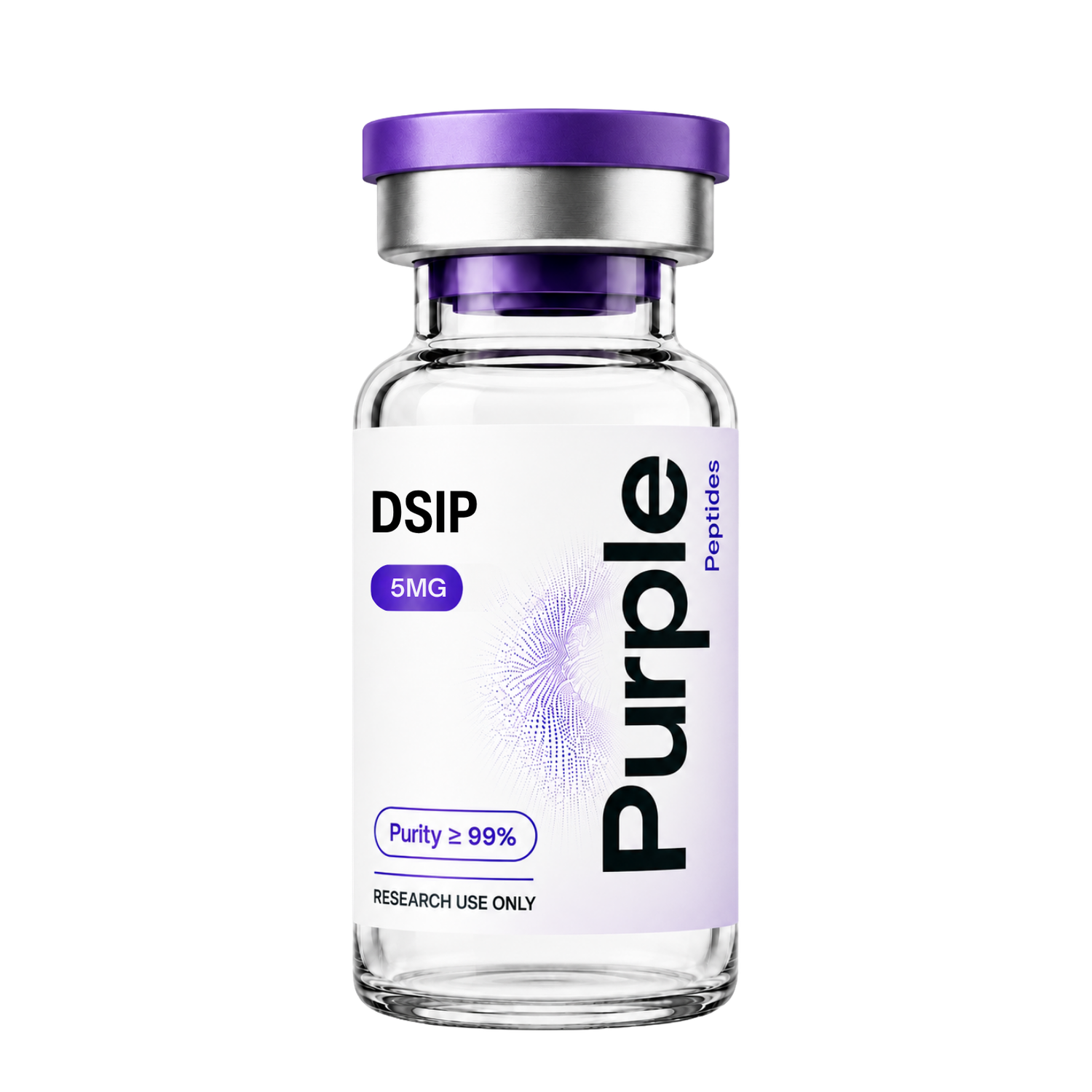
DSIP
What Is DSIP?
DSIP, also known as Delta Sleep–Inducing Peptide, is a nonapeptide studied in laboratory and preclinical research for its connection to sleep-related signaling, delta-wave activity, circadian rhythm biology, neuroendocrine regulation, and central nervous system communication.
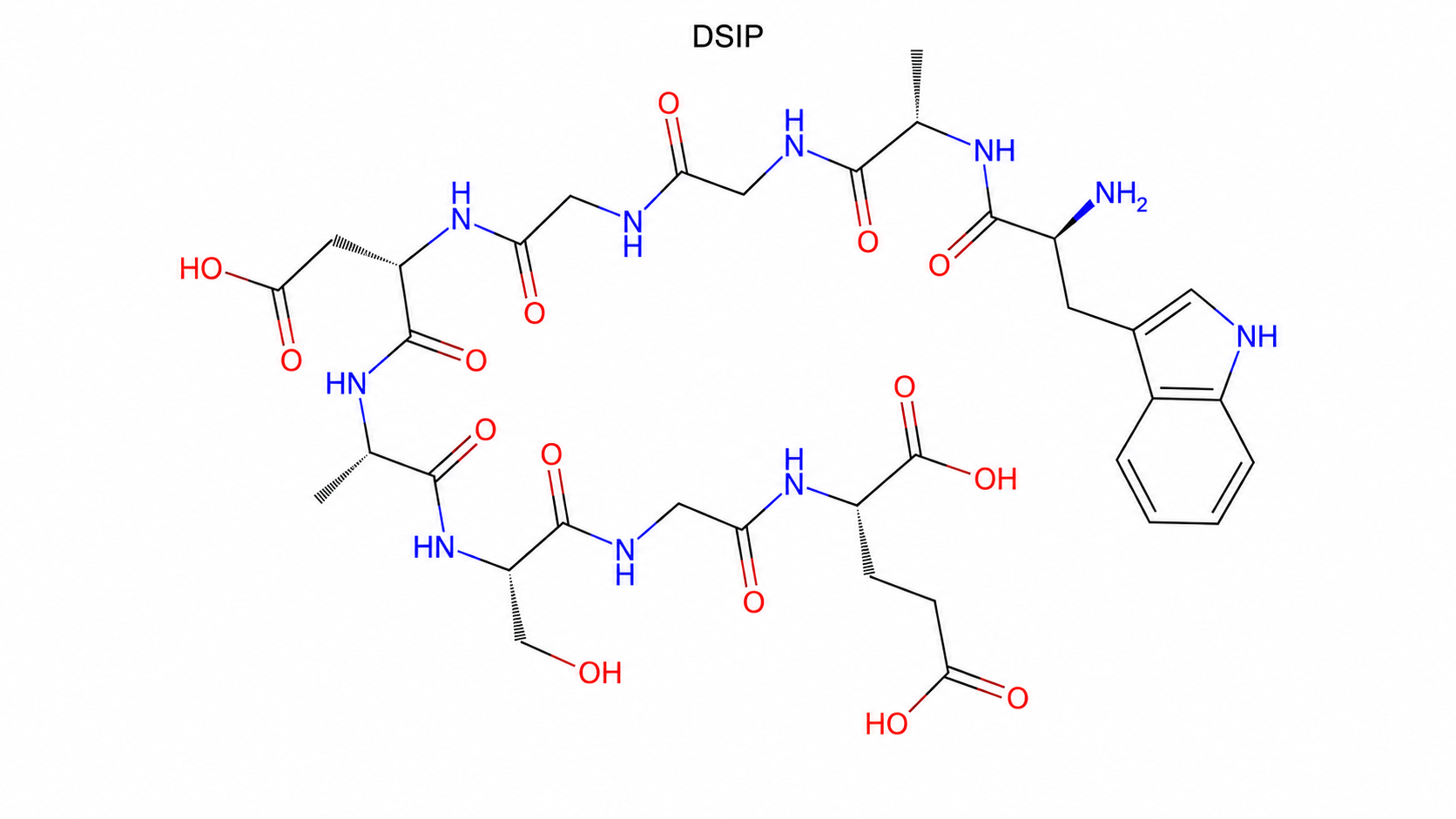
DSIP is composed of nine amino acids and was originally identified during research into sleep-promoting factors and brain peptide signaling. Since its discovery, DSIP has been investigated in models related to sleep architecture, stress-response pathways, hormonal regulation, adaptive neurochemical signaling, and nervous-system balance.
Because of its association with sleep physiology and peptide-mediated CNS activity, DSIP remains an important research compound for studying how neuropeptides may influence sleep-related and stress-related biological systems.
Certificate of Analysis
Third-party testing documentation available for purity and analytical verification.
DSIP Research Overview
Delta Sleep–Inducing Peptide is most often discussed in research involving sleep biology, neurochemical signaling, and neuroendocrine regulation.
Early studies associated DSIP with slow-wave and delta-wave sleep activity. Later research expanded into broader areas, including stress-response signaling, hypothalamic activity, circadian rhythm coordination, mitochondrial-response models, and hormone-related regulation.
In laboratory settings, DSIP is studied as a peptide research tool for understanding how the central nervous system may communicate with endocrine and adaptive stress-response pathways.
History and Development
DSIP was first identified in the 1970s during investigations into sleep-regulating substances. Researchers isolated a peptide sequence associated with sleep-related EEG activity and named it Delta Sleep–Inducing Peptide because of its observed relationship with delta-wave sleep patterns.
Following its discovery, DSIP became a recurring subject in sleep and neuroendocrine research. Studies examined its possible relationship with sleep modulation, stress adaptation, hypothalamic-pituitary signaling, autonomic regulation, and peptide-mediated communication between the brain and body.
Although DSIP has been studied for decades, researchers continue to describe it as a complex and not fully resolved peptide system. This makes it especially relevant for controlled laboratory research focused on sleep signaling, CNS regulation, and neuroendocrine interaction.
DSIP Profile
DSIP Structure
Research Findings
DSIP has been examined across neurological, endocrine, and systemic research models. The main areas of interest include sleep-related signaling, stress adaptation, CNS regulation, and hormone-related pathways.
Key Areas of Investigation
- Neurological Research: Sleep signaling, delta-wave activity, EEG-related models, CNS communication, and neurochemical regulation.
- Circadian Research: Sleep-wake rhythm models, biological timing, adaptive rhythm coordination, and rest-cycle signaling.
- Endocrine Research: Hypothalamic-pituitary communication, stress-hormone regulation, neuroendocrine balance, and peptide-hormone interaction.
- Stress-Response Research: Adaptive stress signaling, nervous-system resilience models, mitochondrial-response research, and systemic stress adaptation.
- Systemic Research: Autonomic balance, metabolic response, recovery-related signaling, and whole-body regulatory models.
Mechanism-Based Research Interest
DSIP is studied because it sits at the intersection of sleep biology, peptide signaling, and neuroendocrine regulation.
Researchers investigate DSIP for its potential relationship with:
- Slow-wave and delta-wave sleep activity
- Central nervous system peptide signaling
- Stress-response modulation
- Hypothalamic and neuroendocrine communication
- Circadian rhythm coordination
- Adaptive recovery and biological resilience models
This makes DSIP a useful research compound for studying how sleep-related peptide signaling may interact with broader stress and endocrine pathways.
Investigational Research Context
DSIP should be considered an investigational research compound. Available studies include laboratory, preclinical, and limited clinical-context research. Findings should not be interpreted as approved therapeutic outcomes.
This product is supplied for laboratory research only and is not intended for human consumption, clinical use, veterinary use, or self-experimentation.
Scientific References
View References
- Schoenenberger G.A. et al. (1978) — The delta EEG sleep-inducing peptide: amino acid sequence and activity.
- Monnier M. et al. (1977) — The delta sleep-inducing peptide: comparative properties of the original and synthetic nonapeptide.
- Graf M.V. & Kastin A.J. (1984) — Delta sleep-inducing peptide: a review.
- Graf M.V. & Kastin A.J. (1986) — Delta sleep-inducing peptide: an update.
- Bes F. et al. (1992) — Effects of delta sleep-inducing peptide on sleep in chronic insomnia.
- Kovalzon V.M. & Strekalova T.V. (2006) — Delta sleep-inducing peptide: a still unresolved riddle.
- Khvatova E.M. et al. (2003) — DSIP and respiration activity in rat brain mitochondria under experimental hypoxia.
- Tukhovskaya E.A. et al. (2021) — Delta Sleep-Inducing Peptide recovers motor function in preclinical nervous-system recovery models.
Need Help?