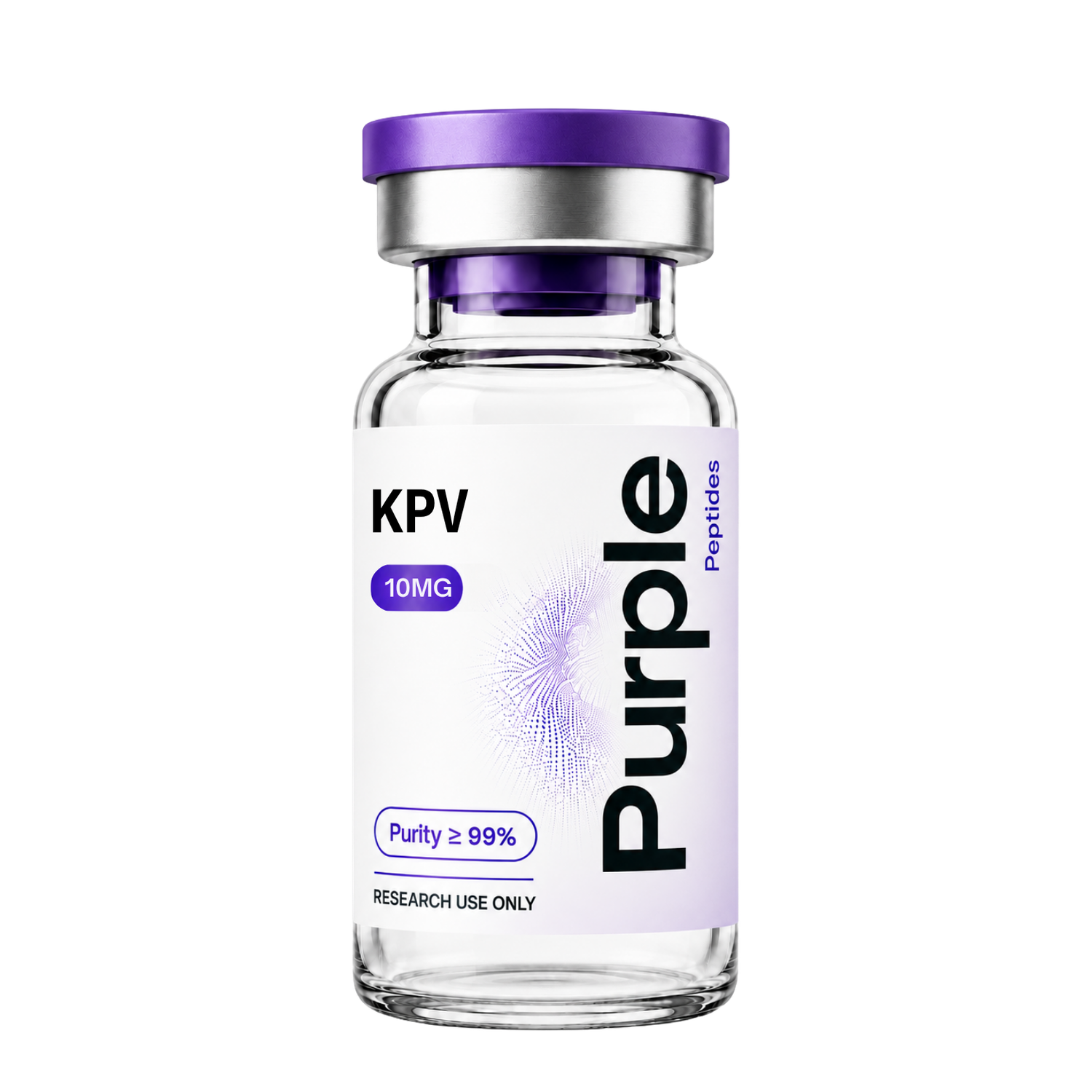
KPV
What Is KPV?
KPV, short for Lys-Pro-Val, is a tripeptide fragment derived from the C-terminal region of alpha-melanocyte-stimulating hormone, also known as α-MSH. It is studied in laboratory and preclinical research settings for its relationship with inflammatory-response signaling, immune pathway modulation, epithelial integrity, mucosal barrier function, and cytokine-related pathway activity.
KPV is one of the smallest biologically active fragments associated with α-MSH research. Unlike full-length α-MSH, KPV is studied as a short tripeptide sequence with a focused research profile involving immune communication, inflammatory pathway regulation, epithelial response models, and barrier-tissue biology.
Research involving KPV has explored its relationship with NF-κB signaling, cytokine expression, macrophage activity, intestinal epithelial models, mucosal barrier integrity, dermatological research models, and inflammatory-response pathways.
Because of its compact structure and immune-signaling research profile, KPV remains a compound of interest in gastrointestinal research, epithelial barrier studies, dermatological research, inflammatory-response models, and melanocortin-related peptide biology.
KPV Profile
Primary Research Focus: Inflammatory-response signaling, immune modulation, epithelial integrity, mucosal barrier function, cytokine pathway interaction, and NF-κB-related research.
Certificate of Analysis
Third-party testing documentation available for purity and analytical verification.
KPV Research Overview
KPV is commonly discussed in research involving immune signaling, inflammatory-response regulation, epithelial protection pathways, mucosal barrier function, cytokine activity, and macrophage-related signaling.
Laboratory and preclinical research involving KPV has examined:
- Inflammatory-response signaling
- Cytokine pathway interaction
- NF-κB-related pathway activity
- Macrophage signaling models
- Epithelial barrier integrity
- Mucosal tissue research
- Gastrointestinal inflammation models
- Dermatological response models
- Immune pathway communication
- Melanocortin-related peptide biology
In controlled research environments, KPV is studied as a peptide tool for understanding how short α-MSH-derived fragments may interact with immune, epithelial, and inflammatory-response pathways.
History and Development
Research on KPV originates from studies of α-MSH and melanocortin peptide biology. Investigators observed that certain short fragments of α-MSH retained biological activity associated with immune and inflammatory-response signaling.
KPV was identified as a minimal C-terminal tripeptide fragment capable of influencing inflammatory-response pathways in experimental models. This made it an important research compound for studying how small peptide fragments may regulate immune communication without requiring the full α-MSH sequence.
Over time, KPV research expanded into gastrointestinal models, epithelial barrier studies, macrophage signaling, dermatological research, cytokine pathway investigation, and mucosal immune-response models.
KPV Structure
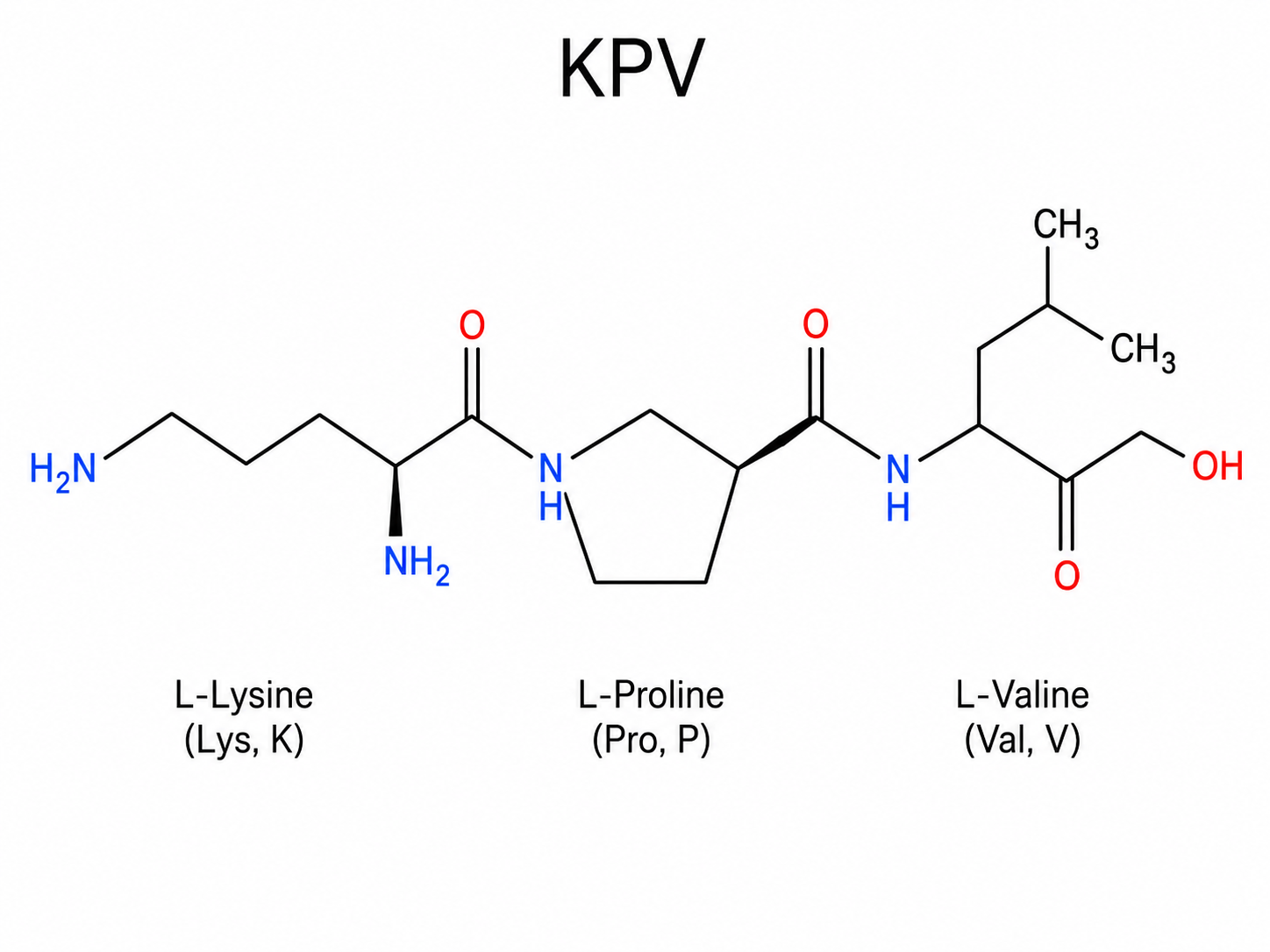
Primary Research Focus: Inflammatory-response signaling, cytokine pathway regulation, epithelial integrity, mucosal barrier function, and immune modulation research.
Note: Some modified KPV derivatives, such as acetylated or amidated forms, may have different molecular formulas and molecular weights. Product documentation and COA data should be used to confirm the exact supplied form.
Research Findings
KPV has been studied across immunological, gastrointestinal, dermatological, epithelial, and systemic research models. The main research interest centers on its relationship with inflammatory-response regulation, cytokine pathway interaction, epithelial integrity, and immune communication.
Published investigations have examined KPV in relation to NF-κB signaling, MAP kinase pathway activity, pro-inflammatory cytokine expression, intestinal epithelial cell models, immune-cell signaling, and mucosal barrier function.
Key Areas of Investigation
- Immune Research: Cytokine signaling, macrophage activity, immune pathway communication, and inflammatory-response modulation.
- Gastrointestinal Research: Intestinal epithelial integrity, mucosal barrier models, PepT1-mediated uptake research, and colitis-related preclinical models.
- Dermatological Research: Skin inflammation models, epithelial tissue response, barrier-tissue biology, and localized inflammatory-response pathways.
- Cellular Research: NF-κB-related signaling, MAP kinase pathway activity, cellular immune response, and peptide uptake mechanisms.
- Systemic Research: Immune balance models, inflammatory-response communication, stress-response pathways, and melanocortin-related peptide biology.
Mechanism-Based Research Interest
KPV is studied because it connects several important immune and epithelial research pathways, including:
- Inflammatory-response signaling
- Cytokine pathway interaction
- NF-κB-related pathway activity
- MAP kinase signaling models
- Macrophage activity
- Epithelial barrier integrity
- Mucosal immune communication
- PepT1-mediated peptide uptake
- Dermatological response models
- Melanocortin-related immune regulation
This makes KPV a useful investigational peptide for studying immune regulation, inflammatory-response signaling, gastrointestinal barrier biology, epithelial tissue models, and peptide-mediated cellular communication in controlled laboratory settings.
Research Applications
KPV may be useful in controlled research models focused on:
- Inflammatory-response pathway studies
- Immune signaling research
- Cytokine pathway investigation
- NF-κB-related pathway models
- Macrophage activity research
- Gastrointestinal epithelial studies
- Mucosal barrier function models
- Dermatological inflammatory-response research
- Barrier-tissue biology
- Melanocortin peptide fragment research
What Researchers May Document
In controlled research environments, researchers may document broad patterns related to:
- Cytokine pathway activity
- NF-κB-related signaling observations
- Macrophage response models
- Epithelial integrity markers
- Mucosal barrier observations
- Inflammatory-response pathway notes
- Dermatological response models
- Peptide uptake research
- Compound handling and reconstitution observations
- Protocol consistency
The purpose of KPV research is not to promise outcomes. The purpose is to provide a structured compound for studying immune signaling, epithelial integrity, inflammatory-response regulation, and barrier-tissue biology.
The Purple Standard™
Every vial supplied by Purple Peptides is handled according to the Purple Standard™. This includes third-party testing, purity verification, controlled storage practices, batch tracking, and internal rejection of any lot that does not meet required quality thresholds.
The Purple Standard™ exists to support consistency, documentation, and research confidence across every Purple Peptides product.
Investigational Research Context
KPV should be considered an investigational research compound. Available research includes laboratory, preclinical, and analytical studies. Findings should not be interpreted as approved therapeutic, clinical, veterinary, dermatological, gastrointestinal, immune-support, cosmetic, or human-use outcomes.
This product is supplied for laboratory research only and is not intended for human consumption, clinical use, veterinary use, diagnostic use, cosmetic use, supplementation, or self-experimentation.
Scientific References
View References
- Hiltz M.E. & Lipton J.M. (1989) — Antiinflammatory activity of a COOH-terminal fragment of the neuropeptide alpha-MSH.
- Dalmasso G. et al. (2008) — PepT1-mediated tripeptide KPV uptake reduces intestinal inflammation.
- Catania A. et al. (2004) — Targeting melanocortin receptors as a novel strategy to control inflammation.
- Brzoska T. et al. (2008) — Alpha-melanocyte-stimulating hormone and related tripeptides: biochemistry, anti-inflammatory and protective effects.
- Getting S.J. et al. (2003) — Dissection of the anti-inflammatory effect of the core and C-terminal peptides of alpha-MSH.
- Kannengiesser K. et al. (2008) — Melanocortin-derived tripeptide KPV research in intestinal inflammation models.
- Singh M. et al. (2014) — KPV as an emerging anti-inflammatory and antimicrobial peptide.
- PubChem — KPV / MSH (11–13) compound profile, molecular formula, molecular weight, synonyms, and compound identifier.
Need Help?
If you have questions regarding certificates of analysis, product documentation, or general research inquiries, our support team is here to assist.