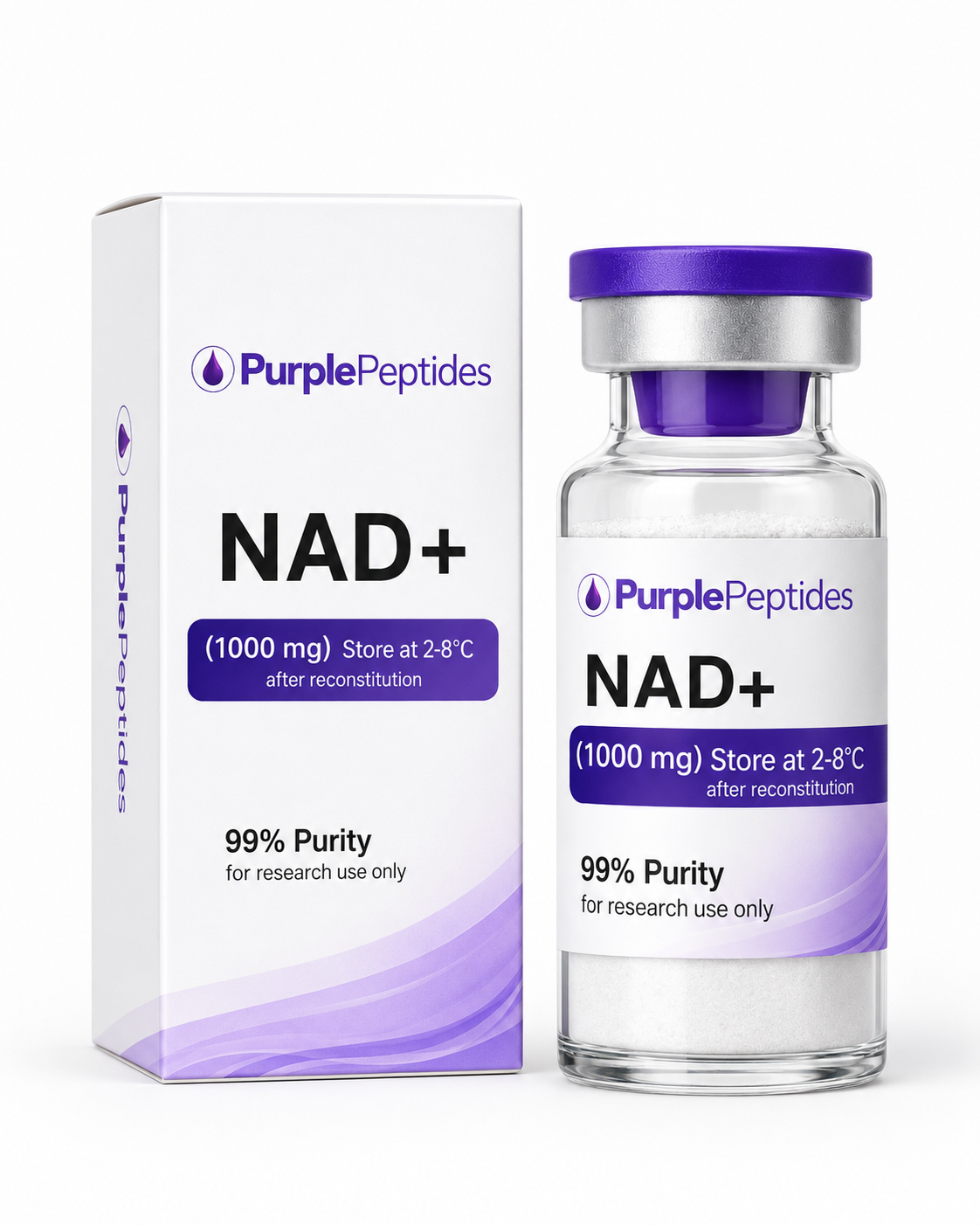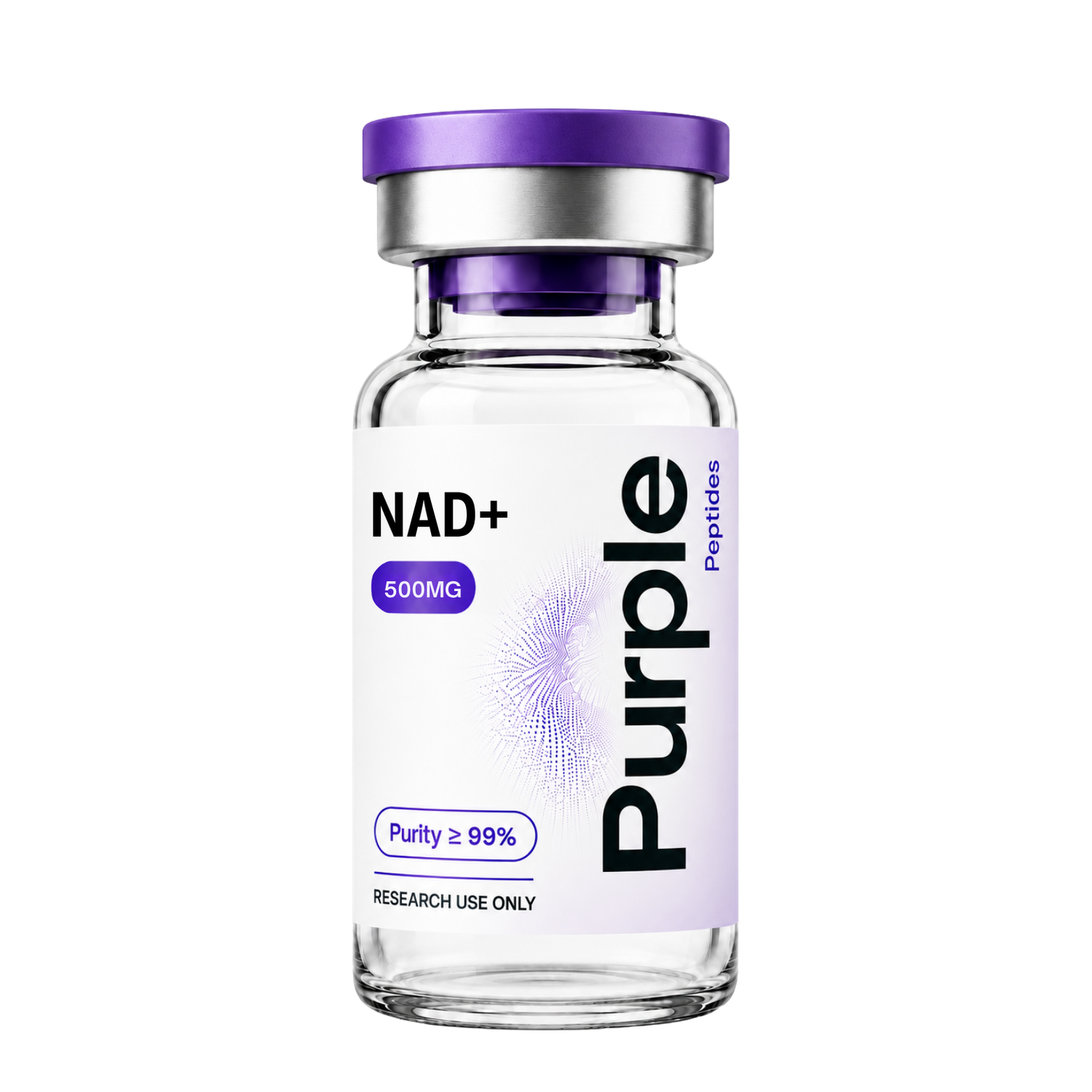
NAD+
What Is NAD+?
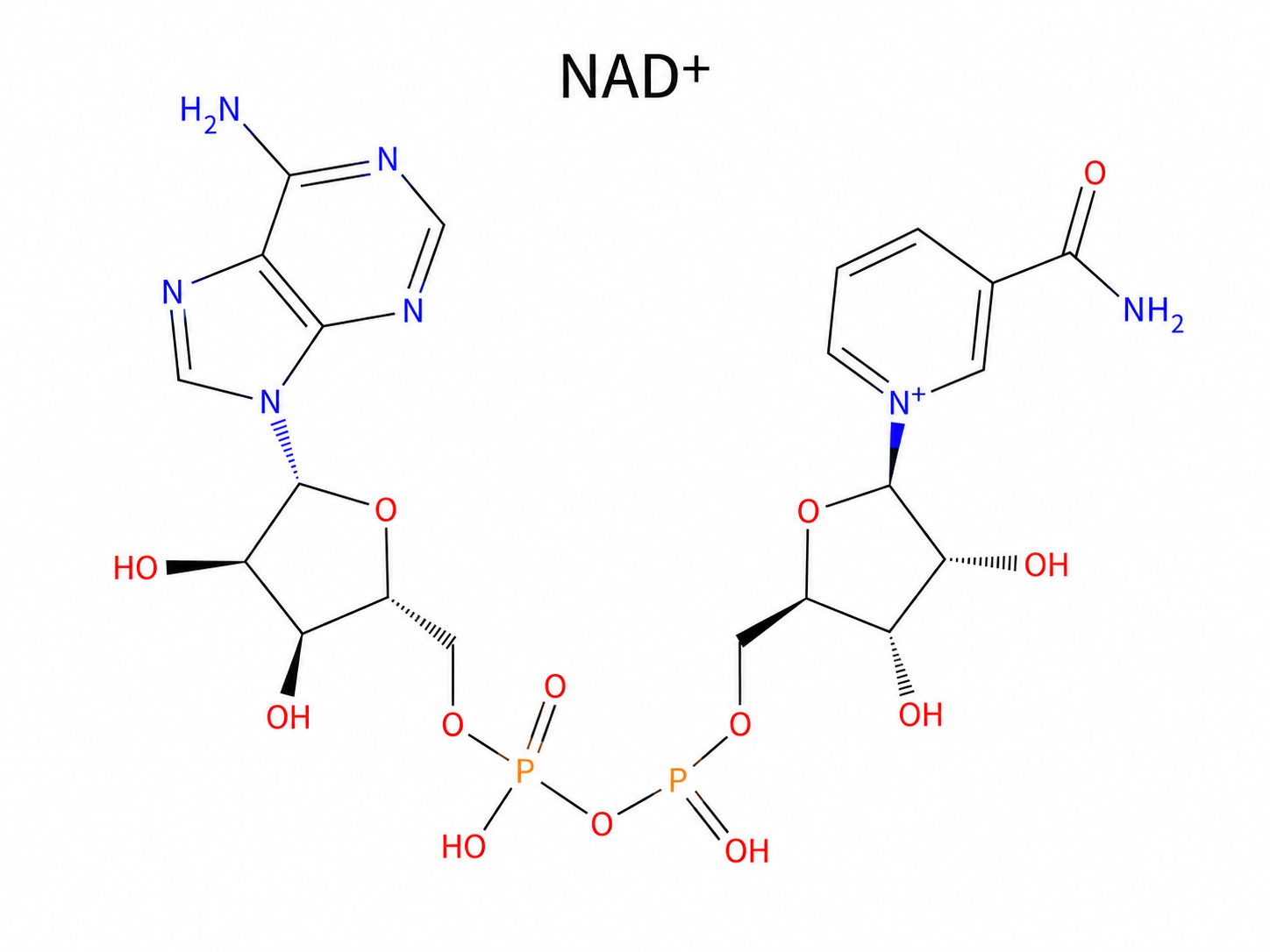
NAD+, short for Nicotinamide Adenine Dinucleotide, is a naturally occurring coenzyme found in all living cells. It plays a central role in cellular energy metabolism, redox reactions, mitochondrial function, DNA repair signaling, and cellular stress-response pathways.
NAD+ exists in an oxidized form and works closely with NADH, its reduced form, to help transfer electrons during metabolic reactions. This NAD+/NADH cycling is essential for cellular respiration, ATP production, and overall energy regulation.
In laboratory research, NAD+ is studied for its relationship with mitochondrial efficiency, sirtuin activity, PARP-mediated DNA repair, oxidative-stress response, gene-expression regulation, and aging-associated cellular maintenance.
Because of its central role in metabolism and cellular repair signaling, NAD+ remains a major research compound in studies of longevity biology, cellular resilience, mitochondrial health, and systemic metabolic regulation.
Certificate of Analysis
Third-party testing documentation available for purity and analytical verification.
NAD+ Research Overview
Nicotinamide Adenine Dinucleotide is one of the most important coenzymes in cellular biology. It participates in redox reactions that allow cells to convert nutrients into usable energy and also serves as a required substrate for several signaling enzymes involved in cellular maintenance.
Research has examined NAD+ in models related to:
- Mitochondrial energy production
- Electron transfer and redox balance
- DNA damage response and repair signaling
- Sirtuin activity and cellular aging pathways
- PARP and CD38-related NAD+ consumption
- Oxidative-stress response
- Cellular survival and stress adaptation
- Metabolic flexibility and energy homeostasis
In controlled laboratory models, NAD+ is studied as a key molecule connecting energy metabolism, genomic maintenance, mitochondrial signaling, and cellular resilience.
History and Development
NAD+ was first discovered in the early 1900s during foundational research into yeast fermentation and cellular respiration. Early scientists observed that certain heat-stable factors were required for fermentation, which later led to the identification of NAD+ as a critical coenzyme in biological oxidation-reduction reactions.
As biochemical research advanced, NAD+ became recognized as essential for glycolysis, the citric acid cycle, oxidative phosphorylation, and multiple enzyme-driven metabolic pathways.
Later research expanded NAD+ beyond energy metabolism. Scientists discovered that NAD+ also functions as a substrate for enzymes involved in DNA repair, chromatin regulation, calcium signaling, immune response, and aging-related cellular processes.
Today, NAD+ is widely studied in metabolic research, mitochondrial biology, neurobiology, longevity science, and stress-response models.
NAD+ Profile
NAD+ Structure
Research Findings
NAD+ has been extensively studied across metabolic, mitochondrial, cellular, genomic, neurological, and systemic research models. The main research interest centers on how NAD+ availability influences cellular energy balance and maintenance pathways.
Key Areas of Investigation
- Metabolic Research: Glycolysis, citric acid cycle activity, oxidative phosphorylation, nutrient metabolism, and energy-balance models.
- Mitochondrial Research: Mitochondrial function, ATP production, respiratory-chain activity, mitochondrial stress response, and cellular energy efficiency.
- Genomic Research: DNA damage response, PARP-mediated repair signaling, chromatin regulation, genomic stability, and age-related DNA maintenance models.
- Cellular Research: Sirtuin activity, oxidative-stress response, cellular survival, autophagy-related pathways, and stress-adaptation signaling.
- Systemic Research: Metabolic flexibility, aging biology, inflammatory-response models, neurodegeneration-related research, and cellular resilience.
Mechanism-Based Research Interest
NAD+ is studied because it connects multiple foundational biological pathways, including:
- Redox balance and electron transfer
- ATP production and mitochondrial respiration
- Sirtuin-dependent cellular regulation
- PARP-mediated DNA repair signaling
- CD38-related NAD+ metabolism
- Oxidative-stress response
- Gene-expression and chromatin regulation
- Cellular aging and stress-resilience models
This makes NAD+ a versatile research compound for studying how cells generate energy, repair damage, respond to stress, and maintain biological function over time.
Investigational Research Context
NAD+ should be considered an investigational research compound when supplied for laboratory use. Available research includes biochemical, cellular, animal, and human-context studies, but product-specific findings should not be interpreted as approved therapeutic outcomes.
This product is supplied for laboratory research only and is not intended for human consumption, clinical use, veterinary use, or self-experimentation.
Scientific References
View References
- Cantó C. et al. (2015) — NAD+ metabolism and the control of energy homeostasis.
- Verdin E. (2015) — NAD+ in aging, metabolism, and neurodegeneration.
- Imai S. & Guarente L. (2014) — NAD+ and sirtuins in aging and disease.
- Choi J.E. et al. (2014) — Sirtuins, metabolism, and DNA repair.
- Rajman L. et al. (2018) — Therapeutic potential of NAD+ modulation in aging and disease.
- Covarrubias A.J. et al. (2021) — NAD+ metabolism and its roles in cellular processes during aging.
- Amjad S. et al. (2021) — Role of NAD+ in regulating cellular and metabolic signaling pathways.
- Katsyuba E. et al. (2020) — NAD+ homeostasis in health and disease.
Need Help?