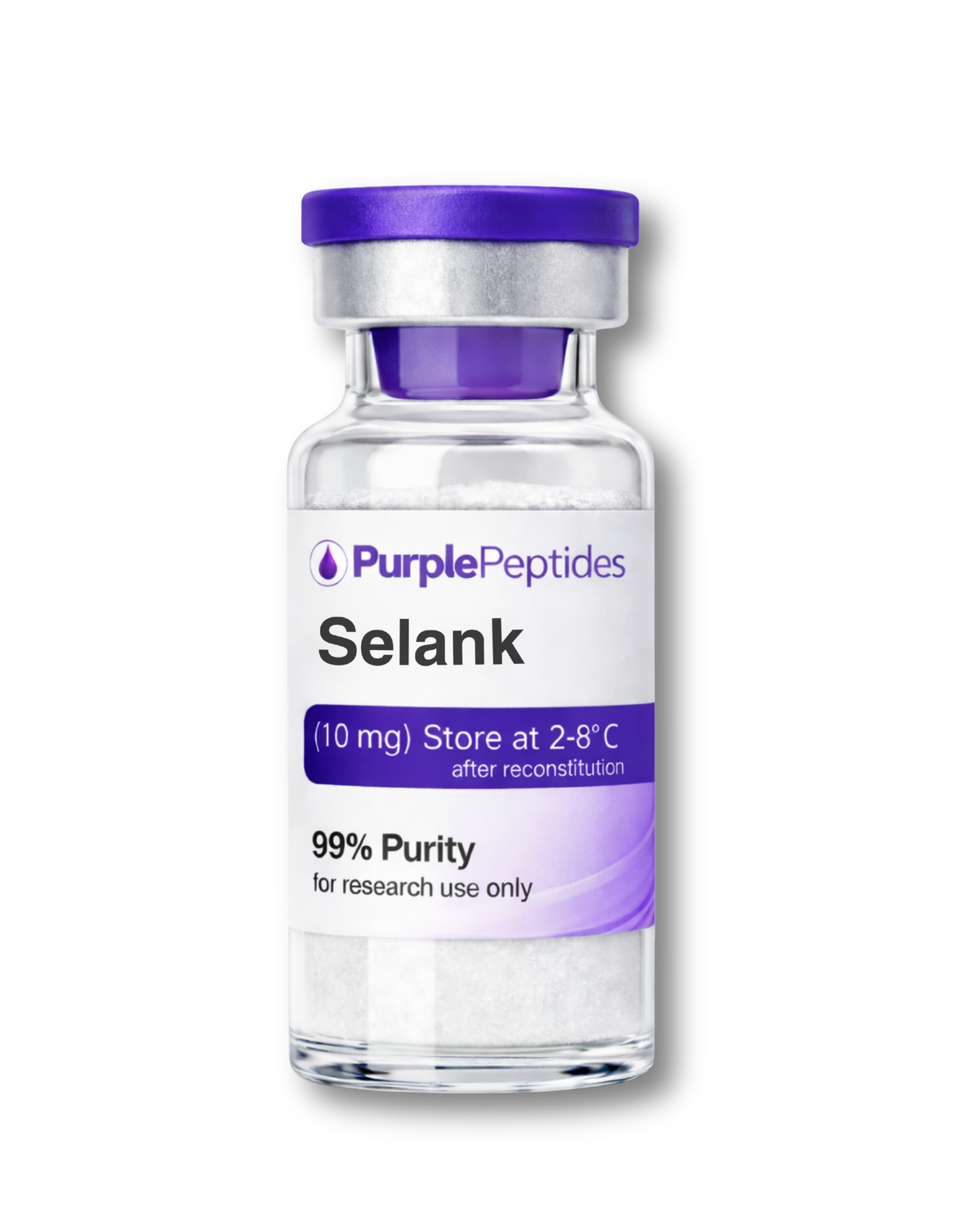
Selank
What Is Selank?
Selank is a synthetic peptide analog of tuftsin, a naturally occurring immunomodulatory fragment of IgG. In research settings, Selank is studied for its involvement in neurological signaling pathways, cognitive processes, and stress-related biomarkers. Investigations commonly focus on its influence over neurotransmitter modulation, neuroplasticity, and inflammatory response regulation in controlled laboratory and preclinical models.
Certificate of Analysis
Third-party tested for 99% purity
Selank Overview
Selank is a synthetic heptapeptide modeled after tuftsin, designed for enhanced stability and activity in experimental settings. It has been examined in preclinical and laboratory models for its relevance to:
- Neurotransmitter regulation, including GABAergic and monoaminergic systems
- Stress-response signaling pathways
- Immune and cytokine balance
Research interest centers on Selank’s ability to interface with neuropeptide signaling and neuroimmune communication, making it a compound of interest in studies of CNS regulation and systemic stress adaptation.
Ashmarin I.P. et al., 1998History and Development
Selank was developed in the 1990s at the Institute of Molecular Genetics of the Russian Academy of Sciences as a synthetic analog of tuftsin. The goal was to improve peptide stability while preserving biological activity relevant to neuroimmune and stress-related research.
Early investigations explored Selank’s immunomodulatory and anxiolytic-like properties in experimental models. Subsequent studies expanded into its effects on neuropeptide signaling, cognitive processes, gene-expression regulation, and immune system interactions.
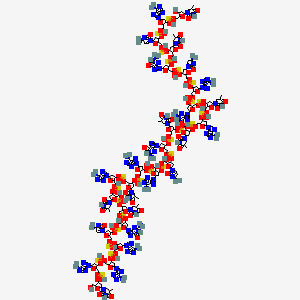
Zozulya A.A. et al., 2008Selank Structure
Research Findings
Selank has been examined across neurological, immune, and systemic research models. Published studies highlight its relevance to neuropeptide signaling, stress-response modulation, and immune regulation, particularly in preclinical environments.
Key Areas of Investigation:
- Neurological: Neurotransmitter modulation, stress signaling, neural pathways
- Immune: Cytokine balance, immune regulation, neuroimmune interaction
- Systemic: Protective signaling, recovery pathways, biological resilience
Collectively, these findings suggest broad experimental utility for Selank across neurological, immune, and systemic domains. By influencing neurotransmitter activity and supporting immune balance, Selank provides a versatile research platform for studying stress biology, neuroimmune regulation, and systemic resilience in laboratory models.
Inozemtsev A.N. et al., 2008