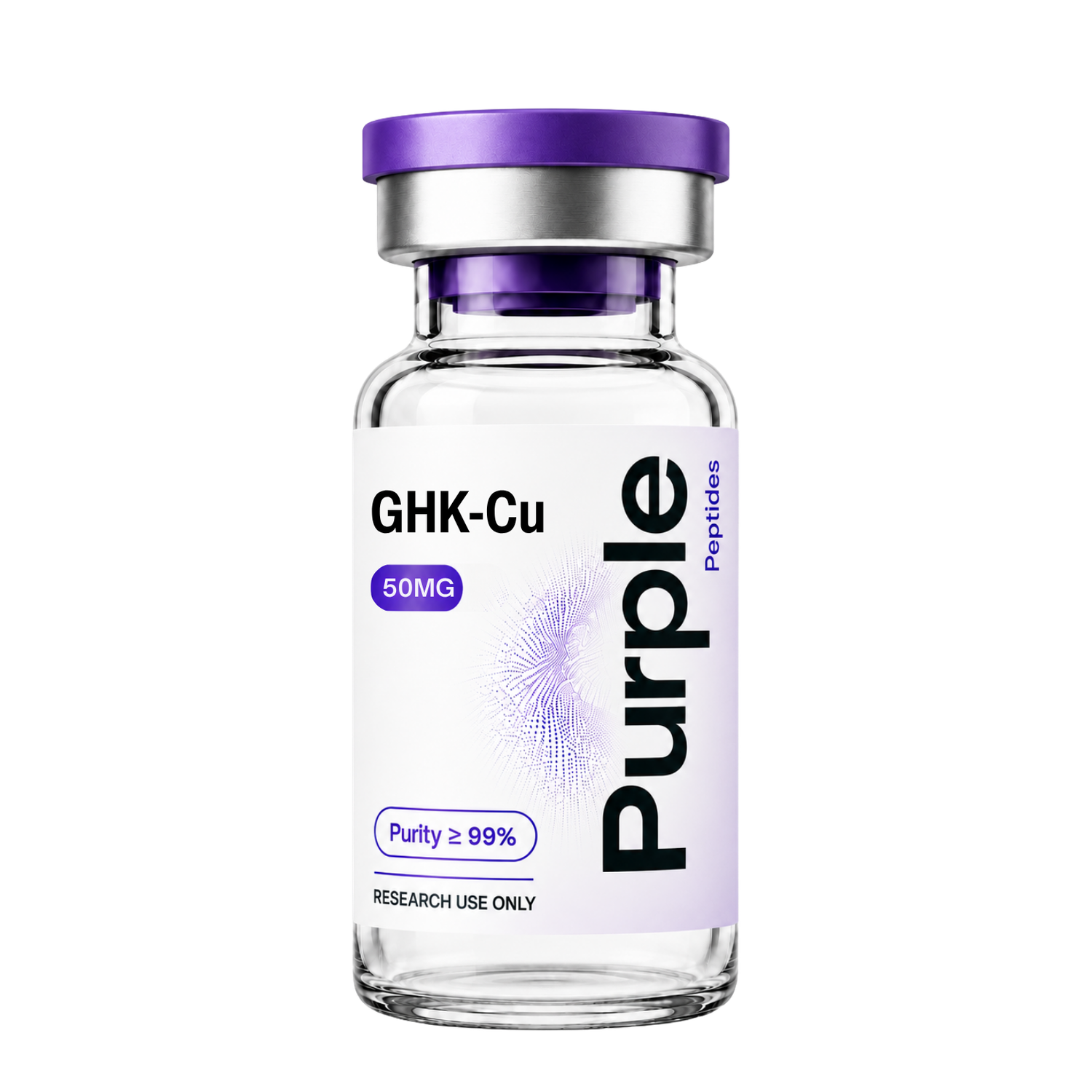
GHK-Cu
What Is GHK-Cu?
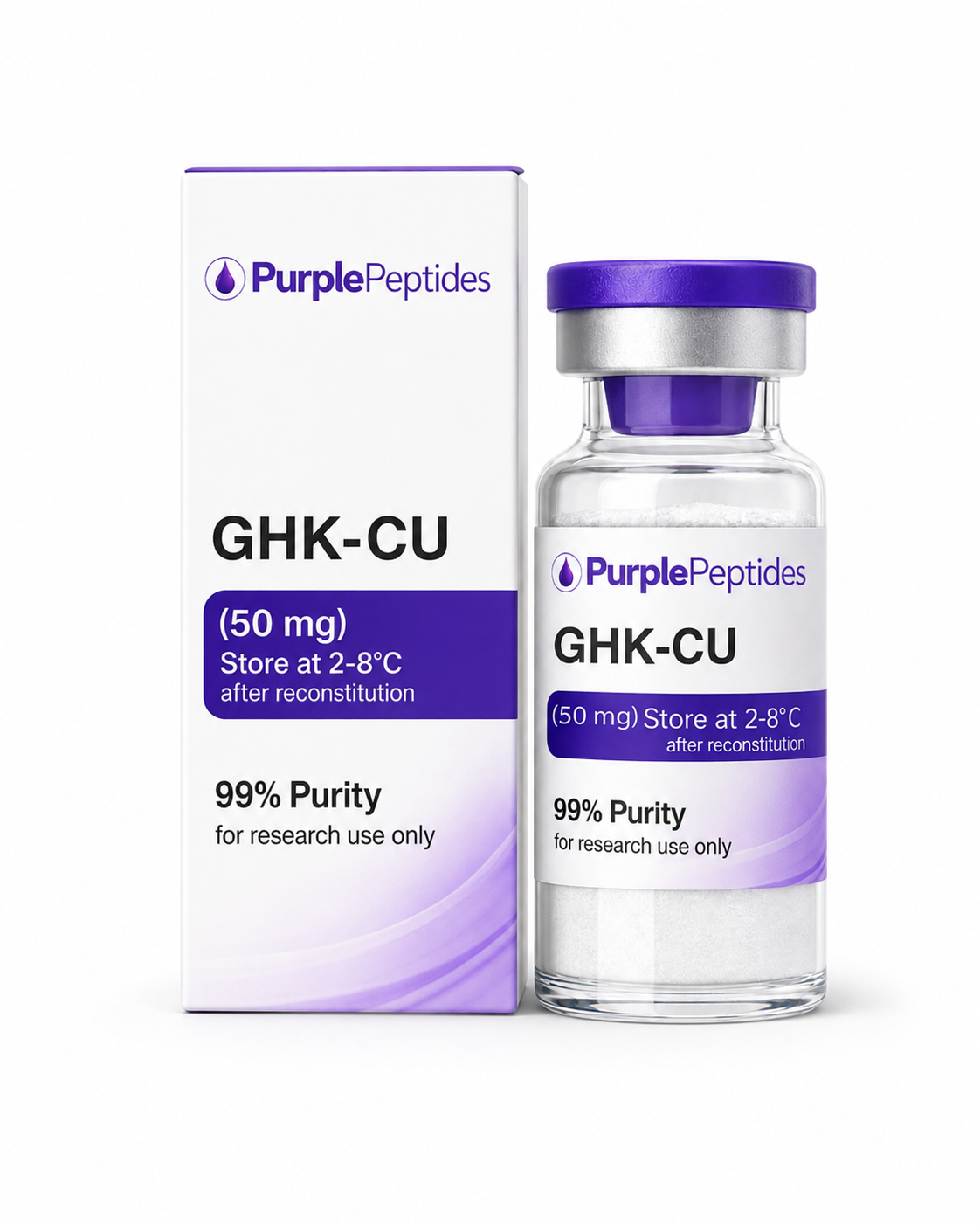
GHK-Cu, also known as Copper Tripeptide-1 or glycyl-L-histidyl-L-lysine copper complex, is a naturally occurring copper-binding peptide studied for its role in cellular communication, extracellular matrix remodeling, tissue-response signaling, and gene-expression regulation.
GHK is a tripeptide made from three amino acids: glycine, histidine, and lysine. When complexed with copper, it forms GHK-Cu, a peptide-copper complex widely examined in laboratory and preclinical research.
In controlled research settings, GHK-Cu has been investigated for its relationship with collagen regulation, fibroblast activity, angiogenic signaling, antioxidant-response pathways, inflammatory signaling, and skin/tissue remodeling models.
Because of its connection to copper transport, cellular repair signaling, and extracellular matrix biology, GHK-Cu remains a major research compound in regenerative biology, dermatological research, connective-tissue models, and peptide-mediated cellular signaling.
Certificate of Analysis
Third-party testing documentation available for purity and analytical verification.
GHK-Cu Research Overview
GHK-Cu is commonly studied for its ability to interact with biological systems involved in tissue remodeling, wound-response signaling, collagen turnover, and gene-expression modulation.
Research has examined GHK-Cu in models related to:
- Collagen and elastin regulation
- Glycosaminoglycan and proteoglycan synthesis
- Fibroblast activity and cellular migration
- Angiogenic signaling and vascular-response models
- Inflammatory and antioxidant-response pathways
- Skin physiology and extracellular matrix organization
In laboratory models, GHK-Cu is often discussed as a copper-binding signaling peptide that may help researchers understand how copper-dependent pathways influence repair-related cellular behavior.
History and Development
GHK was first identified in the 1970s during research into human plasma factors that influenced cell growth and survival. Researchers later determined that the tripeptide sequence glycyl-L-histidyl-L-lysine had strong copper-binding activity.
The copper-complexed form, GHK-Cu, became a major focus because copper is involved in many biological systems, including enzyme activity, connective-tissue formation, oxidative balance, and cellular signaling.
Over time, GHK-Cu research expanded into wound-healing models, skin biology, fibroblast signaling, extracellular matrix remodeling, angiogenesis, gene-expression studies, and systemic tissue-response pathways.
GHK-Cu Profile
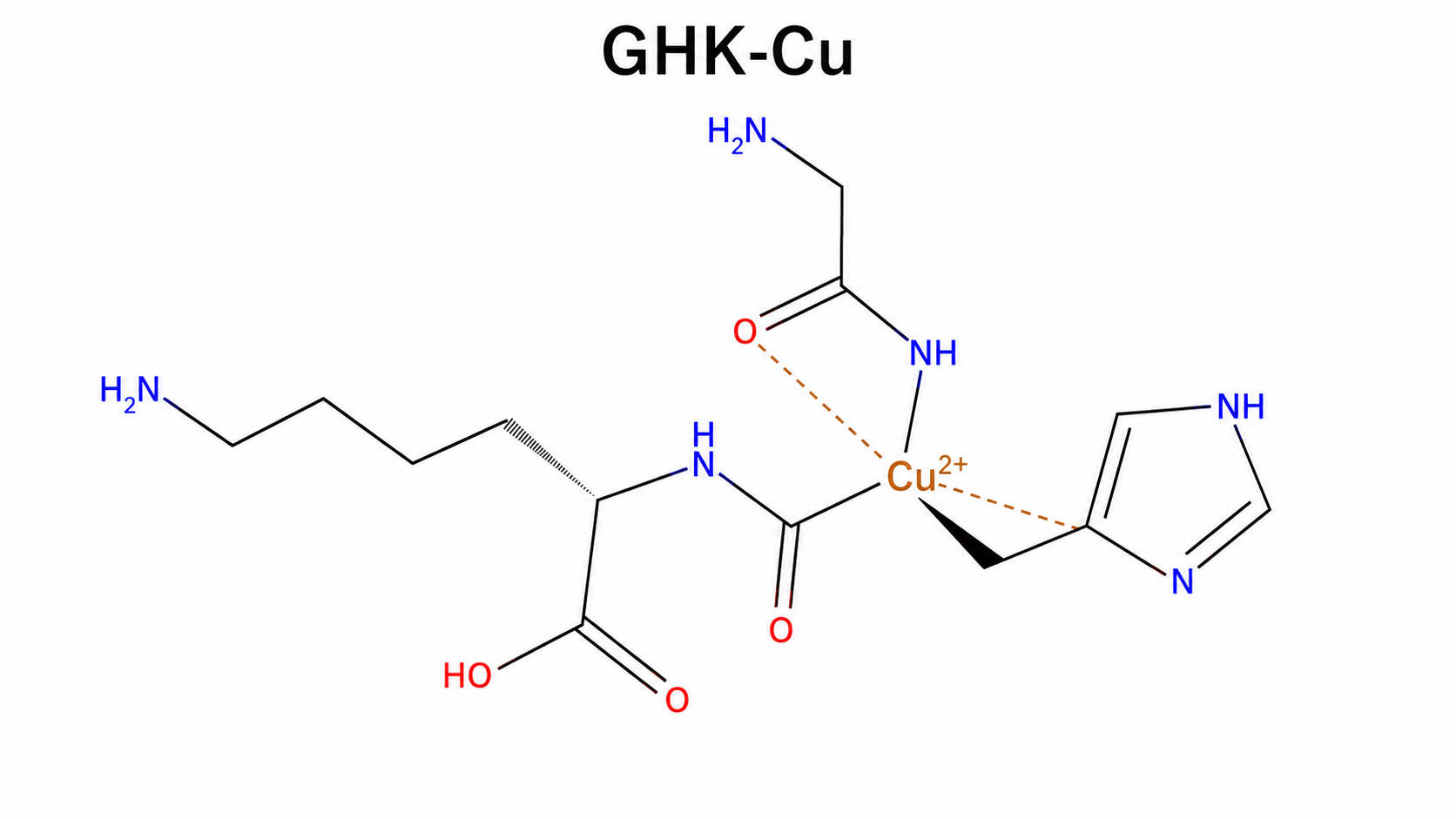
GHK-Cu Structure
Research Findings
GHK-Cu has been studied across dermatological, structural, cellular, vascular, and systemic research models. The main research interest centers on its relationship with tissue remodeling, copper-dependent signaling, and extracellular matrix regulation.
Key Areas of Investigation
- Structural Research: Collagen synthesis, elastin regulation, decorin expression, extracellular matrix organization, and connective-tissue remodeling.
- Dermatological Research: Skin physiology, wound-response models, epithelial remodeling, hair-follicle signaling, and dermal fibroblast activity.
- Cellular Research: Fibroblast proliferation, cell migration, growth-factor expression, antioxidant-response pathways, and cellular repair signaling.
- Vascular Research: Angiogenic signaling, endothelial response, vascular remodeling, and growth-factor-related pathways.
- Inflammatory Research: Inflammatory pathway modulation, oxidative-stress response, tissue-protection models, and matrix metalloproteinase regulation.
Mechanism-Based Research Interest
GHK-Cu is studied because it connects multiple repair-related biological pathways, including:
- Copper-binding and copper-transport models
- Collagen and elastin regulation
- Fibroblast activity and cellular migration
- Glycosaminoglycan and decorin expression
- Angiogenesis and vascular signaling
- Antioxidant-response pathways
- Gene-expression modulation
- Extracellular matrix remodeling
This makes GHK-Cu a versatile research compound for studying skin biology, regenerative signaling, connective-tissue response, and cellular repair mechanisms.
Investigational Research Context
GHK-Cu should be considered an investigational research compound. Available research includes laboratory, preclinical, cosmetic, and limited clinical-context data. Findings should not be interpreted as approved therapeutic outcomes.
This product is supplied for laboratory research only and is not intended for human consumption, clinical use, veterinary use, or self-experimentation.
Scientific References
View References
- Pickart L. & Thaler M.M. (1973) — Tripeptide in human serum which prolongs survival of normal liver cells and stimulates growth in neoplastic liver.
- Freedman J.H. et al. (1982) — Structure of the glycyl-L-histidyl-L-lysine-copper(II) complex in solution.
- Wegrowski Y. et al. (1992) — Stimulation of sulfated glycosaminoglycan synthesis by the tripeptide-copper complex glycyl-L-histidyl-L-lysine-Cu²⁺.
- Siméon A. et al. (2000) — Expression of glycosaminoglycans and small proteoglycans in wounds: modulation by the tripeptide-copper complex glycyl-L-histidyl-L-lysine-Cu²⁺.
- McCormack M.C. et al. (2001) — The effect of copper tripeptide and tretinoin on growth factor production in fibroblast cultures.
- Pollard J.D. et al. (2005) — Effects of copper tripeptide on the growth and expression of growth factors by normal and irradiated fibroblasts.
- Pickart L. et al. (2015) — GHK peptide as a natural modulator of multiple cellular pathways in skin regeneration.
- Pickart L. & Margolina A. (2018) — Regenerative and protective actions of the GHK-Cu peptide in the light of new gene data.
- Dou Y. et al. (2020) — The potential of GHK as an anti-aging peptide.
- Mortazavi S.M. et al. (2024) — Topically applied GHK as an anti-wrinkle peptide: advantages, problems and prospective.
Need Help?