Semaglutide vs. Tirzepatide: The Real Scientific Difference
Explore the key research differences between semaglutide and tirzepatide, including GLP-1 activity, GIP receptor signaling, appetite pathways, metabolic response, and why tirzepatide has become one of the most discussed compounds in modern metabolic research.
Why Semaglutide and Tirzepatide Are Often Compared
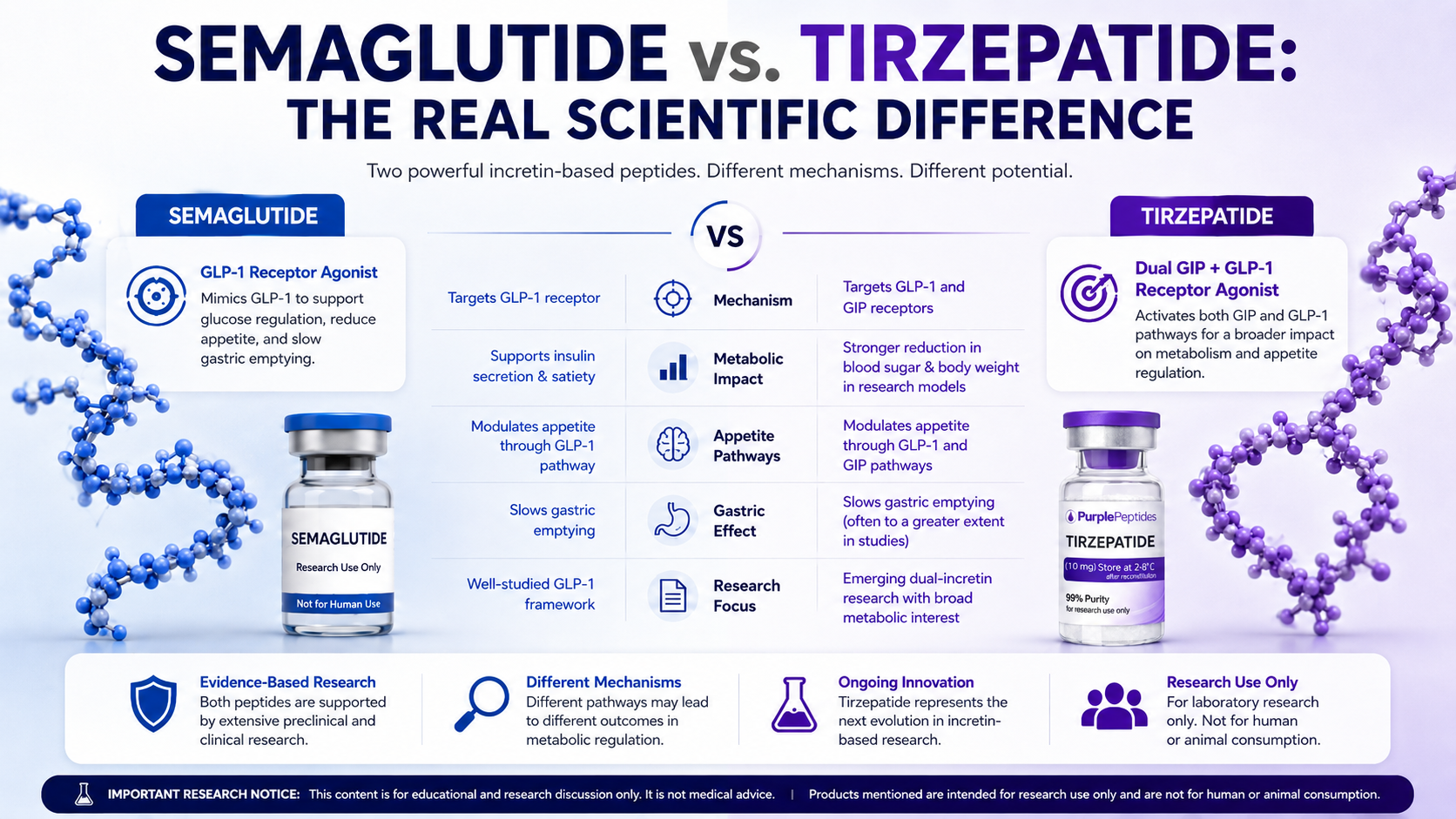
Semaglutide and tirzepatide are both central to the metabolic research conversation because they interact with incretin pathways connected to glucose regulation, appetite signaling, gastric emptying, and energy balance.
On the surface, they may appear similar. Both are discussed in relation to GLP-1 biology, appetite response, and metabolic outcomes. Mechanistically, however, they are not the same.
- Both are studied for appetite and glucose-related pathways
- Both are connected to incretin hormone signaling
- Both are commonly discussed in metabolic research
- Tirzepatide adds a second pathway through GIP receptor activity
Semaglutide: Selective GLP-1 Receptor Activity
Semaglutide is primarily known as a GLP-1 receptor agonist. In research discussions, GLP-1 activation is associated with insulin signaling, reduced glucagon activity, slowed gastric emptying, and appetite-related signaling in the brain.
Key GLP-1 Research Areas
- Glucose-dependent insulin response
- Glucagon regulation
- Appetite signaling pathways
- Gastric emptying and satiety response
Tirzepatide: Dual GLP-1 + GIP Pathway Research
Tirzepatide is different because it is commonly described as a dual incretin receptor agonist. It interacts with both GLP-1 and GIP receptor pathways, making it especially interesting for researchers studying metabolic signaling and body composition-related outcomes.
Why the GIP Pathway Matters
GIP, or glucose-dependent insulinotropic polypeptide, is another incretin hormone involved in insulin response and energy balance. When studied alongside GLP-1 activity, the GIP pathway may help explain why tirzepatide has become a major focus in metabolic research.
- Dual incretin signaling through GLP-1 and GIP
- Potential differences in appetite and satiety research
- Interest in fat metabolism and energy balance pathways
- Growing relevance in advanced peptide research discussions
Semaglutide vs. Tirzepatide: Quick Research Comparison
| Feature | Semaglutide | Tirzepatide |
|---|---|---|
| Primary pathway | GLP-1 receptor | GLP-1 + GIP receptors |
| Research focus | GLP-1 signaling, appetite, glucose response | Dual incretin signaling, metabolic response, appetite pathways |
| Mechanism type | Single incretin pathway | Dual incretin pathway |
| Scientific interest | Established GLP-1 research model | Advanced dual-pathway research model |
Key Takeaways
- Semaglutide is mainly associated with GLP-1 receptor activity.
- Tirzepatide is studied for dual GLP-1 and GIP receptor signaling.
- Both compounds are widely discussed in metabolic research.
- Tirzepatide stands out because of its dual incretin pathway profile.
- Research context, study design, and receptor biology matter more than hype.
Explore Tirzepatide Research
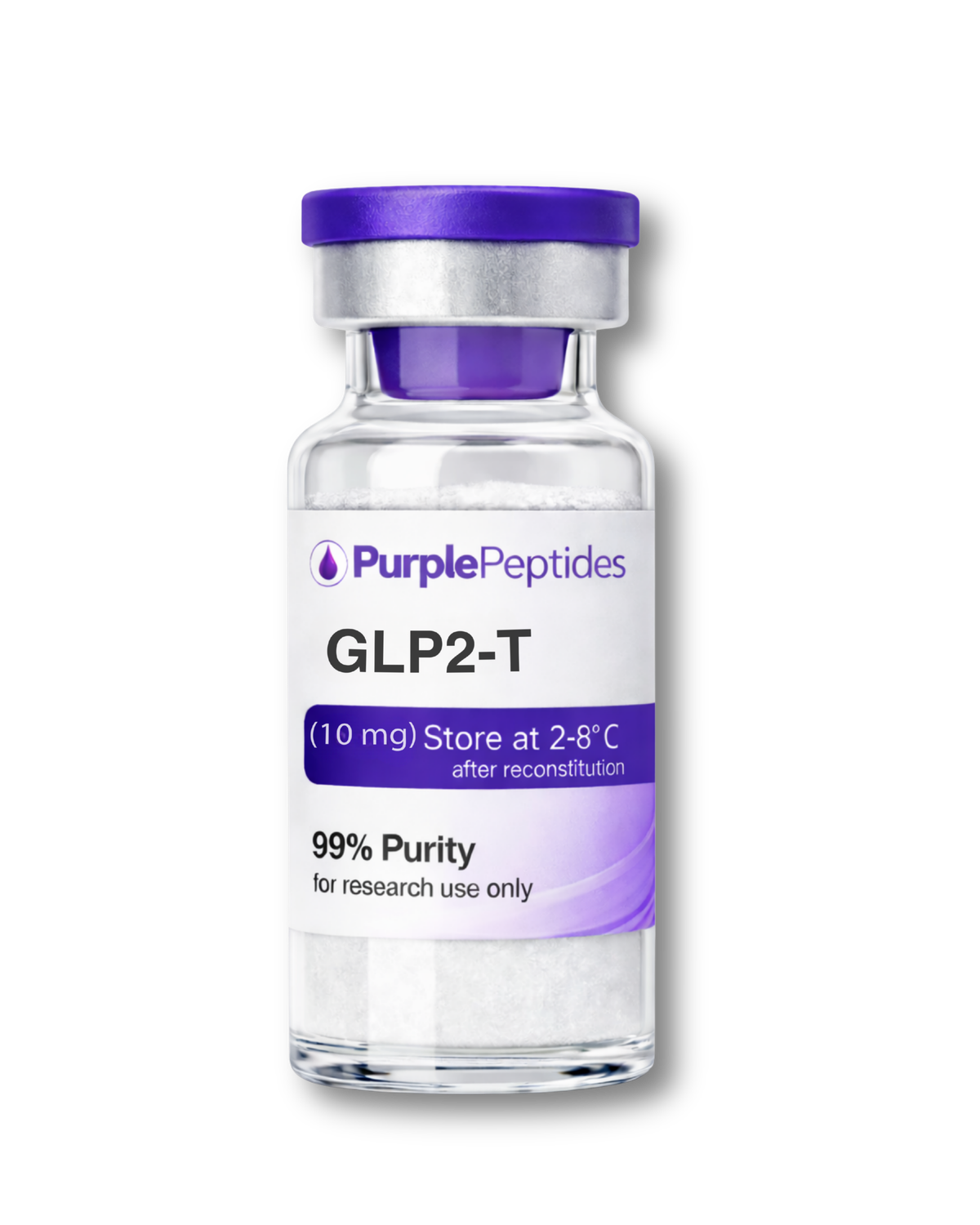
View Purple Peptides Tirzepatide for research applications involving GLP-1 and GIP pathway studies. Clean sourcing, clear labeling, and a research-focused product experience.
Buy Now