Semax
What Is Semax?
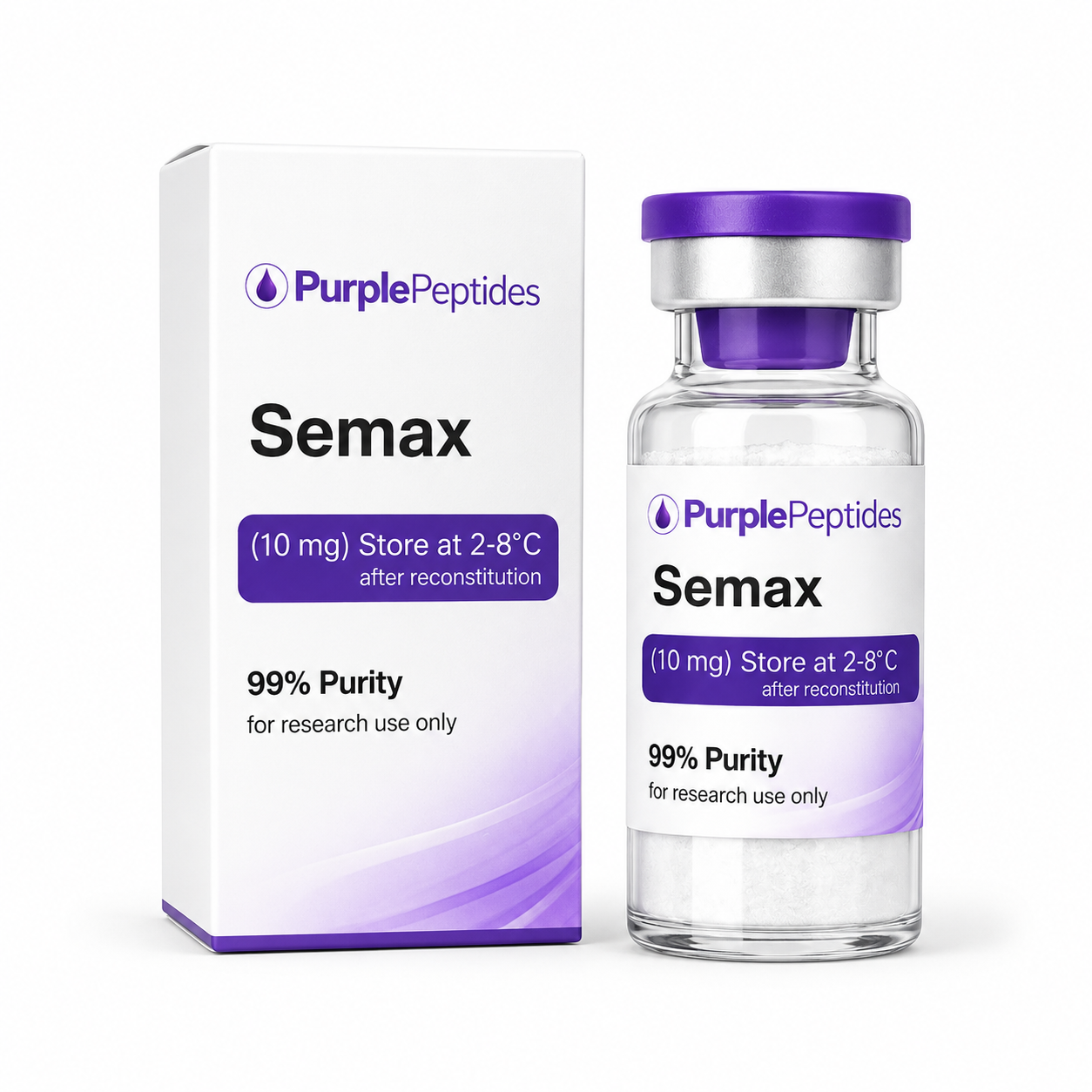
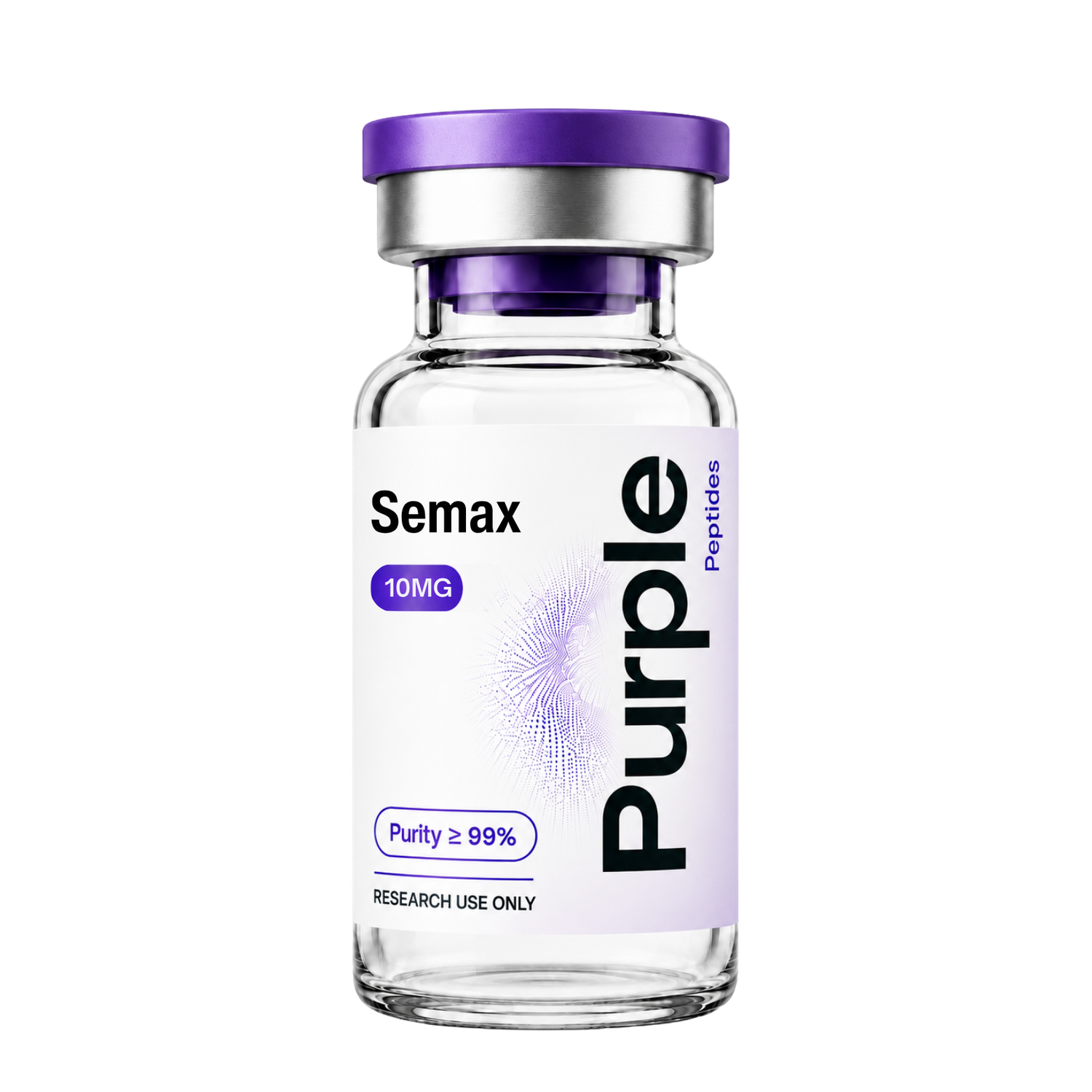
Semax is a synthetic heptapeptide derived from the ACTH 4–10 peptide fragment and modified with a Pro-Gly-Pro sequence to improve peptide stability and neuroactive research relevance.
Unlike full adrenocorticotropic hormone, Semax is studied as a non-hormonal ACTH analog. In laboratory and preclinical research, Semax is examined for its relationship with central nervous system signaling, neurotrophic factor expression, cellular stress-response pathways, oxidative-stress regulation, and neuroprotective signaling models.
Research commonly focuses on Semax in connection with BDNF expression, NGF-related pathways, cholinergic signaling, neurotransmitter regulation, ischemia-response models, and CNS resilience.
Because of its role in neuroregulatory and stress-response research, Semax remains a compound of interest in studies focused on brain signaling, neuroplasticity, cognitive-process models, and adaptive cellular protection.
Certificate of Analysis
Third-party testing documentation available for purity and analytical verification.
Semax Research Overview
Semax is most commonly discussed in research involving neuroprotection, neurotrophic signaling, gene-expression regulation, and central nervous system adaptation.
Laboratory and preclinical studies have examined Semax in relation to:
- BDNF and NGF expression
- Neurotrophin receptor signaling
- Oxidative-stress response
- Nitric-oxide pathway modulation
- Neuronal survival models
- Cholinergic neuron activity
- Ischemia and hypoxia-response models
- Cognitive and memory-related signaling
In controlled research environments, Semax is studied as a peptide tool for understanding how ACTH-derived fragments may influence CNS signaling without the endocrine activity associated with full ACTH.
History and Development
Semax was developed through research into synthetic analogs of ACTH fragments. Scientists focused on the ACTH 4–10 region because this fragment was associated with neuroactive properties while lacking the full hormonal profile of ACTH.
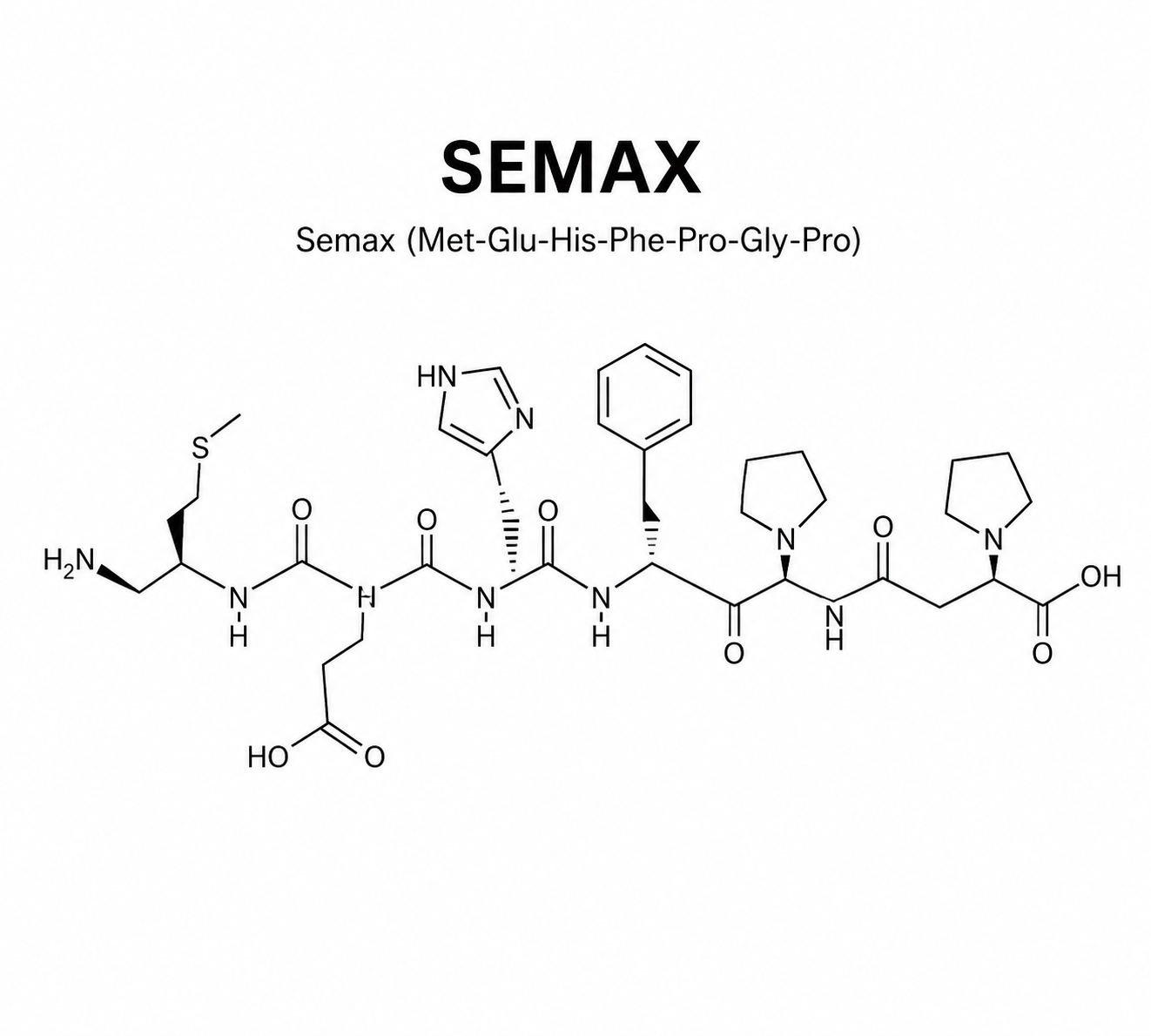
The final Semax structure combines the ACTH 4–7 sequence with a Pro-Gly-Pro stabilizing fragment, producing the heptapeptide sequence Met-Glu-His-Phe-Pro-Gly-Pro.
Early research explored Semax in relation to neuroprotection, learning and memory models, and neuronal survival. Later studies expanded into BDNF signaling, neurotrophin transcription, gene-expression regulation, inflammatory-response pathways, oxidative-stress models, and ischemic brain injury research.
Today, Semax is studied as a neuroregulatory research peptide because it connects multiple areas of CNS biology, including neurotrophic signaling, stress adaptation, neurotransmitter function, and cellular resilience.
Semax Profile
Semax Structure
Research Findings
Semax has been examined across neurological, cognitive, cellular, and systemic research models. The main research interest centers on how Semax may influence neurotrophic factors, neuronal survival pathways, and adaptive CNS signaling.
Key Areas of Investigation
- Neurological Research: Neuroprotection, neuronal survival, CNS signaling, cholinergic neuron activity, and neurotrophic-factor regulation.
- Neurotrophin Research: BDNF expression, NGF signaling, Trk receptor-related pathways, and neuroplasticity-associated gene expression.
- Cognitive Research: Learning-related models, memory-process research, attention-related signaling, and adaptive neural communication.
- Stress-Response Research: Oxidative-stress regulation, nitric-oxide pathway activity, hypoxia-response models, and ischemia-related cellular protection.
- Gene-Expression Research: Transcriptional changes in genes related to immune response, vascular regulation, neurotrophins, inflammation, and stress adaptation.
- Systemic Research: Biological resilience models, repair-response pathways, neuroimmune communication, and adaptive cellular signaling.
Mechanism-Based Research Interest
Semax is studied because it may connect several important CNS-related pathways, including:
- ACTH-fragment peptide signaling
- BDNF and NGF expression
- Neurotrophin receptor activity
- Oxidative-stress response
- Nitric-oxide pathway modulation
- Cholinergic neuron support models
- Gene-expression regulation
- Ischemia and hypoxia-response pathways
- Cognitive-process and neuroplasticity models
This makes Semax a versatile research compound for studying neuroregulatory signaling, neuronal adaptation, CNS stress response, and peptide-mediated neuroprotection in laboratory models.
Investigational Research Context
Semax should be considered an investigational research compound. Available research includes laboratory, preclinical, and limited clinical-context studies. Findings should not be interpreted as approved therapeutic outcomes.
This product is supplied for laboratory research only and is not intended for human consumption, clinical use, veterinary use, or self-experimentation.
Scientific References
View References
- Bashkatova V.G. et al. (2001) — Novel synthetic analogue of ACTH 4–10 Semax reduces nitric oxide elevation and neurological dysfunction in ischemia models.
- Dolotov O.V. et al. (2006) — Semax, an analogue of ACTH 4–10, binds specifically and increases BDNF protein levels in rat basal forebrain.
- Grivennikov I.A. et al. (2008) — Semax supports survival and cholinergic activity in basal forebrain neuron culture models.
- Dmitrieva V.G. et al. (2010) — Semax and Pro-Gly-Pro activate transcription of neurotrophins and neurotrophin receptors after focal cerebral ischemia.
- Medvedeva E.V. et al. (2014) — Semax affects expression of genes related to immune and vascular systems in rat brain ischemia models.
- Medvedeva E.V. et al. (2017) — Semax regulates immune and vascular gene-expression pathways after focal cerebral ischemia.
- Filippenkov I.B. et al. (2020) — Protective properties of ACTH 4–7 PGP / Semax in ischemic brain injury research.
- Glazova N.Y. et al. (2021) — Semax, a synthetic ACTH 4–10 analog, demonstrates neuroprotective activity in preclinical CNS models.
Need Help?