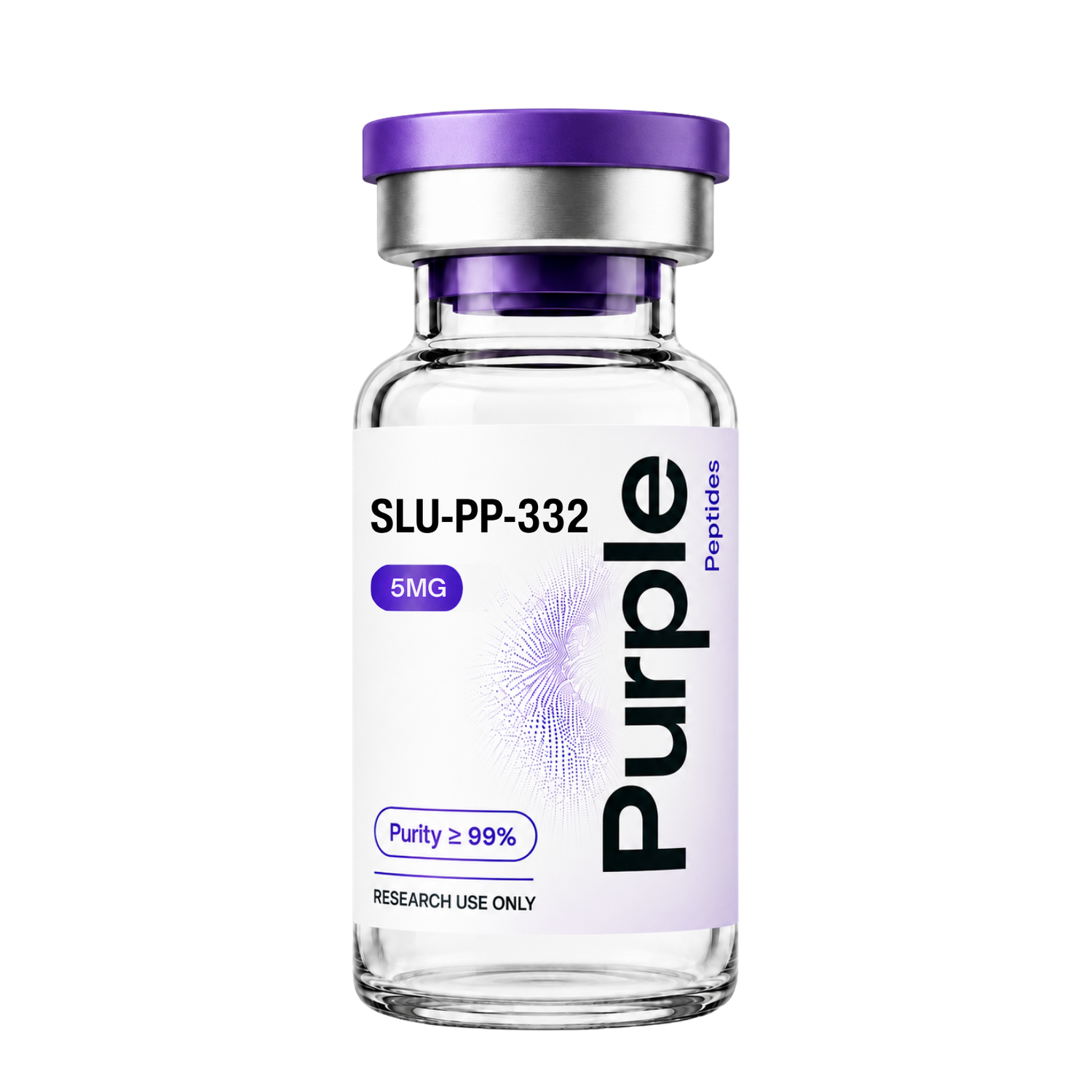
SLU-PP-332
What Is SLU-PP-332?
SLU-PP-332 is an investigational synthetic small-molecule compound studied in laboratory and preclinical research settings for its interaction with estrogen-related receptor pathways, commonly known as ERR pathways.
Estrogen-related receptors are nuclear receptors involved in transcriptional regulation of energy metabolism, mitochondrial activity, oxidative phosphorylation, fatty acid oxidation, and skeletal muscle metabolic adaptation. Although the name includes “estrogen-related,” SLU-PP-332 is not an estrogen hormone. It is studied as a research compound that interacts with ERRα, ERRβ, and ERRγ signaling systems.
Unlike traditional hormonal compounds, SLU-PP-332 has been investigated for its relationship with metabolic transcription pathways connected to mitochondrial respiration, cellular energy utilization, oxidative metabolism, exercise-associated gene-expression activity, and endurance-related biological models.
Because of its receptor-focused research profile, SLU-PP-332 remains a compound of interest in metabolic science, mitochondrial pathway research, exercise physiology models, energy-balance studies, and nuclear receptor biology.
SLU-PP-332 Profile
Primary Research Focus: ERR signaling, mitochondrial function, oxidative metabolism, skeletal muscle energy utilization, and exercise-associated pathway research.
Certificate of Analysis
Third-party testing documentation available for purity and analytical verification.
COA buttons can be added here once the SLU-PP-332 COA links are available.
SLU-PP-332 Research Overview
SLU-PP-332 is commonly discussed in research involving estrogen-related receptor signaling, mitochondrial regulation, skeletal muscle metabolism, oxidative phosphorylation, fatty acid oxidation, and endurance-associated biological pathways.
Laboratory and preclinical studies involving SLU-PP-332 have examined:
- ERRα, ERRβ, and ERRγ pathway activity
- Mitochondrial function and respiration
- Skeletal muscle energy metabolism
- Cellular energy utilization
- Oxidative metabolic signaling
- Fatty acid oxidation pathways
- Exercise-associated transcription activity
- Endurance-related physiological mechanisms
- Energy expenditure research models
- Metabolic syndrome-related preclinical models
In controlled research environments, SLU-PP-332 is studied as a chemical tool for understanding how ERR activation may influence metabolic adaptation, mitochondrial communication, and exercise-associated signaling.
History and Development
SLU-PP-332 emerged from research into nuclear receptor biology, mitochondrial regulation, and metabolic pathway control.
Investigators studied ERR receptor activation because ERRα, ERRβ, and ERRγ are connected to transcriptional programs involved in energy metabolism, mitochondrial biogenesis, oxidative muscle phenotype, and cellular respiration.
Early experimental models examined SLU-PP-332 for its interaction with exercise-associated signaling pathways, oxidative metabolism, mitochondrial function, energy expenditure regulation, and skeletal muscle metabolic adaptation.
Its novel mechanism has positioned SLU-PP-332 as an important investigational compound in modern metabolic, mitochondrial, nuclear receptor, and exercise physiology research.
SLU-PP-332 Structure
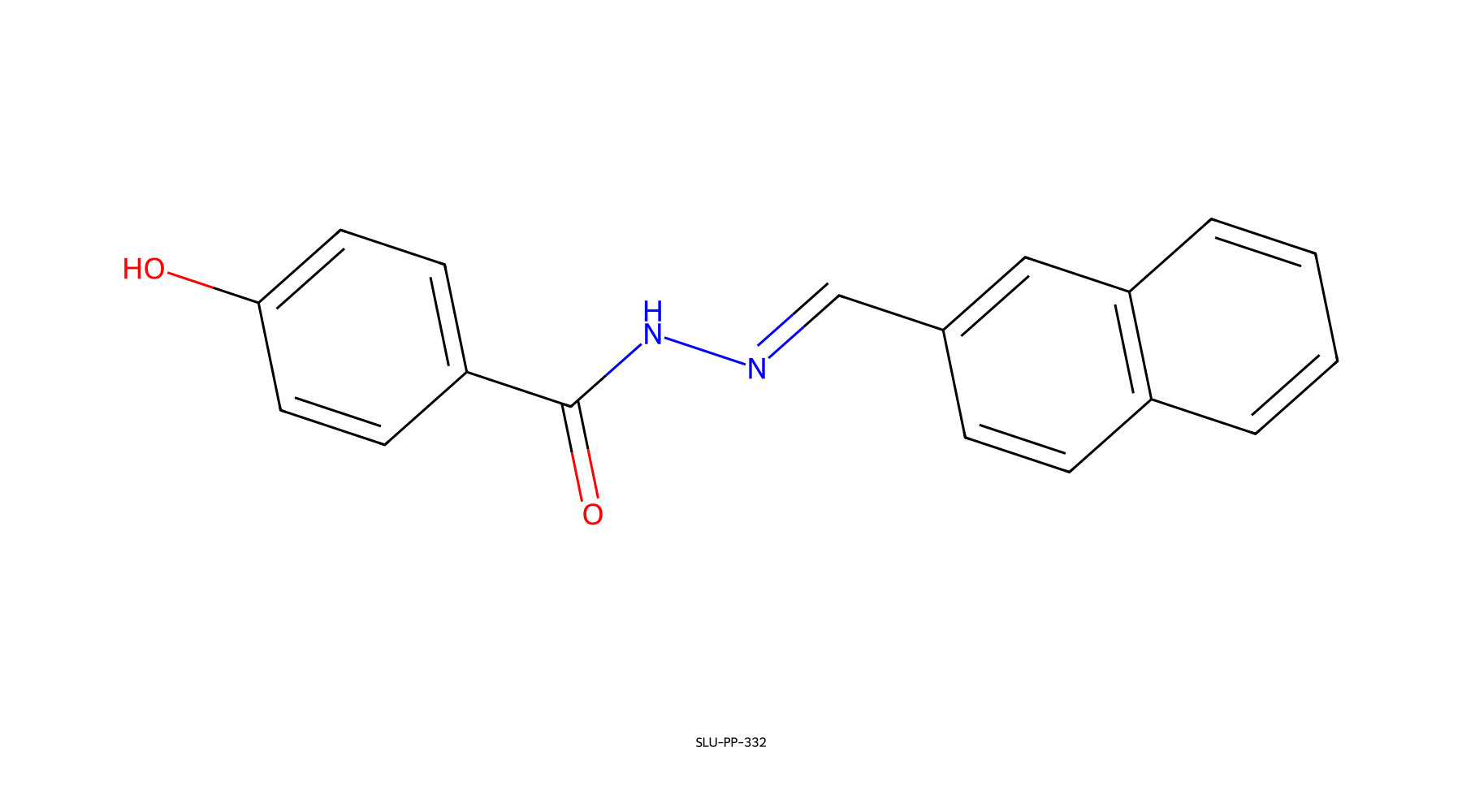
Primary Research Focus: ERR receptor signaling, mitochondrial activity, oxidative metabolism, skeletal muscle energy utilization, and endurance-associated research models.
Research Findings
SLU-PP-332 has been studied across metabolic and physiological research models involving mitochondrial regulation, energy metabolism, skeletal muscle signaling, cellular respiration, and endurance-associated pathway activity.
Published investigations have examined its interaction with ERR receptor activity and downstream transcription systems connected to mitochondrial respiration, oxidative metabolism, fatty acid oxidation, energy expenditure, and cellular energy communication.
Key Areas of Investigation
- Metabolic Research: Energy expenditure pathways, oxidative metabolism, fatty acid oxidation, cellular fuel utilization, and metabolic transcription activity.
- Mitochondrial Research: Mitochondrial signaling, cellular respiration, energy production mechanisms, and metabolic adaptation pathways.
- Exercise Physiology Research: Skeletal muscle metabolism, endurance-associated signaling, exercise-mimetic pathway activity, and oxidative muscle fiber research.
- Nuclear Receptor Research: ERRα, ERRβ, and ERRγ pathway activity, receptor-linked transcriptional regulation, and metabolic gene-expression models.
- Cellular Energy Research: Cellular energy utilization, oxidative phosphorylation mechanisms, mitochondrial respiration, and fuel-selection pathway studies.
Mechanism-Based Research Interest
SLU-PP-332 is studied because it connects several important metabolic and exercise-associated research pathways, including:
- Estrogen-related receptor activation
- ERRα-dependent transcriptional signaling
- ERRβ and ERRγ pathway interaction
- Mitochondrial respiration
- Oxidative phosphorylation mechanisms
- Fatty acid oxidation pathways
- Skeletal muscle metabolic adaptation
- Exercise-associated gene-expression activity
- Energy expenditure regulation
- Endurance-associated physiological research models
This makes SLU-PP-332 a useful investigational compound for studying mitochondrial regulation, metabolic signaling, nuclear receptor activity, and exercise-associated physiological pathways in controlled laboratory settings.
Research Applications
SLU-PP-332 may be useful in controlled research models focused on:
- ERR receptor signaling research
- Mitochondrial function studies
- Oxidative metabolism models
- Skeletal muscle energy research
- Fatty acid oxidation pathway studies
- Exercise-associated transcription research
- Energy expenditure models
- Metabolic syndrome-related preclinical research
- Cellular respiration studies
- Nuclear receptor pathway investigation
What Researchers May Document
In controlled research environments, researchers may document broad patterns related to:
- ERR pathway activity
- Mitochondrial respiration markers
- Oxidative metabolism research notes
- Skeletal muscle signaling observations
- Fatty acid oxidation pathway activity
- Energy-utilization models
- Exercise-associated gene-expression patterns
- Cellular respiration response
- Compound handling and stability observations
- Protocol consistency
The purpose of SLU-PP-332 research is not to promise outcomes. The purpose is to provide a structured investigational compound for studying ERR signaling, mitochondrial function, metabolic adaptation, and exercise-associated transcription pathways.
The Purple Standard™
Every vial supplied by Purple Peptides is handled according to the Purple Standard™. This includes third-party testing, purity verification, controlled storage practices, batch tracking, and internal rejection of any lot that does not meet required quality thresholds.
The Purple Standard™ exists to support consistency, documentation, and research confidence across every Purple Peptides product.
Investigational Research Context
SLU-PP-332 should be considered an investigational research compound. Available research is primarily laboratory, analytical, and preclinical in nature. Findings should not be interpreted as approved therapeutic, clinical, veterinary, metabolic, exercise-performance, body-composition, or human-use outcomes.
This product is supplied for laboratory research only and is not intended for human consumption, clinical use, veterinary use, supplementation, diagnostic use, athletic enhancement, or self-experimentation.
Scientific References
View References
- Billon C. et al. (2023) — Synthetic ERRα/β/γ agonist induces an ERRα-dependent acute aerobic exercise response and enhances exercise capacity.
- Billon C. et al. (2024) — A synthetic ERR agonist alleviates metabolic syndrome.
- Tocris / R&D Systems — SLU-PP-332 technical data, compound specifications, ERR agonist activity, CAS number, formula, molecular weight, and storage information.
- PubChem — SLU-PP-332 compound profile, molecular formula, molecular weight, CAS number, and structural information.
- Analytical Science Journals — Analysis and identification of in vitro metabolites of exercise-mimetic ERR agonists including SLU-PP-332.
Need Help?
If you have questions regarding certificates of analysis, product documentation, or general research inquiries, our support team is here to assist.