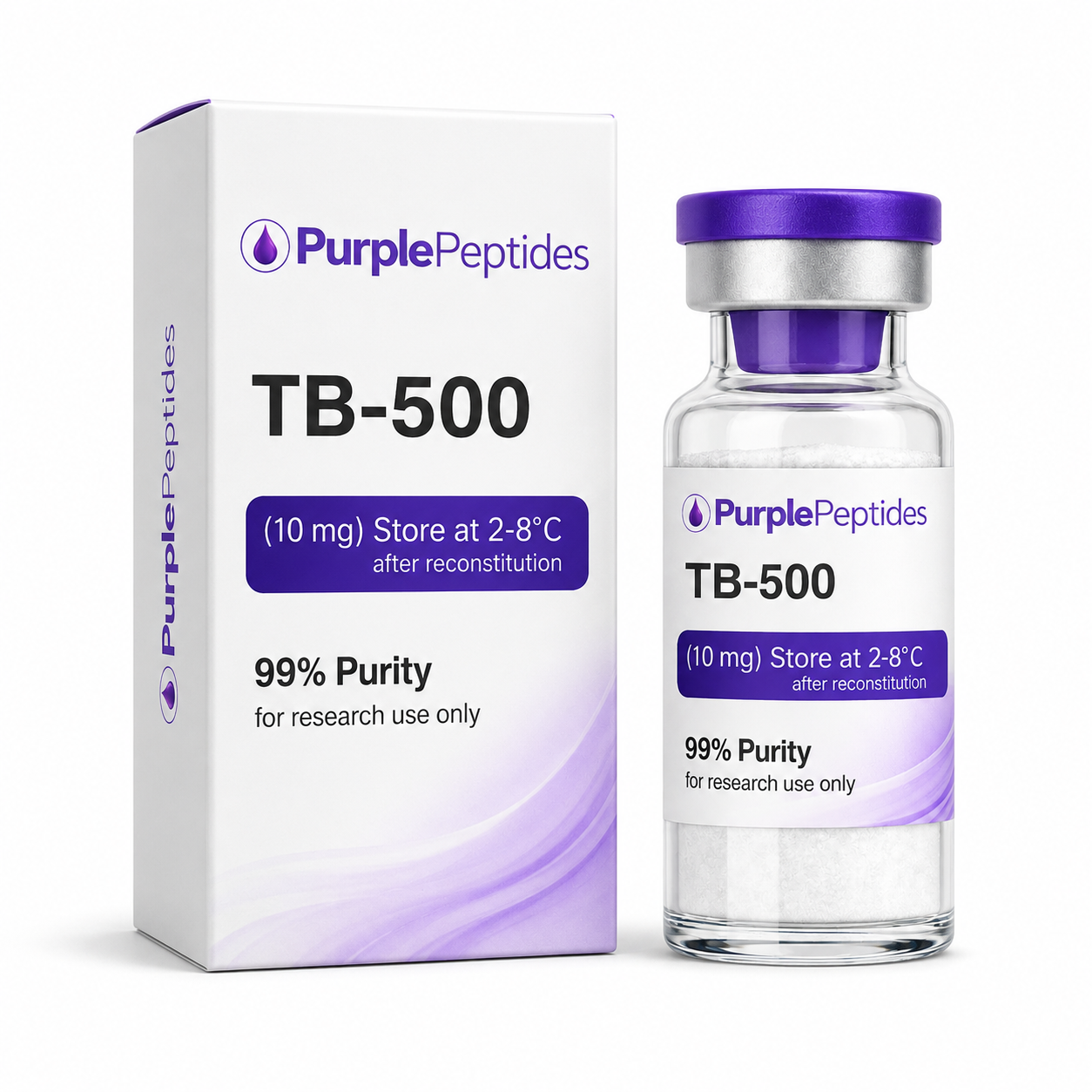
TB-500
What Is TB-500?
TB-500 is a laboratory-synthesized thymosin beta-4-related peptide fragment studied in research settings for its relationship with actin regulation, cellular migration, angiogenic signaling, cytoskeletal organization, and tissue-remodeling models.
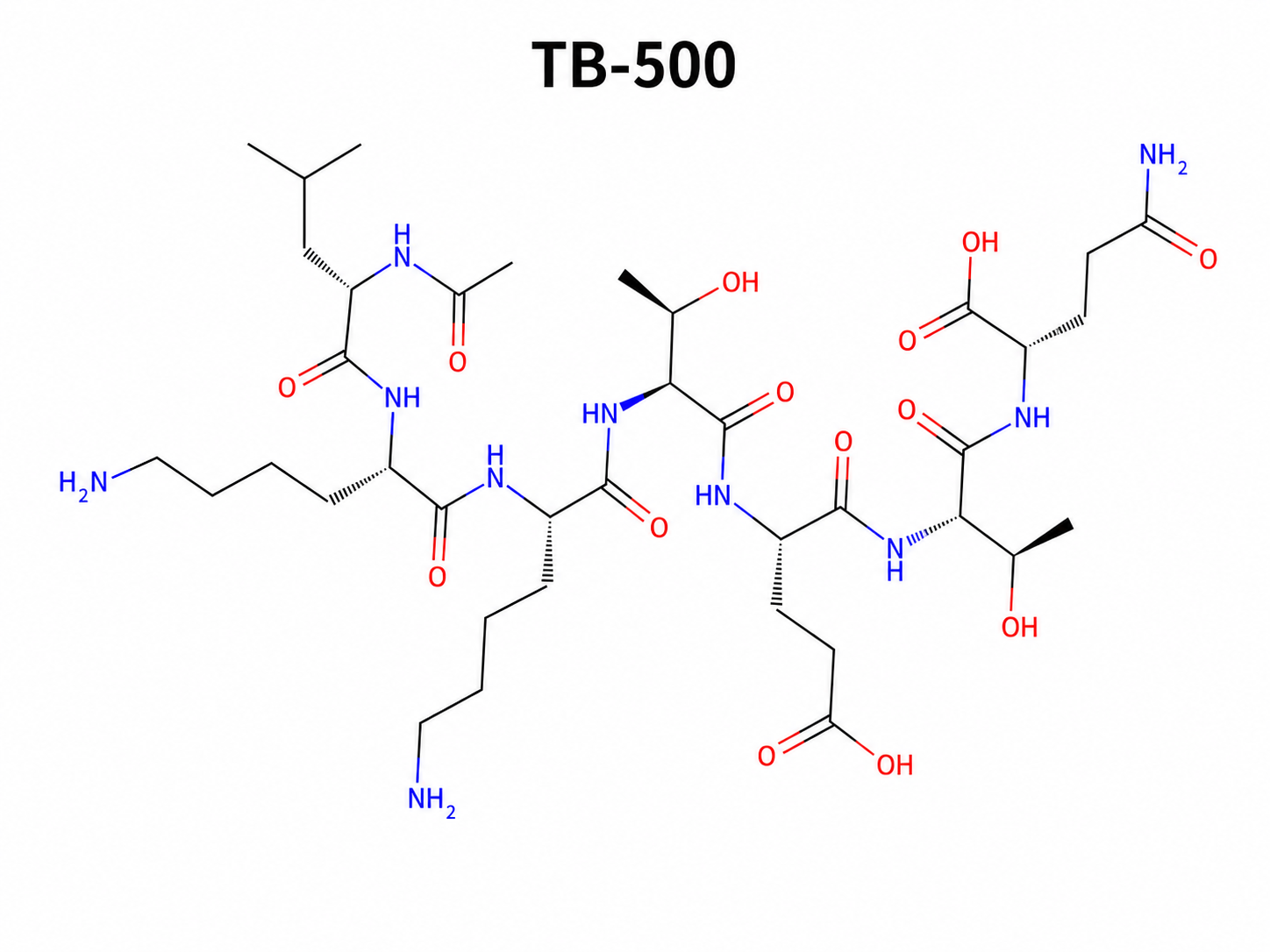
TB-500 is commonly identified as the N-terminal acetylated 17–23 fragment of human thymosin beta-4, also written as Ac-LKKTETQ. Thymosin beta-4 is a naturally occurring actin-binding peptide involved in cell movement, structural organization, angiogenesis, and wound-response biology.
In controlled laboratory and preclinical research environments, TB-500 is examined as a peptide tool for studying cellular movement, vascular-response pathways, extracellular matrix dynamics, epithelial remodeling, and repair-related biological signaling.
Because of its connection to thymosin beta-4 biology, TB-500 remains a compound of interest in research models focused on cytoskeletal signaling, connective-tissue response, vascular remodeling, and cellular recovery pathways.
Certificate of Analysis
Third-party testing documentation available for purity and analytical verification.
TB-500 Research Overview
TB-500 is most commonly discussed in research involving thymosin beta-4 activity, actin-binding biology, angiogenesis, cell migration, and tissue-remodeling pathways.
Research interest around TB-500 focuses on its relationship with:
- Actin regulation and cytoskeletal organization
- Cellular migration and structural remodeling
- Angiogenic signaling and endothelial response
- Extracellular matrix dynamics
- Epithelial repair-response models
- Connective-tissue and dermal research pathways
- Inflammatory-response and recovery-signaling models
In laboratory models, TB-500 is often studied as a thymosin beta-4-related fragment that helps researchers examine how actin-associated peptide signaling may influence cellular movement and vascular-response mechanisms.
History and Development
Thymosin beta-4 was first identified during research into thymus-derived peptides and later became known for its role as a major G-actin-sequestering peptide. Subsequent research connected thymosin beta-4 to cell migration, angiogenesis, endothelial activity, wound-response signaling, and tissue-remodeling biology.
TB-500 was later characterized as a synthetic fragment related to the active region of thymosin beta-4. Research literature commonly identifies TB-500 as Ac-LKKTETQ, the N-acetylated 17–23 fragment of human thymosin beta-4.
This distinction is important: full thymosin beta-4 is a larger 43–amino acid peptide, while TB-500 is commonly referenced as a shorter synthetic fragment. This makes TB-500 useful in research settings where investigators want to examine actin-related and migration-related peptide activity in a more targeted way.
TB-500 Profile
TB-500 Structure
Research Findings
TB-500-related research is closely connected to the broader thymosin beta-4 literature. Studies on thymosin beta-4 and its active regions have examined structural, vascular, dermatological, cellular, and systemic research models.
Key Areas of Investigation
- Structural Research: Actin organization, cytoskeletal remodeling, connective-tissue signaling, extracellular matrix dynamics, and tissue-integrity models.
- Vascular Research: Angiogenesis, endothelial cell migration, tubule formation, vascular remodeling, and blood-vessel-response pathways.
- Dermatological Research: Wound-response models, epithelial remodeling, skin-integrity research, dermal repair signaling, and tissue-regeneration pathways.
- Cellular Research: Cell migration, actin binding, proliferation-related signaling, matrix interaction, and cellular survival models.
- Systemic Research: Recovery-response signaling, inflammatory modulation, tissue viability, cellular resilience, and adaptive repair-related biology.
Mechanism-Based Research Interest
TB-500 is studied because it connects several repair-related biological systems, including:
- Actin binding and cytoskeletal regulation
- Cell migration and tissue remodeling
- Angiogenesis and endothelial response
- Extracellular matrix organization
- Wound-response signaling
- Epithelial regeneration models
- Connective-tissue research pathways
- Inflammatory-response modulation
This makes TB-500 a useful research compound for studying how thymosin beta-4-related peptide signaling may influence cellular movement, vascular response, and structural remodeling in controlled laboratory models.
Investigational Research Context
TB-500 should be considered an investigational research compound. Much of the available scientific literature focuses on thymosin beta-4 or thymosin beta-4-related fragments, and findings should not be interpreted as approved therapeutic, cosmetic, veterinary, or clinical outcomes for TB-500.
This product is supplied for laboratory research only and is not intended for human consumption, clinical use, veterinary use, diagnostic use, or self-experimentation.
Scientific References
View References
- Esposito S. et al. (2012) — Synthesis and characterization of the N-terminal acetylated 17–23 fragment of thymosin beta-4 identified in TB-500.
- Goldstein A.L. et al. (2005) — Thymosin beta-4 and related thymic peptide research.
- Goldstein A.L. & Hannappel E. (2012) — Thymosin beta-4 and regenerative peptide biology.
- Malinda K.M. et al. (1997) — Thymosin beta-4 stimulates directional migration of human endothelial cells.
- Malinda K.M. et al. (1999) — Thymosin beta-4 accelerates wound healing in a rat full-thickness wound model.
- Philp D. et al. (2003) — The actin-binding site on thymosin beta-4 promotes angiogenesis.
- Philp D. et al. (2003) — Thymosin beta-4 and a synthetic peptide containing its actin-binding domain promote dermal wound repair.
- Bock-Marquette I. et al. (2004) — Thymosin beta-4 activates integrin-linked kinase and supports cardiac repair models.
- Smart N. et al. (2007) — Thymosin beta-4 and angiogenesis: modes of action and therapeutic potential.
- Ying Y. et al. (2023) — Thymosin beta-4 and actin: binding modes, biological functions, and clinical applications.
Need Help?