The Top 3 Peptides Women Over 40 Are Researching Right Now And Why the Biology Matters
Women over 40 are not simply dealing with “slower progress.” They are often navigating real physiological changes in metabolism, recovery, collagen production, hormone rhythm, mitochondrial efficiency, and body composition regulation. This is why certain research peptides have become popular in educational conversations around aging, cellular support, and women’s health science.

After 40, the Conversation Changes
A woman in her 40s may still train, eat well, work hard, and stay consistent, but her body can begin responding differently. Recovery may feel slower. Sleep may become lighter. Body composition can shift more easily. Skin texture may change faster. Energy may feel less predictable. These changes are not always about effort. Many are connected to biological systems that naturally evolve with age.
After 40, women often experience changes in estrogen and progesterone rhythm, insulin sensitivity, mitochondrial efficiency, growth hormone dynamics, collagen turnover, muscle recovery, and inflammatory balance. These systems influence how the body manages energy, repairs tissue, maintains lean mass, and preserves skin structure.
This is not a shortcut conversation. It is a physiology conversation.
- Metabolism can become less flexible as mitochondrial performance changes.
- Insulin sensitivity may shift, making body composition more difficult to manage.
- Collagen production naturally declines, affecting skin, connective tissue, and repair quality.
- Growth hormone patterns may become less robust, influencing recovery and lean tissue support.
- Inflammation and stress signaling may become more noticeable in daily recovery.
Important: This article is educational only. It is not medical advice, not a dosage guide, and not a human-use protocol. The goal is to explain why these compounds are being researched and what biological systems they are associated with.
MOTS-c: Mitochondrial and Metabolic Research
If there is one system that quietly changes with age, it is mitochondrial function. Mitochondria are often called the energy engines of the cell because they help produce cellular energy and regulate metabolic flexibility. When mitochondrial efficiency declines, the body may become less efficient at switching between fuel sources, maintaining energy, supporting recovery, and managing glucose metabolism.
MOTS-c is a mitochondrial-derived peptide that has been studied for its relationship with AMPK signaling, glucose metabolism, insulin sensitivity, and cellular energy regulation. AMPK is often described as a metabolic sensor because it helps the cell respond to energy demand.
Why women over 40 are researching MOTS-c
- It is connected to mitochondrial energy signaling.
- It is discussed in research around insulin sensitivity and metabolic flexibility.
- It is studied for its relationship with AMPK activation.
- It may be relevant to age-related changes in energy regulation.
- It fits the broader conversation around body composition research and cellular metabolism.
In simple terms, MOTS-c is not being researched as a stimulant or quick-fix compound. It is being discussed because mitochondrial signaling is central to how the body manages energy, glucose, fat oxidation, and metabolic adaptation.
Source: Lee et al., Cell Metabolism and Nature Communications research.
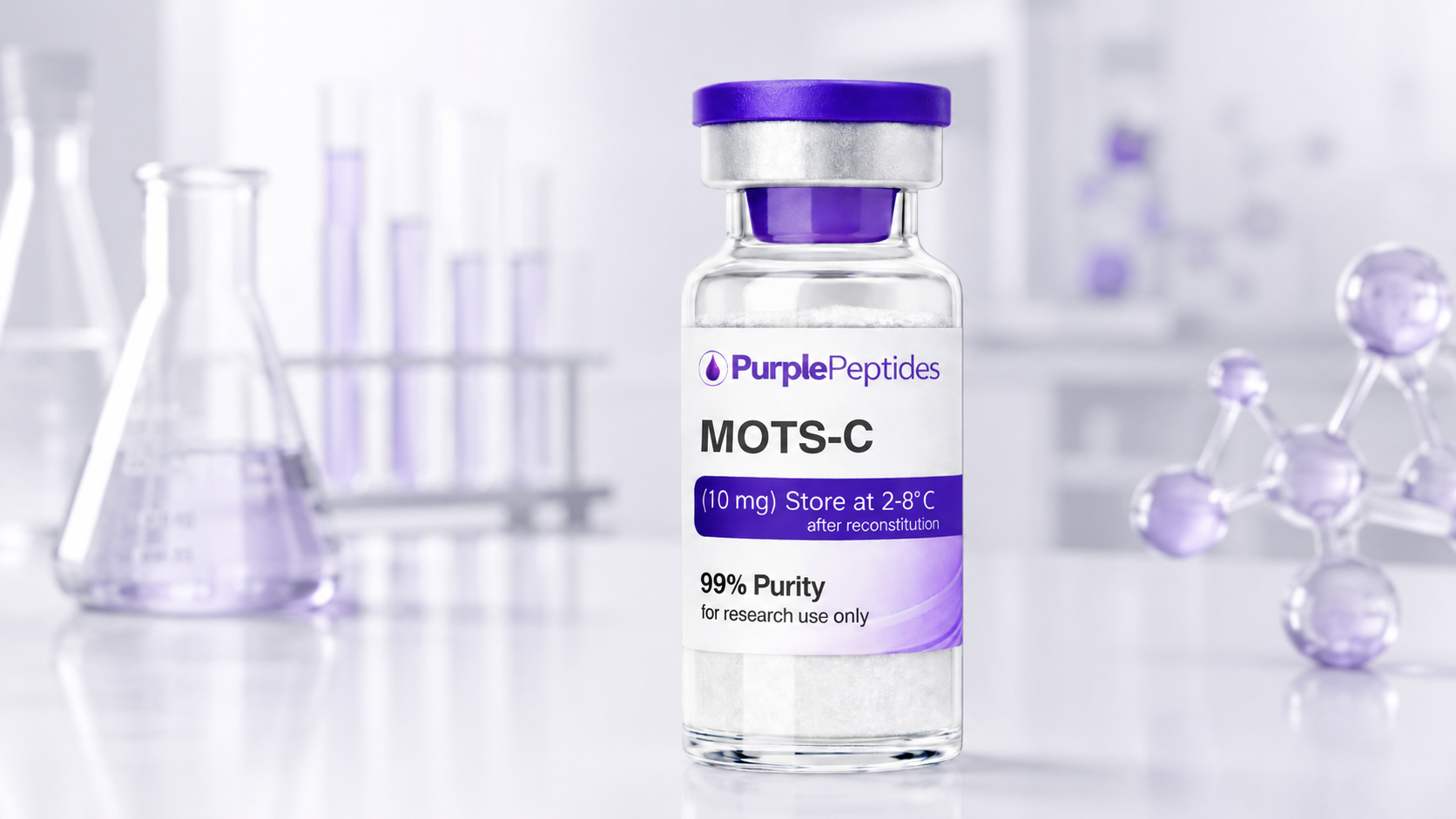
MOTS-c
A mitochondrial-derived peptide researched for cellular energy signaling, AMPK pathway activity, metabolic flexibility, and mitochondrial function.
Buy NowResearch note: Human data remains early, and MOTS-c should be discussed responsibly as an investigational research compound rather than a guaranteed outcome product.
Tesamorelin: Growth Hormone Signaling and Visceral Fat Research
Growth hormone signaling changes with age. For women over 40, this can become relevant because growth hormone rhythm is connected to recovery, lean tissue support, fat distribution, sleep quality, and metabolic health. One peptide that appears often in research conversations is tesamorelin.
Tesamorelin is a growth hormone-releasing hormone analog. It is known for stimulating the body’s natural growth hormone release pathway rather than directly replacing growth hormone. It has an approved medical use in a specific population for HIV-associated lipodystrophy, where it has been studied for reducing visceral adipose tissue.
Why visceral fat matters
Visceral fat is not just a cosmetic concern. It is metabolically active tissue associated with inflammatory signaling, insulin resistance, and cardiometabolic risk. That is why research around visceral fat regulation receives attention, especially in age-related body composition discussions.
- Tesamorelin is researched for growth hormone-releasing hormone pathway activity.
- It has clinical data in the specific context of HIV-associated lipodystrophy.
- It is discussed in relation to visceral adipose tissue reduction.
- It connects to the broader topic of age-related GH rhythm changes.
Source: Falutz et al., New England Journal of Medicine.
Reality check: Tesamorelin is not approved for general anti-aging or cosmetic fat loss. Any off-label or investigational context requires serious regulatory and medical consideration.
GHK-Cu: Skin, Collagen, and Tissue Remodeling Research
Skin changes are one of the most visible signs of aging, but the biology underneath is deeper than appearance. After 40, collagen production tends to decline, elasticity can change, tissue repair may slow, and the skin barrier may become more sensitive. These changes are part of why GHK-Cu has become one of the most discussed peptides in skin and tissue research.
GHK-Cu stands for glycyl-L-histidyl-L-lysine copper complex. It is a naturally occurring copper peptide associated in research literature with wound healing, collagen synthesis, tissue remodeling, antioxidant-related activity, and inflammatory balance.
Why women over 40 are researching GHK-Cu
- It is connected to collagen and extracellular matrix research.
- It is discussed in relation to skin texture and elasticity pathways.
- It appears in tissue remodeling and wound repair literature.
- It is widely recognized in cosmetic science, especially in topical formulations.
- It fits the broader conversation around visible aging and repair signaling.
GHK-Cu is not best understood as a beauty trend. It is better understood as a peptide involved in repair-related signaling and tissue remodeling research. For women over 40, collagen biology becomes a major topic because collagen supports skin structure, firmness, elasticity, and connective tissue integrity.
Source: Pickart and Margolina review on GHK-Cu.
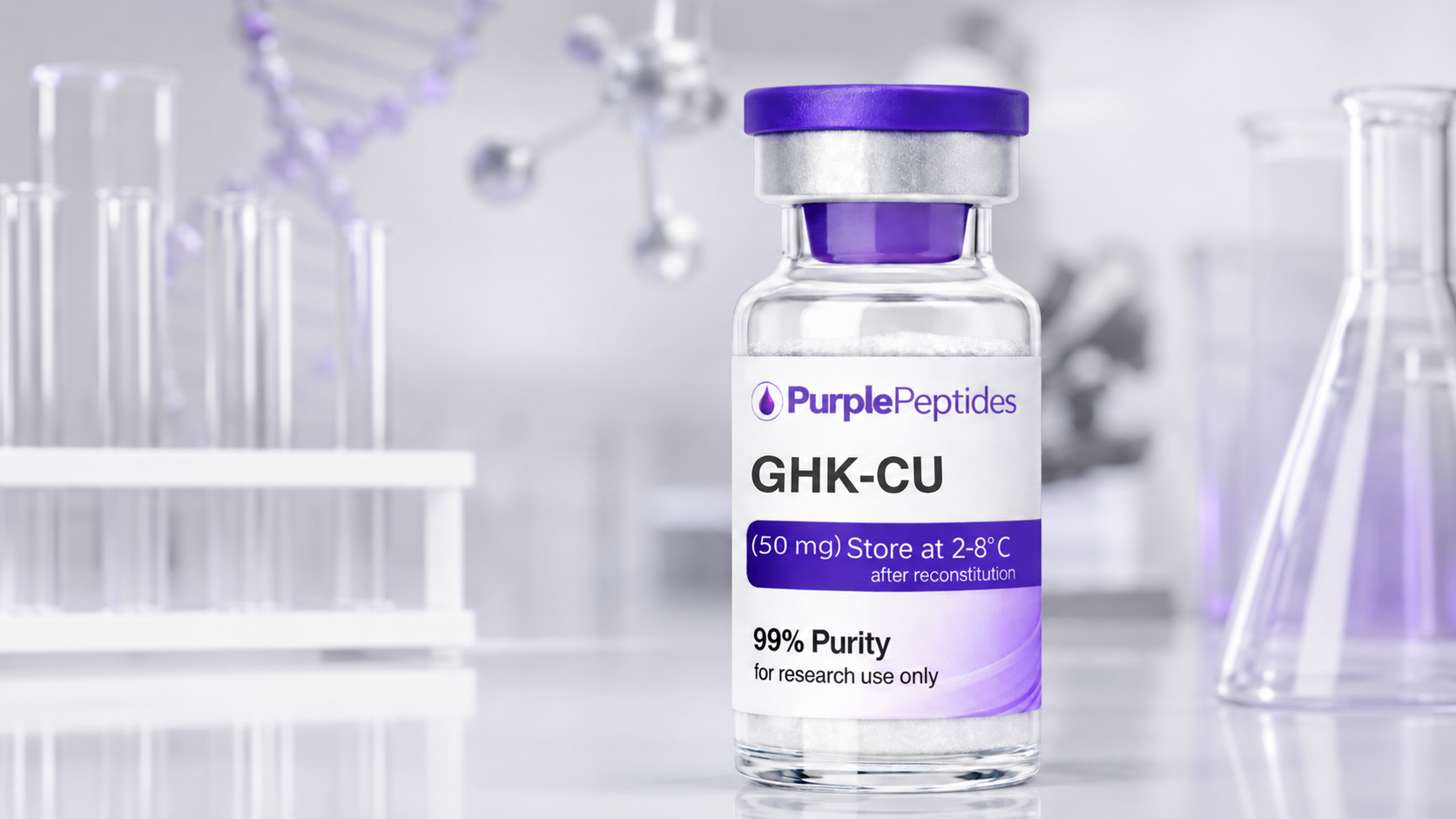
GHK-Cu 50mg
A copper peptide researched for collagen signaling, skin texture pathways, tissue remodeling, and repair-related biological activity.
Buy NowResearch note: GHK-Cu is widely known in topical cosmetic science, while injectable or non-cosmetic research applications should be treated as investigational.
Different Systems, Different Mechanisms
MOTS-c, tesamorelin, and GHK-Cu are often discussed together because they represent three different biological systems that become especially relevant after 40: mitochondrial energy, body composition signaling, and collagen/tissue remodeling.
- MOTS-c connects to mitochondrial energy, AMPK signaling, and metabolic flexibility.
- Tesamorelin connects to growth hormone signaling and visceral fat research in specific clinical contexts.
- GHK-Cu connects to collagen biology, skin research, and tissue remodeling pathways.
This is the key educational point: these peptides are not interchangeable. Each one belongs to a different mechanism category. A smarter research conversation begins by understanding the pathway first, not chasing the most popular compound.
What About GLP-1 Peptides?
GLP-1 related compounds such as semaglutide and dual incretin compounds such as tirzepatide are usually discussed in relation to appetite regulation, glycemic control, and metabolic management. They can be highly relevant to body composition conversations, but they work through different mechanisms than MOTS-c, tesamorelin, or GHK-Cu.
That difference matters. GLP-1 research focuses heavily on appetite and glucose-related signaling. MOTS-c is more focused on mitochondrial and metabolic signaling. Tesamorelin is connected to growth hormone release pathways. GHK-Cu is connected to collagen and repair biology. Understanding the difference helps create a more educated, responsible conversation.
Important Reality Check
Peptide research is exciting, but it should never be treated casually. Hormonal systems, metabolic pathways, inflammatory signaling, and tissue repair biology are complex. This is especially true for women navigating perimenopause, menopause, stress, sleep disruption, insulin resistance, or body composition changes.
- Many peptide applications remain investigational.
- Long-term safety data may be limited outside approved uses.
- Individual response can vary significantly.
- More signaling does not always mean better outcomes.
- Education should come before experimentation.
The future of women’s health is not about hacks. It is about smarter cellular education.
Explore Featured Research Peptides
These featured research products connect directly to the biology discussed in this article: mitochondrial energy signaling with MOTS-c and collagen/tissue remodeling research with GHK-Cu.
MOTS-c
Researched for mitochondrial signaling, AMPK activity, energy regulation, and metabolic flexibility.
Buy MOTS-c
GHK-Cu 50mg
Researched for collagen pathways, skin texture science, tissue remodeling, and repair signaling.
Buy GHK-CuEducational content only. This article is not medical advice, diagnosis, treatment guidance, or a usage protocol. Products discussed are for research purposes only and are not intended for human or animal consumption. Always follow applicable laws, regulations, and product labeling requirements.