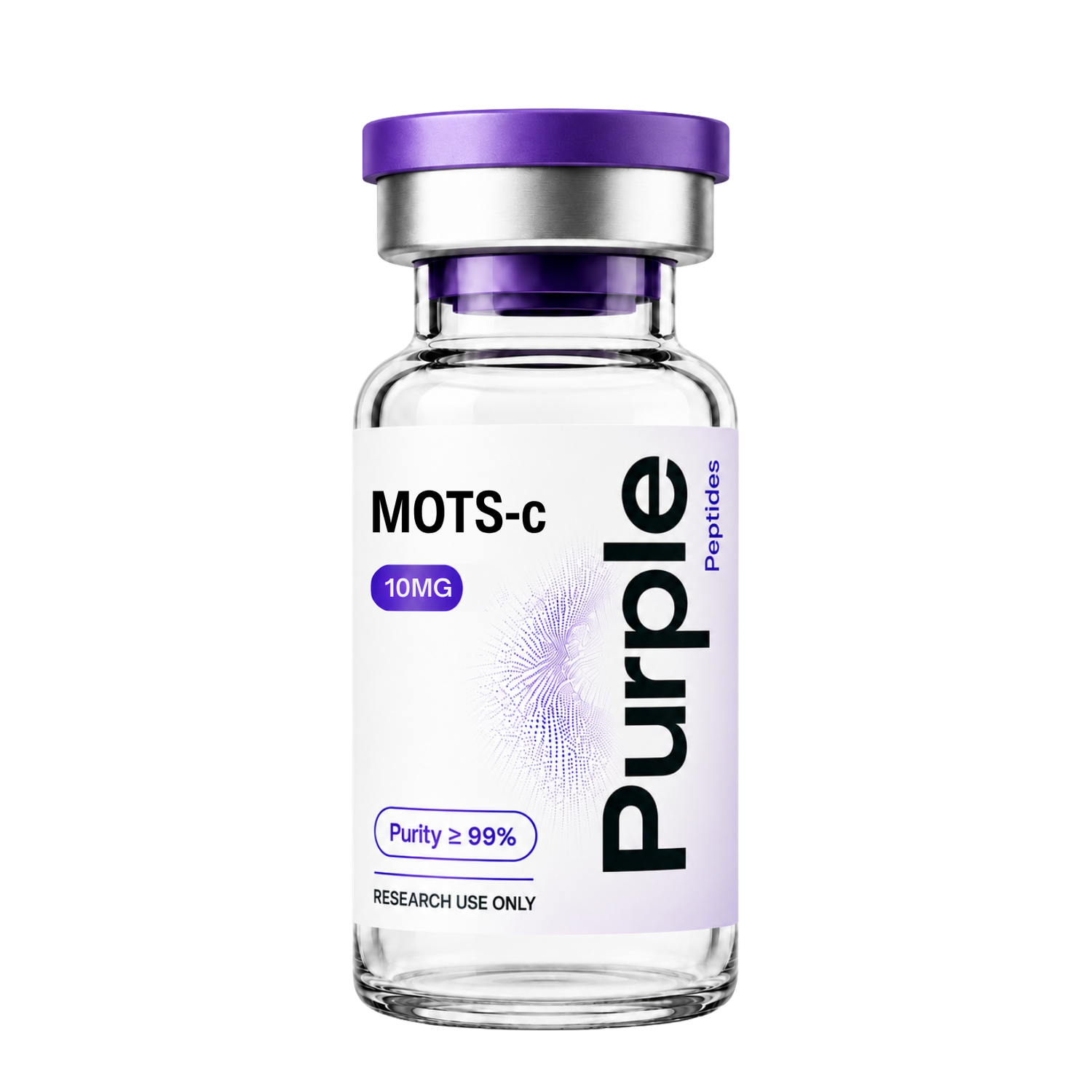
MOTS-c
What Is MOTS-c?
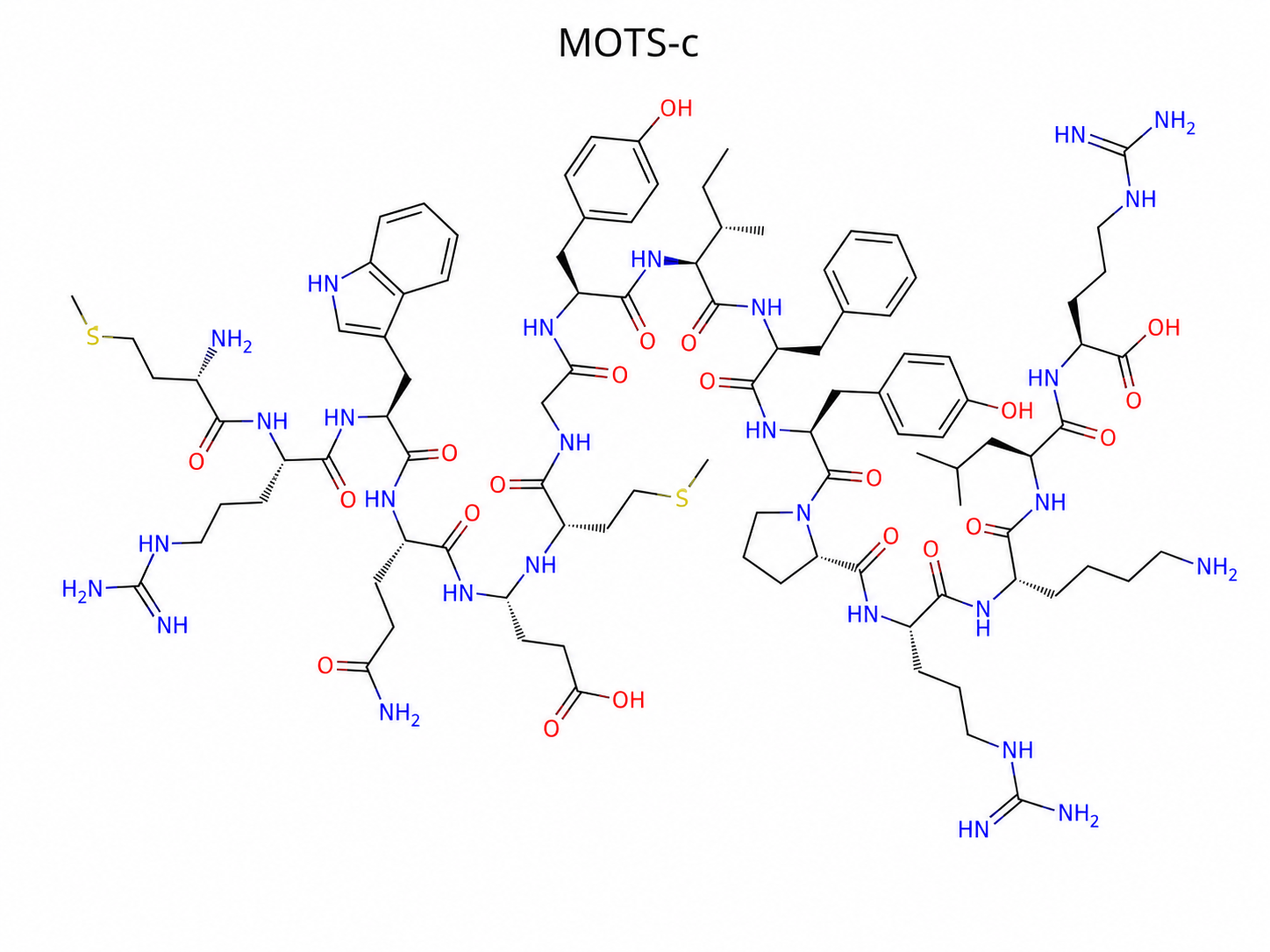
MOTS-c, short for Mitochondrial Open Reading Frame of the 12S rRNA-c, is a 16–amino acid mitochondrial-derived peptide studied for its role in metabolic signaling, cellular energy regulation, mitochondrial communication, and adaptive stress-response pathways.
Unlike many peptides encoded by nuclear DNA, MOTS-c is encoded within the mitochondrial genome. Its discovery expanded the understanding of mitochondria as active signaling organelles that do more than produce cellular energy. In laboratory research, MOTS-c is examined for its relationship with AMPK activation, glucose metabolism, insulin-signaling models, nuclear gene regulation, and stress-adaptation pathways.
Because of its connection to mitochondrial signaling and metabolic resilience, MOTS-c remains a major research compound in studies of energy balance, cellular stress response, exercise biology, aging models, and systemic metabolic regulation.
Certificate of Analysis
Third-party testing documentation available for purity and analytical verification.
MOTS-c Research Overview
MOTS-c is commonly studied in research involving mitochondrial-derived peptides, metabolic homeostasis, skeletal-muscle signaling, and cellular adaptation under stress.
Early research described MOTS-c as a mitochondrial-encoded peptide involved in insulin sensitivity and metabolic regulation. In experimental models, MOTS-c has been studied for its relationship with glucose utilization, AMPK signaling, folate-cycle interaction, de novo purine biosynthesis, lipid metabolism, and cellular energy balance.
Additional studies have examined MOTS-c in relation to exercise-response models, mitochondrial-nuclear communication, age-related metabolic decline, muscle homeostasis, and adaptive stress-response signaling.
History and Discovery
MOTS-c was first described in 2015 after researchers identified a short open reading frame within mitochondrial DNA. This discovery helped establish MOTS-c as part of a growing class of mitochondrial-derived peptides, alongside compounds such as Humanin and SHLP peptides.
The original research connected MOTS-c to skeletal-muscle metabolism, insulin sensitivity, and AMPK pathway activation. Later studies expanded its research relevance into nuclear gene regulation, cellular stress response, exercise physiology, aging biology, and metabolic adaptation.
This changed how researchers view mitochondria. Instead of being seen only as energy-producing organelles, mitochondria are now understood as signaling centers that can encode small peptides capable of influencing cellular and systemic biology.
MOTS-c Profile
MOTS-c Structure
Research Findings
MOTS-c has been studied across metabolic, cellular, mitochondrial, muscular, and systemic research models. The main research interest centers on how mitochondrial-encoded peptides may influence energy regulation and adaptive biological responses.
Key Areas of Investigation
- Metabolic Research: Glucose utilization, insulin-signaling models, AMPK activation, lipid metabolism, and energy-balance pathways.
- Mitochondrial Research: Mitochondrial communication, mitochondrial-derived peptide signaling, energy sensing, and mitochondrial-nuclear interaction.
- Cellular Research: Adaptive stress response, nuclear gene regulation, oxidative-stress models, cell survival signaling, and metabolic resilience.
- Muscle Research: Skeletal-muscle metabolism, exercise-response pathways, muscle homeostasis, physical-capacity models, and age-related muscle-function research.
- Systemic Research: Obesity-related models, metabolic flexibility, inflammatory-response pathways, aging biology, and physiological resilience.
Mechanism-Based Research Interest
MOTS-c is studied because it connects mitochondrial signaling with broader metabolic and cellular-response systems.
Researchers investigate MOTS-c for its relationship with:
- AMPK pathway activation
- Glucose metabolism and insulin-signaling models
- Folate-cycle and purine-biosynthesis interaction
- Mitochondrial-to-nuclear communication
- Nuclear gene-expression regulation during metabolic stress
- Exercise-response signaling
- Age-related metabolic adaptation
- Cellular resilience and stress-response pathways
This makes MOTS-c a valuable research compound for studying how mitochondria communicate with the rest of the cell and how mitochondrial-derived peptides may influence metabolism, stress adaptation, and systemic biological balance.
Investigational Research Context
MOTS-c should be considered an investigational research compound. Available research includes laboratory, animal, and limited human-context studies. Findings should not be interpreted as approved therapeutic outcomes.
This product is supplied for laboratory research only and is not intended for human consumption, clinical use, veterinary use, or self-experimentation.
Scientific References
View References
- Lee C. et al. (2015) — The mitochondrial-derived peptide MOTS-c promotes metabolic homeostasis and reduces obesity and insulin resistance.
- Lee C., Yen K., Cohen P. (2016) — MOTS-c: A novel mitochondrial-derived peptide regulating muscle and fat metabolism.
- Kim K.H. et al. (2018) — The mitochondrial-encoded peptide MOTS-c translocates to the nucleus to regulate nuclear gene expression in response to metabolic stress.
- Reynolds J.C. et al. (2021) — MOTS-c is an exercise-induced mitochondrial-encoded regulator of age-dependent physical decline and muscle homeostasis.
- Yang B. et al. (2021) — MOTS-c interacts synergistically with exercise intervention to regulate insulin resistance and glucose metabolism.
- Wan W. et al. (2023) — Mitochondria-derived peptide MOTS-c: effects and mechanisms related to stress, metabolism and aging.
- Kong B.S. et al. (2023) — Mitochondrial-encoded peptide MOTS-c, diabetes, and metabolic regulation.
- Zheng Y. et al. (2023) — MOTS-c: A promising mitochondrial-derived peptide for metabolic and aging-related research.
Need Help?