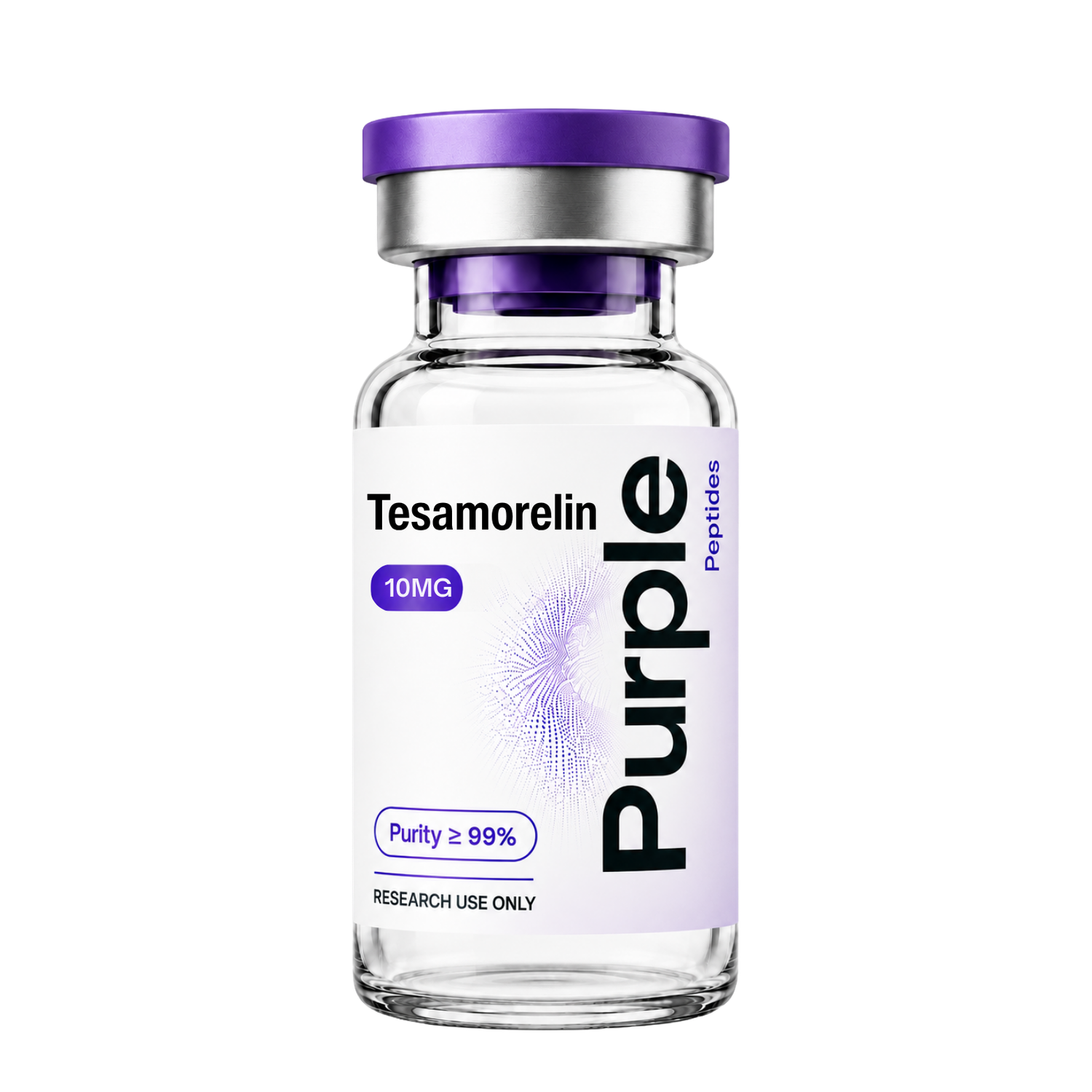
Tesamorelin
What Is Tesamorelin?
Tesamorelin is a synthetic growth hormone-releasing factor analog studied in laboratory, endocrine, and metabolic research settings for its interaction with growth hormone-releasing hormone receptor signaling and downstream IGF-1 pathway activity.
Tesamorelin is based on the 44-amino acid sequence of human growth hormone-releasing factor and includes an N-terminal hexenoyl modification designed to support peptide stability and receptor-focused research applications.
Research involving Tesamorelin has explored its relationship with endogenous growth hormone secretion, pulsatile GH release dynamics, IGF-1 activity, adipose tissue physiology, metabolic signaling, neuroendocrine communication, and body-composition-related research models.
Because of its targeted interaction with GHRH / GRF receptor pathways, Tesamorelin remains a compound of interest in endocrine research models focused on growth hormone dynamics, IGF-1 pathway regulation, adipose tissue metabolism, and metabolic pathway communication.
Tesamorelin Profile
Primary Research Focus: Growth hormone signaling, GHRH receptor interaction, IGF-1 pathway regulation, endocrine signaling, metabolic function, and adipose tissue research.
Certificate of Analysis
Third-party testing documentation available for purity and analytical verification.
Tesamorelin Research Overview
Tesamorelin is commonly studied in research involving endocrine signaling, growth hormone pathway regulation, IGF-1 activity, metabolic function, adipose tissue physiology, and neuroendocrine communication.
Laboratory, preclinical, and clinical-context research involving Tesamorelin has examined:
- Growth hormone signaling pathways
- GHRH / GRF receptor interaction
- IGF-1 pathway regulation
- Pulsatile growth hormone release
- Metabolic pathway activity
- Adipose tissue metabolism
- Body-composition-related mechanisms
- Neuroendocrine communication
- Peptide-receptor interaction
- Endocrine-metabolic pathway regulation
In controlled research environments, Tesamorelin is studied as a peptide tool for understanding how stabilized GHRH analogs may influence endogenous growth hormone release and downstream metabolic signaling.
History and Development
Tesamorelin was developed as a synthetic analog of naturally occurring human growth hormone-releasing factor.
The compound was designed to preserve the receptor-signaling properties of endogenous GRF while incorporating structural modification for improved peptide stability and research utility.
Early investigations focused on the relationship between growth hormone signaling, IGF-1 activity, adipose tissue metabolism, body-composition-related research models, and endocrine pathway regulation.
Its stabilized structure and receptor-specific research profile contributed to broader interest within endocrine biology, metabolic research, peptide signaling, and growth hormone pathway investigation.
Tesamorelin Structure
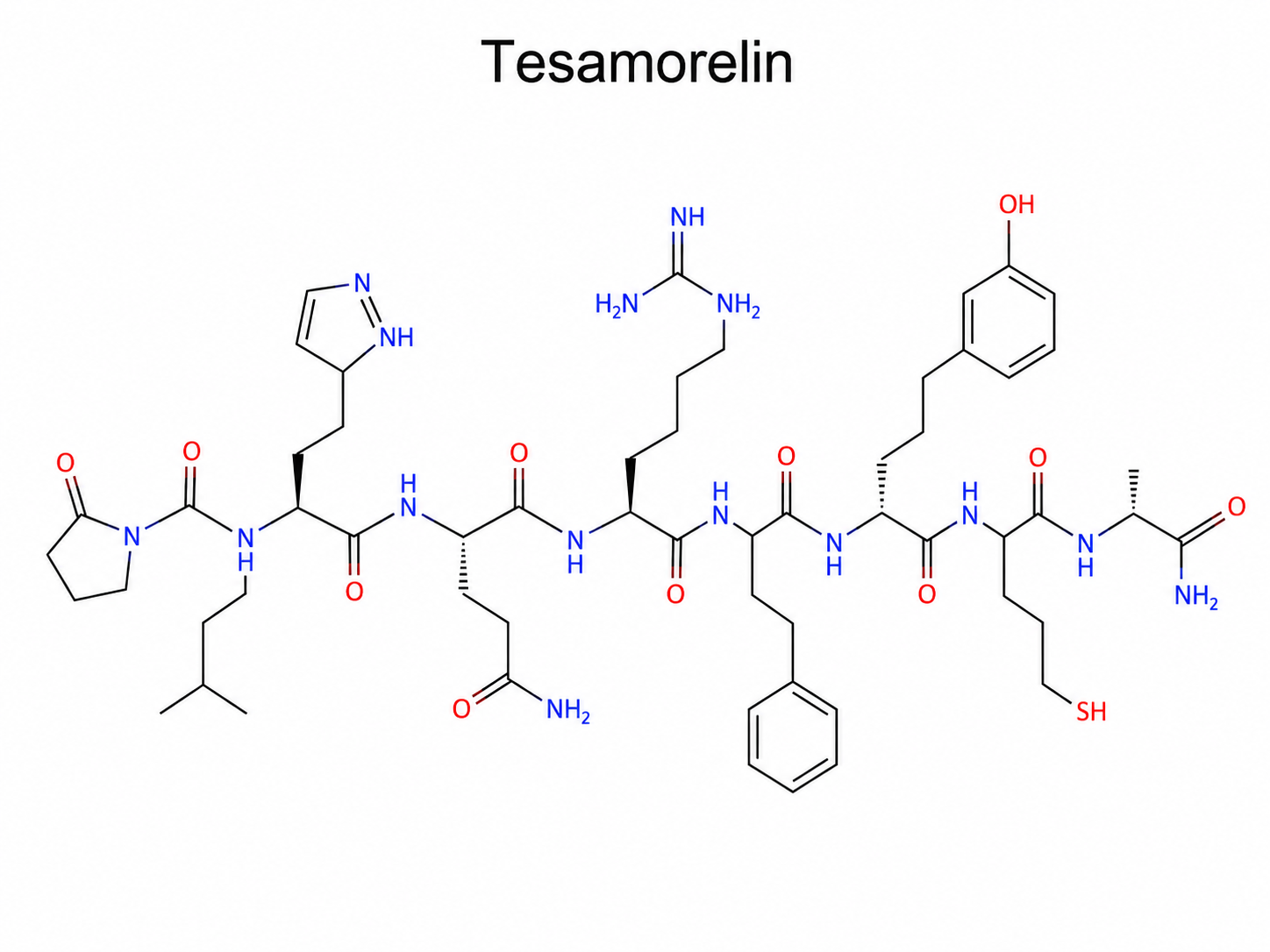
Primary Research Focus: Growth hormone signaling, GHRH receptor interaction, IGF-1 pathway regulation, metabolic signaling, adipose tissue physiology, and endocrine research models.
Research Findings
Tesamorelin has been studied across endocrine, metabolic, and physiological research models involving growth hormone signaling and IGF-1 pathway activity.
Published investigations have examined its relationship with pulsatile growth hormone release, IGF-1 regulation, adipose tissue physiology, metabolic pathway activity, liver fat research models, glucose-related observations, and body-composition-associated mechanisms.
Key Areas of Investigation
- Endocrine Research: Growth hormone signaling, GHRH receptor interaction, IGF-1 pathway regulation, hormonal signaling dynamics, and pituitary-response models.
- Metabolic Research: Adipose tissue metabolism, energy regulation pathways, lipid-related signaling, cellular metabolic activity, and metabolic pathway communication.
- Physiological Research: Neuroendocrine communication, growth hormone secretion dynamics, endocrine pathway activity, and adipose tissue response models.
- Cellular Research: Downstream IGF-1 signaling, tissue-level metabolic response, peptide-receptor interaction, and pathway regulation.
- Body-Composition Research: Experimental models involving adipose tissue behavior, visceral fat-related pathways, metabolic communication, and endocrine-adipose interaction.
Mechanism-Based Research Interest
Tesamorelin is studied because it connects several important endocrine and metabolic research pathways, including:
- GHRH / GRF receptor signaling
- Endogenous growth hormone secretion
- Pulsatile growth hormone release dynamics
- IGF-1 pathway regulation
- Adipose tissue metabolism
- Cellular metabolic regulation
- Neuroendocrine communication
- Energy-balance pathways
- Body-composition-related mechanisms
- Endocrine-metabolic pathway interaction
This makes Tesamorelin a useful investigational peptide for studying growth hormone regulation, IGF-1 activity, metabolic signaling, adipose tissue physiology, and endocrine pathway communication in controlled laboratory settings.
Research Applications
Tesamorelin may be useful in controlled research models focused on:
- Growth hormone signaling research
- GHRH receptor pathway studies
- IGF-1 activity models
- Endocrine regulation research
- Adipose tissue physiology
- Metabolic signaling models
- Body-composition-related experimental research
- Neuroendocrine communication
- Peptide stability and receptor interaction
- Endocrine-metabolic pathway investigation
What Researchers May Document
In controlled research environments, researchers may document broad patterns related to:
- Growth hormone signaling observations
- IGF-1 pathway activity
- Adipose tissue response models
- Metabolic pathway markers
- Neuroendocrine communication notes
- Peptide-receptor interaction
- Body-composition-related research patterns
- Protocol consistency
- Compound handling and reconstitution observations
The purpose of Tesamorelin research is not to promise outcomes. The purpose is to provide a structured compound for studying GHRH receptor signaling, endogenous growth hormone dynamics, IGF-1 pathway regulation, and metabolic communication models.
The Purple Standard™
Every vial supplied by Purple Peptides is handled according to the Purple Standard™. This includes third-party testing, purity verification, controlled storage practices, batch tracking, and internal rejection of any lot that does not meet required quality thresholds.
The Purple Standard™ exists to support consistency, documentation, and research confidence across every Purple Peptides product.
Investigational Research Context
Tesamorelin should be considered an investigational research compound in the context of this product page. Available research includes laboratory, preclinical, and clinical-context studies. Findings should not be interpreted as approved therapeutic, clinical, veterinary, cosmetic, metabolic, body-composition, or human-use outcomes for this product.
This product is supplied for laboratory research only and is not intended for human consumption, clinical use, veterinary use, diagnostic use, supplementation, or self-experimentation.
Scientific References
View References
- Falutz J. et al. (2010) — Effects of Tesamorelin, a growth hormone-releasing factor analog, in HIV-associated abdominal fat accumulation research.
- Falutz J. et al. (2010) — Effects of Tesamorelin on visceral adipose tissue and metabolic parameters in HIV-associated lipodystrophy research.
- Stanley T.L. et al. (2011) — Effects of a growth hormone-releasing hormone analog on endogenous growth hormone pulsatility and insulin sensitivity.
- Koutkia P. et al. (2004) — Growth hormone-releasing hormone research in HIV-associated lipodystrophy models.
- Makimura H. et al. (2012) — Metabolic effects of growth hormone-releasing hormone in obesity-related research.
- Stanley T.L. et al. (2014) — Effect of Tesamorelin on visceral fat and liver fat in HIV-associated abdominal fat accumulation research.
- Clemmons D.R. et al. (2017) — Safety and metabolic effects of Tesamorelin, a growth hormone-releasing factor analog, in type 2 diabetes research context.
- DailyMed — Tesamorelin product labeling, description, molecular structure, and clinical pharmacology information.
- PubChem — Tesamorelin compound profile, molecular formula, molecular weight, and compound identifier.
Need Help?
If you have questions regarding certificates of analysis, product documentation, or general research inquiries, our support team is here to assist.