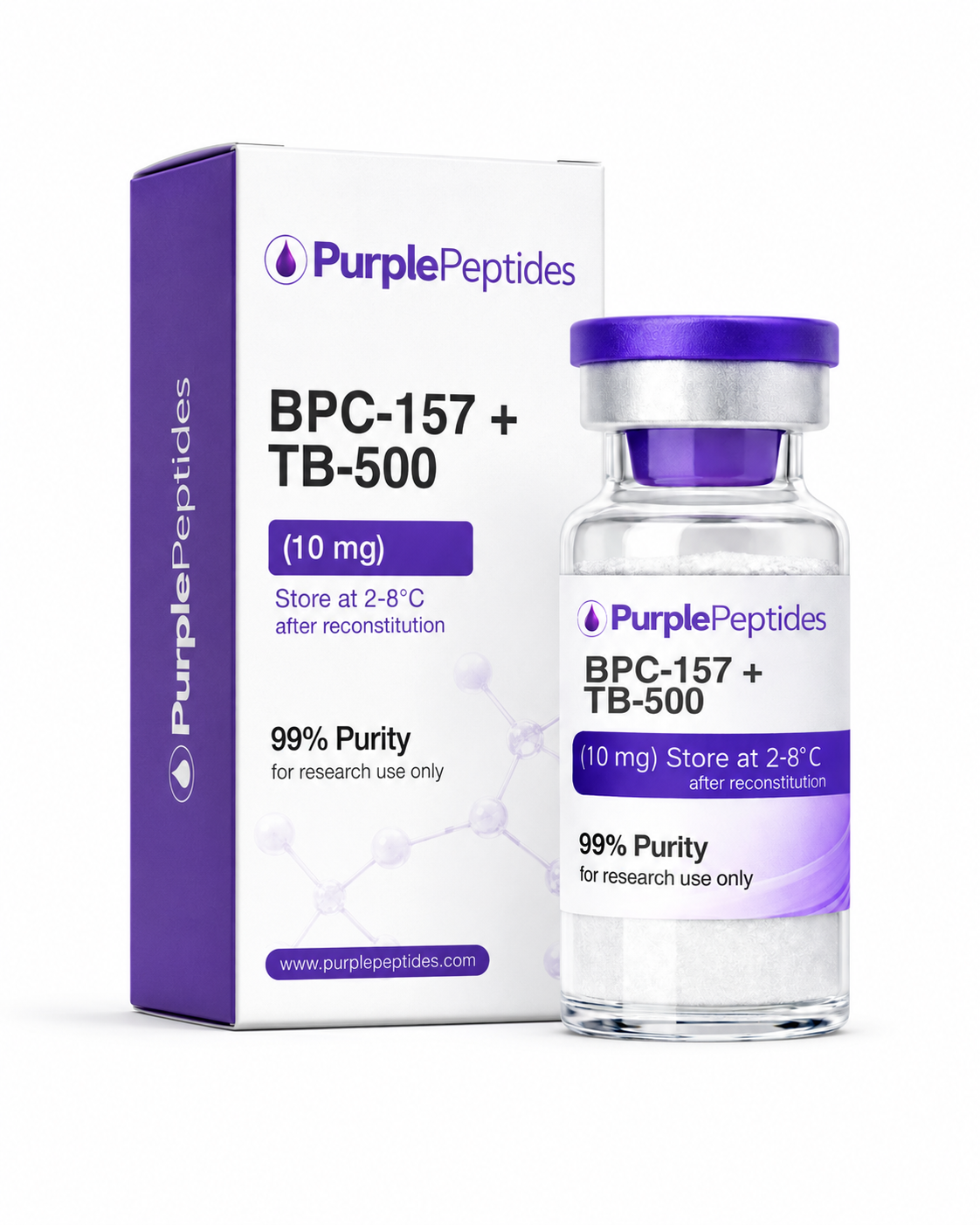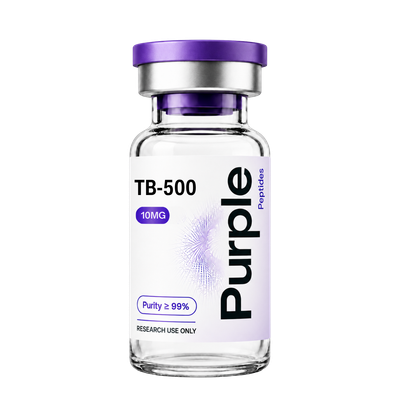
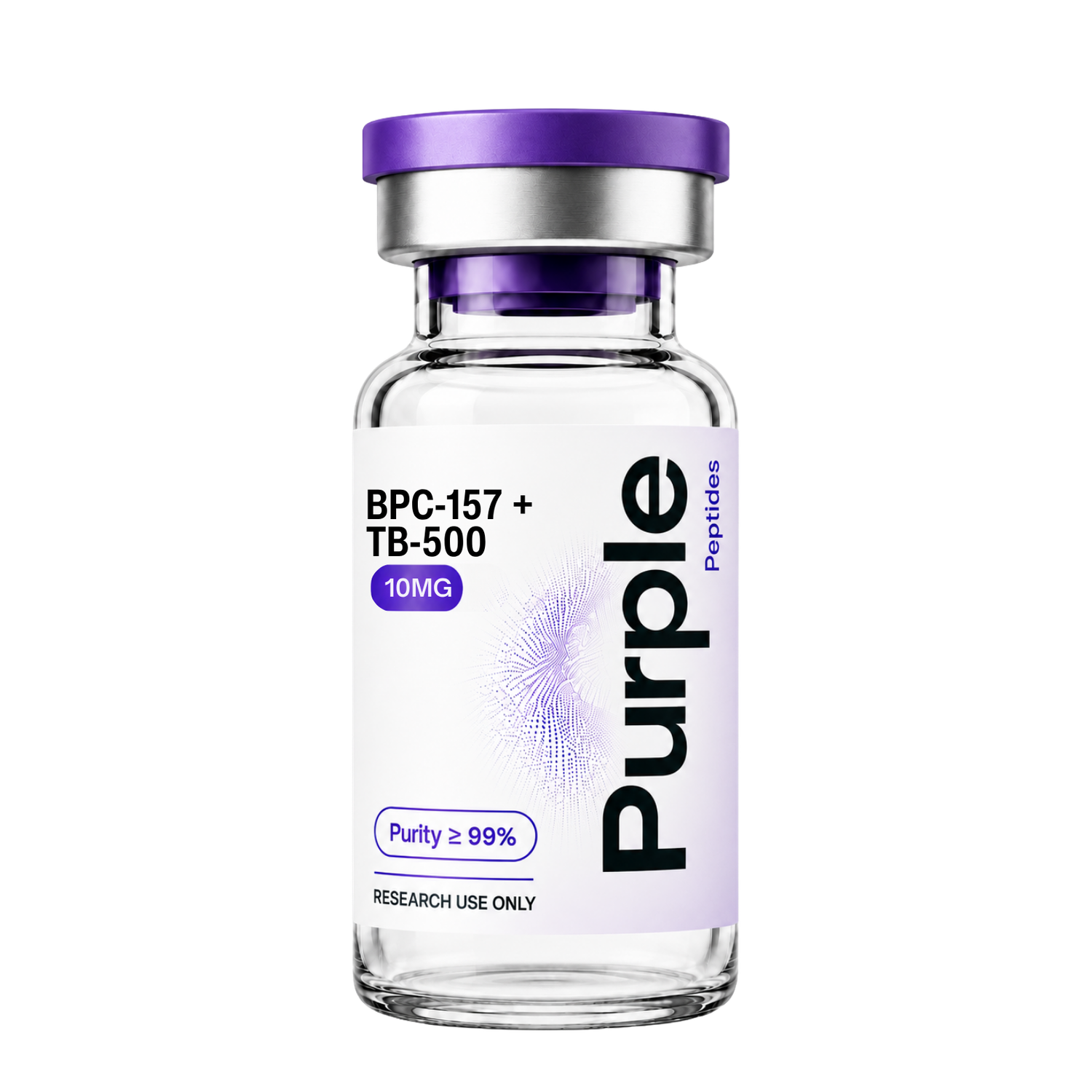
BPC-157 + TB-500
What Is the BPC-157 & TB-500 Blend?
The BPC-157 + TB-500 blend is a research peptide combination commonly examined in laboratory and preclinical models related to tissue-response pathways, cellular migration, angiogenic signaling, cytoskeletal organization, and regenerative biology.
BPC-157 is a synthetic pentadecapeptide made up of 15 amino acids. It is modeled after a protective peptide sequence associated with gastric juice and has been studied in preclinical research for cellular protection, collagen organization, fibroblast activity, nitric-oxide signaling, and tissue-integrity models.
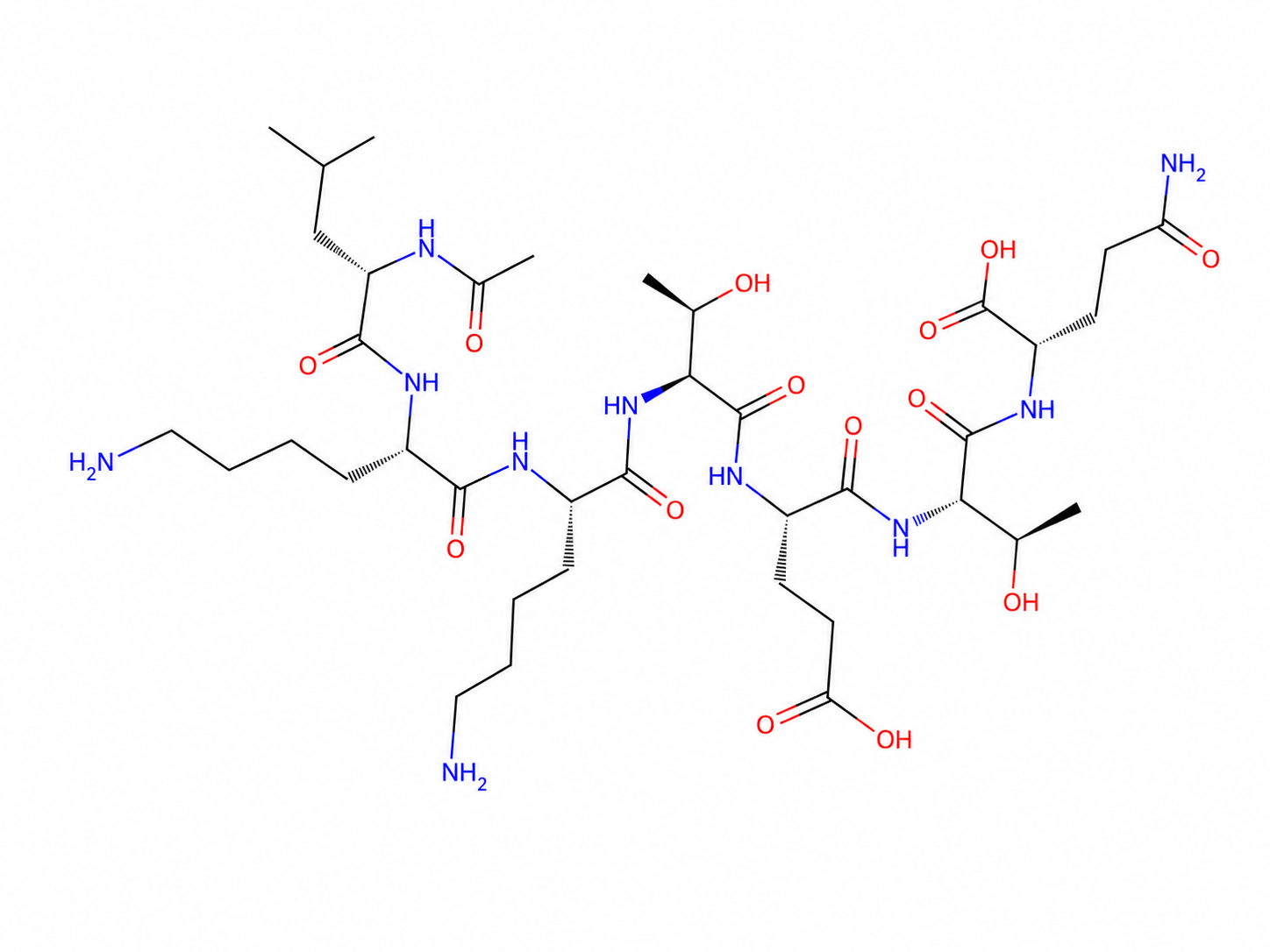
TB-500 is commonly described as a synthetic fragment related to thymosin beta-4, a naturally occurring actin-binding peptide involved in cell movement, cytoskeletal regulation, angiogenesis, and repair-related signaling.
Together, BPC-157 and TB-500 are studied for complementary research interest in cellular repair models, vascular signaling, connective-tissue biology, inflammation-response pathways, and regenerative mechanisms.
Certificate of Analysis
Third-party tested for 99% purity.
BPC-157 + TB-500 Research Overview
The BPC-157 + TB-500 blend brings together two synthetic research peptides that are frequently discussed in tissue-repair and regenerative-biology literature.
BPC-157 has been investigated in preclinical models for its potential relationship with fibroblast migration, tendon-cell activity, collagen regulation, endothelial response, gastrointestinal resilience, and nitric-oxide pathway modulation.
TB-500, through its relationship to thymosin beta-4 research, is studied for actin regulation, cellular migration, angiogenesis, wound-healing models, inflammatory-response pathways, and cytoskeletal remodeling.
When evaluated together in research contexts, these peptides are often explored for their relevance to connective-tissue models, vascular remodeling, cellular recovery signaling, and structural repair pathways.
History and Development
The research interest behind BPC-157 and TB-500 comes from two separate areas of peptide biology.
BPC-157 was developed from investigations into protective peptide fragments associated with gastric juice. Early research focused on gastrointestinal protection and cytoprotection, while later studies expanded into musculoskeletal, tendon, ligament, vascular, neurological, and dermal research models.
Thymosin beta-4 was first identified as a thymic peptide and later became widely studied for its role as a major actin-sequestering molecule. TB-500 is commonly discussed as a synthetic peptide fragment related to the active region of thymosin beta-4.
The combination is of interest in laboratory research focused on tissue integrity, angiogenic signaling, cellular movement, extracellular-matrix organization, and regenerative response models.
BPC-157 + TB-500 Blend Profile
BPC-157 Structure
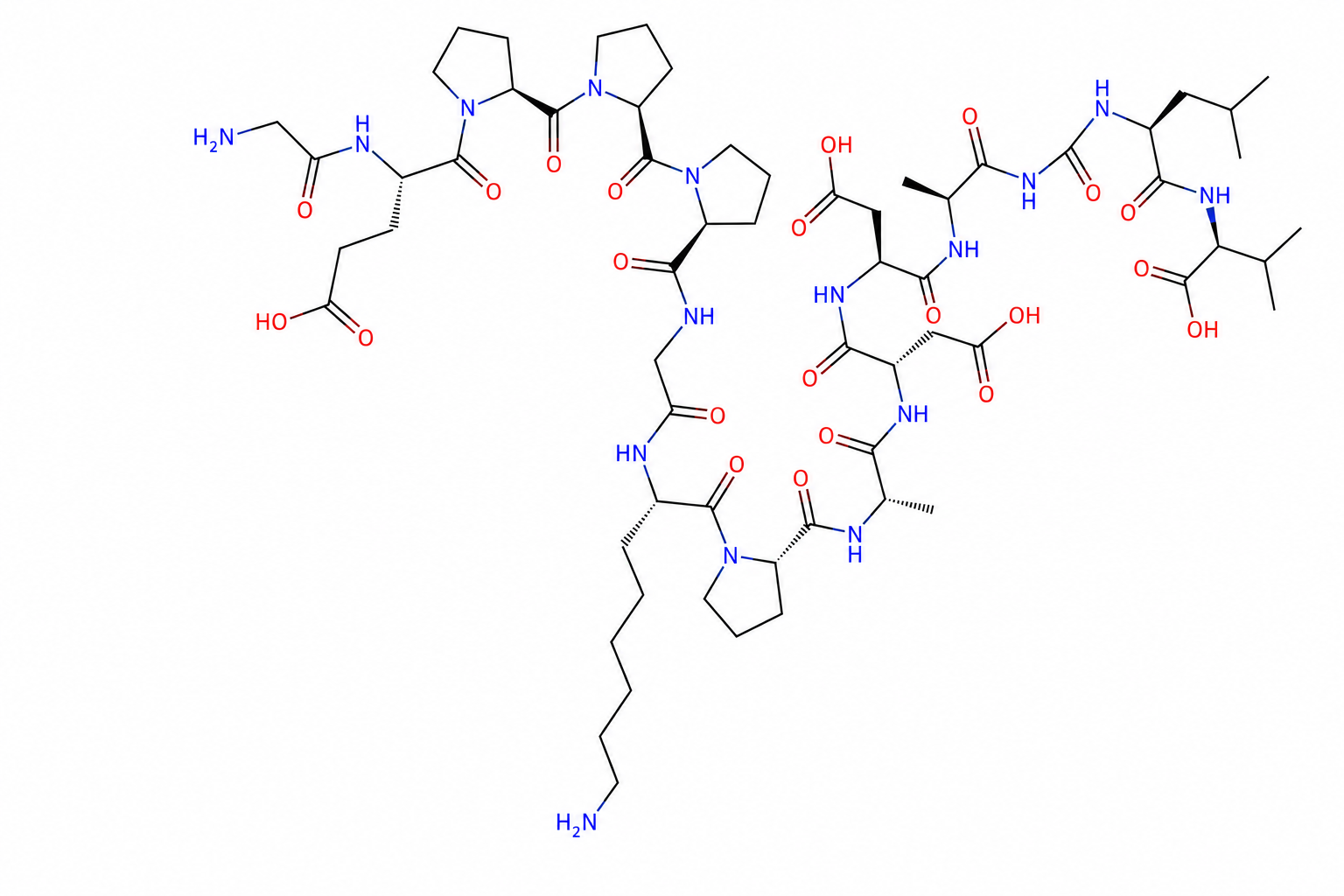
TB-500 Structure
Research Findings
BPC-157 and TB-500 are studied across multiple laboratory and preclinical research areas, especially those involving structural tissue response, vascular signaling, cellular movement, and inflammation-related pathways.
Key Areas of Investigation
- Structural Research: Tendon, ligament, muscle, connective tissue, collagen organization, and extracellular-matrix models.
- Vascular Research: Angiogenesis, endothelial response, nitric-oxide signaling, and vascular-remodeling pathways.
- Cellular Migration: Fibroblast activity, cytoskeletal dynamics, actin regulation, and cell-movement models.
- Dermal Research: Wound-closure dynamics, epithelial response, tissue remodeling, and skin-integrity models.
- Systemic Research: Gastrointestinal resilience, cellular survival, cytoprotection, and stress-response signaling.
Investigational Research Context
BPC-157 and TB-500 should be considered investigational research compounds. Most available data comes from laboratory, animal, or preclinical models. These findings should not be interpreted as approved therapeutic outcomes, and this product is not intended for human or animal use.
Scientific References
View References
- Chang C-H. et al. (2011) — BPC 157 and tendon healing research. Journal of Applied Physiology.
- Chang C-H. et al. (2014) — BPC 157 and growth hormone receptor expression in tendon fibroblasts. Molecules.
- Gwyer D. et al. (2019) — BPC 157 and musculoskeletal soft tissue healing review. Cell and Tissue Research.
- Seiwerth S. et al. (2021) — BPC 157 and wound-healing research. Frontiers in Pharmacology.
- McGuire F.P. et al. (2025) — Regeneration or Risk? BPC-157 narrative review. Current Reviews in Musculoskeletal Medicine.
- Esposito S. et al. (2012) — N-terminal acetylated 17-23 fragment of thymosin beta-4 identified in TB-500. Drug Testing and Analysis.
- Goldstein A.L. et al. (2012) — Thymosin beta-4 as a multi-functional regenerative peptide. Expert Opinion on Biological Therapy.
- Philp D. et al. (2003) — Actin-binding site on thymosin beta-4 and angiogenesis. FASEB Journal.
- Malinda K.M. et al. (1999) — Thymosin beta-4 and wound-healing research. Journal of Investigative Dermatology.
- Ying Y. et al. (2023) — Thymosin beta-4 and actin binding modes. Current Protein & Peptide Science.
Need Help?