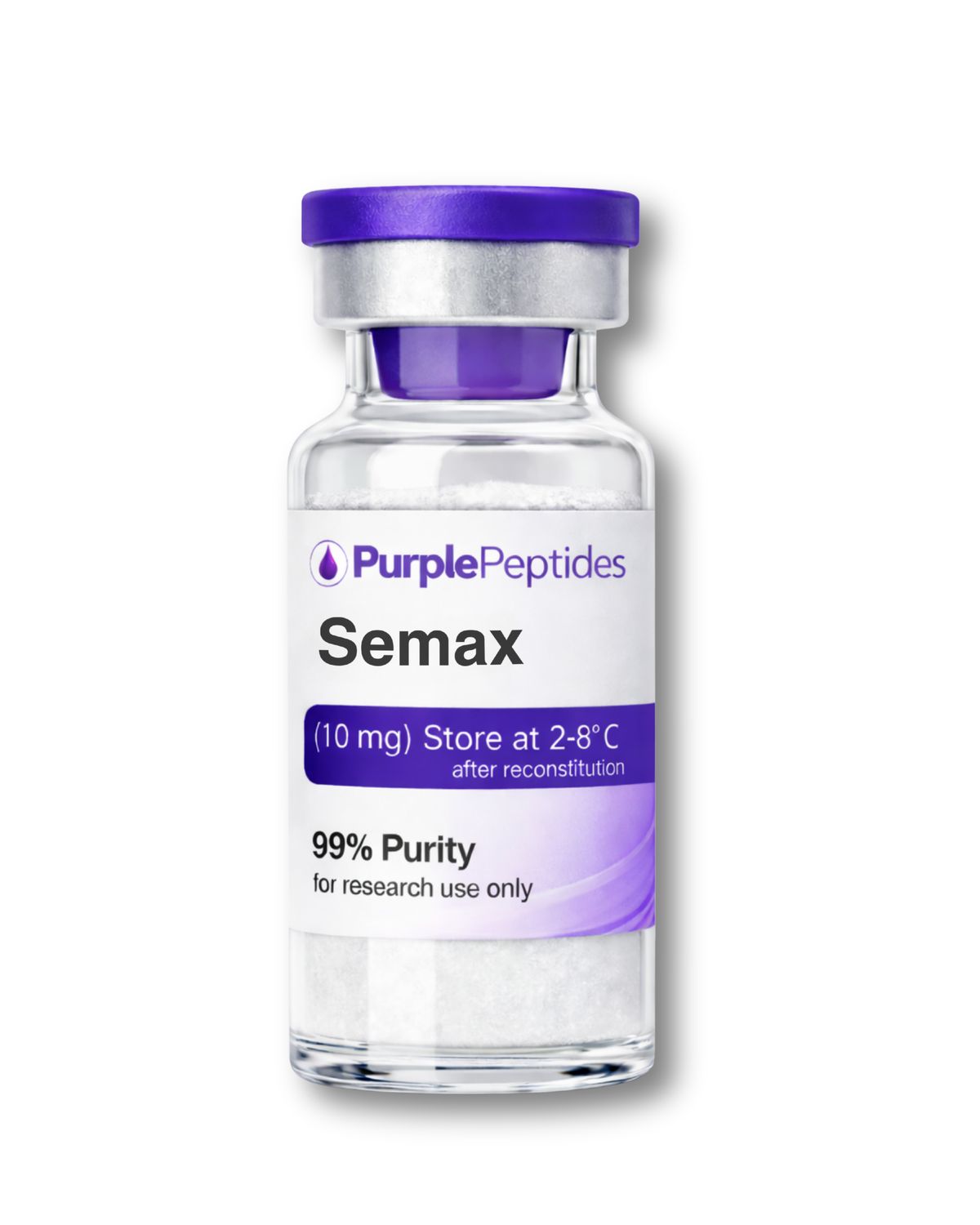
Semax
What Is Semax?
Semax is a synthetic peptide derived from a fragment of adrenocorticotropic hormone (ACTH 4–10), modified to remove hormonal activity while preserving neuroactive properties. In research environments, Semax is studied for its role in neuroregulatory signaling, cellular stress response, and central nervous system (CNS) function. Investigations commonly explore its influence on BDNF expression, oxidative stress pathways, and neural cell signaling in controlled laboratory and preclinical models.
Certificate of Analysis
Third-party tested for 99% purity
Semax Overview
Semax is a synthetic heptapeptide derived from ACTH (4–10) with an added C-terminal Pro-Gly-Pro sequence, which enhances stability and biological activity. It has been studied in laboratory and preclinical models for its involvement in:
- Neuroprotection and neuronal signaling
- Cognitive and memory-related processes
- Cellular stress-response pathways
Research suggests Semax may modulate neurotrophic factor expression, neurotransmitter systems, and oxidative balance, making it a valuable compound for studies focused on CNS resilience and adaptive signaling.
Ashmarin I.P. et al., 1997History and Development
Semax was developed in Russia during the 1980s–1990s as part of research into synthetic peptides with neuromodulatory potential. Scientists aimed to preserve the neuroactive core of ACTH while eliminating its endocrine effects, resulting in a non-hormonal peptide optimized for CNS research.
Over time, research expanded beyond initial neuroactivity studies to include synaptic plasticity, gene-expression regulation, and neuronal survival mechanisms in experimental brain models.
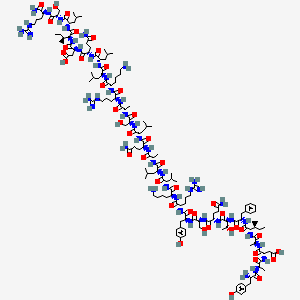
Inozemtsev A.N. et al., 2008Semax Structure
Research Findings
Semax has been evaluated across neurological, cognitive, and systemic research models. Published studies highlight its relevance to neuroprotective signaling, cognitive function, and stress-adaptation pathways, particularly in preclinical settings.
Key Areas of Investigation:
- Neurological: Neuroprotection, intracellular signaling, neuronal resilience
- Cognitive: Learning processes, memory-related signaling, cognitive function
- Systemic: Stress response modulation, repair pathways, biological resilience
Collectively, these findings suggest broad experimental utility for Semax across neurological, cognitive, and systemic domains. By influencing neurotransmitter systems and supporting protective cellular responses, Semax provides a versatile research platform for studying CNS regulation, stress adaptation, and systemic resilience in laboratory models.
Ashmarin I.P. et al., 1995