Product Catalog
Blends
Protocols
Explore Our Products
All orders ship same day from our US facility.
Made in the USA
Peptides are precision-synthesized and lyophilized at state-of-the-art laboratories in the United States.
Frequently Asked Questions
Peptides are short chains of amino acids that occur naturally in organisms, where they act as messengers in many biological systems. While some peptides have been developed for medical use, laboratory research focuses on understanding their activity at the cellular level, examining how they impact essential processes in vitro.
Products from Direct Peptides do not include usage instructions, as they are strictly for in vitro research and prohibited by law for human or animal use. Misuse or unlawful application will result in permanent denial of service.
Orders are typically processed and shipped within 24 hours on weekdays. Delivery times vary by location, but most domestic orders arrive within 3–5 business days. You’ll receive tracking information as soon as your order ships.


The Phoenix 30
What is The PHOENIX Protocol™?
The PHOENIX Protocol™ is a 30-day, research-informed connective tissue and recovery signaling framework designed to examine how structural communication, cellular remodeling, mitochondrial function, and extracellular matrix processes interact during periods of active tissue stress.
Rather than focusing on isolated repair mechanisms, The PHOENIX Protocol™ integrates complementary research compounds studied across structural, cellular, metabolic, and recovery signaling domains. This systems-based approach reflects emerging research suggesting that recovery signaling occurs through coordinated biological communication rather than single-pathway intervention.
Protocol Overview
The PHOENIX Protocol™ was designed as a coordinated 30-day recovery cycle examining how connective tissue signaling, cellular remodeling, mitochondrial activity, and structural communication processes interact during active stress phases.
- Connective tissue signaling and structural communication
- Cellular migration and remodeling pathways
- Mitochondrial function and cellular energy metabolism
- Collagen and extracellular matrix communication
The PHOENIX Protocol™ is intended for research and educational use only and is not designed to diagnose, treat, cure, or prevent any disease.
Short Overview
The PHOENIX Protocol™ is a research-informed, 30-day protocol designed to support connective tissue signaling, cellular coordination, mitochondrial function, metabolic signaling, and structural integrity during periods of active tissue stress.
The PHOENIX Protocol™ was developed for individuals in recovery phases — not just rebuilding, but re-establishing coordinated biological signaling.
Rather than focusing on symptom relief, this protocol integrates research compounds studied for their roles in connective tissue communication, cellular remodeling, collagen interaction, mitochondrial function, and cellular energy metabolism.
For research and educational purposes only. Not intended for human consumption.
What Makes The PHOENIX Protocol™ Different
- Designed for active injury or tissue stress phases
- Focuses on signaling coordination rather than symptom masking
- Integrates structural + cellular + metabolic domains
- Structured as a 30-day recovery phase
- Research-driven, systems-based formulation
What You Receive in The PHOENIX Protocol™ 30-Day Kit
Kit Contents (Per 30-Day Protocol)
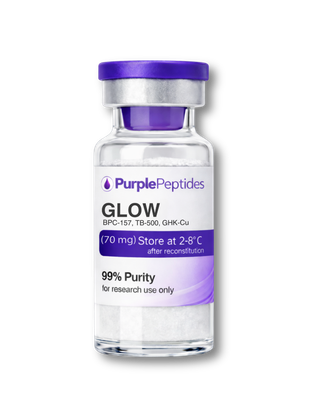
- BPC-157
Vial Size: 10 mg
Vial Count: 1
Total Provided: 10 mg - TB-500
Vial Size: 10 mg
Vial Count: 1
Total Provided: 10 mg - GHK-Cu
Vial Size: 50 mg
Vial Count: 1
Total Provided: 50 mg - NAD⁺
Vial Size: 1000 mg
Vial Count: 1
Total Provided: 1000 mg
Each kit is assembled to align with a complete 30-day coordinated recovery signaling cycle.
Research Domains Addressed
Connective Tissue Signaling
Certain peptides included in The PHOENIX Protocol™ have been studied for their interaction with tendon, ligament, fascia, and muscle-related signaling pathways. This domain focuses on extracellular matrix communication and structural adaptation during stress.
Cellular Migration & Remodeling
Recovery requires coordinated cellular activity. Peptides in this protocol have been studied in laboratory models for their roles in cellular migration, angiogenic signaling pathways, and tissue remodeling processes.
Mitochondrial Function & Cellular Energy
NAD⁺ is studied for its role in cellular energy metabolism, mitochondrial function, redox reactions, and stress-response pathways. This domain focuses on the cellular energy systems that support biological adaptation and resilience.
Collagen & Structural Integrity
Copper-binding peptides in this protocol have been studied for their involvement in collagen expression, extracellular matrix organization, and structural communication across connective tissues.
Why a 30-Day Protocol
Recovery and tissue adaptation occur across multi-week phases. The PHOENIX Protocol™ is structured as a 30-day recovery block to examine early-stage connective tissue, cellular remodeling, mitochondrial activity, and structural signaling coordination during active stress periods.
This reflects an initial structured phase within a broader biological adaptation timeline.
Research-Based Ingredient Overview
BPC-157
BPC-157 is a synthetic peptide derived from a gastric protein fragment, widely studied in preclinical models for its involvement in connective tissue signaling, cytoprotective pathways, and structural communication processes.
TB-500
TB-500 is a synthetic fragment analog of thymosin beta-4, researched for its role in cellular migration, actin regulation, and tissue remodeling pathways in laboratory models.
GHK-Cu
GHK-Cu is a copper-binding peptide studied for its role in collagen signaling, extracellular matrix organization, and tissue communication processes.
NAD⁺
NAD⁺, or Nicotinamide Adenine Dinucleotide, is a naturally occurring coenzyme present in all living cells and studied for its role in cellular energy metabolism, mitochondrial function, DNA repair processes, redox reactions, and cellular stress-response pathways.
Why These Compounds Are Studied Together
- BPC-157: Connective tissue signaling & structural communication
- TB-500: Cellular remodeling & migration pathways
- GHK-Cu: Collagen signaling & structural integrity
- NAD⁺: Cellular energy metabolism, mitochondrial function & cellular resilience
Together, these compounds form a coordinated recovery-focused research framework aligned with systems biology models examining tissue signaling, cellular remodeling, collagen communication, mitochondrial activity, and structural adaptation.
How The PHOENIX Protocol™ Works
Built for Coordinated Recovery Signaling
Some products focus on short-term relief. The PHOENIX Protocol™ was designed to explore how biological systems communicate during active tissue stress phases.
1. Structural Communication
Certain peptides in this protocol are studied for how connective tissues respond to mechanical stress and signaling demands.
2. Cellular Remodeling
Recovery requires structural reorganization at the cellular level. Peptides included in this protocol are studied for their interaction with remodeling pathways.
3. Cellular Energy & Mitochondrial Function
NAD⁺ is studied for its central role in mitochondrial function, cellular energy metabolism, redox balance, and stress-response signaling.
4. Collagen & Matrix Signaling
Copper-binding peptides in this protocol are studied for their role in extracellular matrix and collagen communication.
What The PHOENIX Protocol™ Is — and Is Not
The PHOENIX Protocol™ IS:
- Research-based
- Structured
- Designed for active tissue stress phases
- A coordinated 30-day recovery signaling phase
The PHOENIX Protocol™ IS NOT:
- A quick-fix guarantee
- A pain treatment
- A medical therapy
- A long-term maintenance program
Frequently Asked Questions
Is The PHOENIX Protocol™ approved for human use?
No. The PHOENIX Protocol™ products are provided strictly for research and educational purposes only and are not approved for human consumption.
Is this a medical treatment protocol?
No. The PHOENIX Protocol™ is a research framework designed to examine connective tissue, cellular, mitochondrial, and structural signaling pathways during active tissue stress phases. It is not a medical therapy.
Why is this structured as a 30-day protocol?
Recovery and signaling adaptation typically occur across multi-week phases. The PHOENIX Protocol™ aligns with a structured 30-day block to examine coordinated signaling support during active tissue stress periods.
Need Help?
If you have questions regarding certificates of analysis, product documentation, or general research inquiries, our support team is here to assist.
Contact SupportImportant Notice
The PHOENIX Protocol™ is intended for research and educational use only. These products are not approved for human consumption and are not intended to diagnose, treat, cure, or prevent any disease.