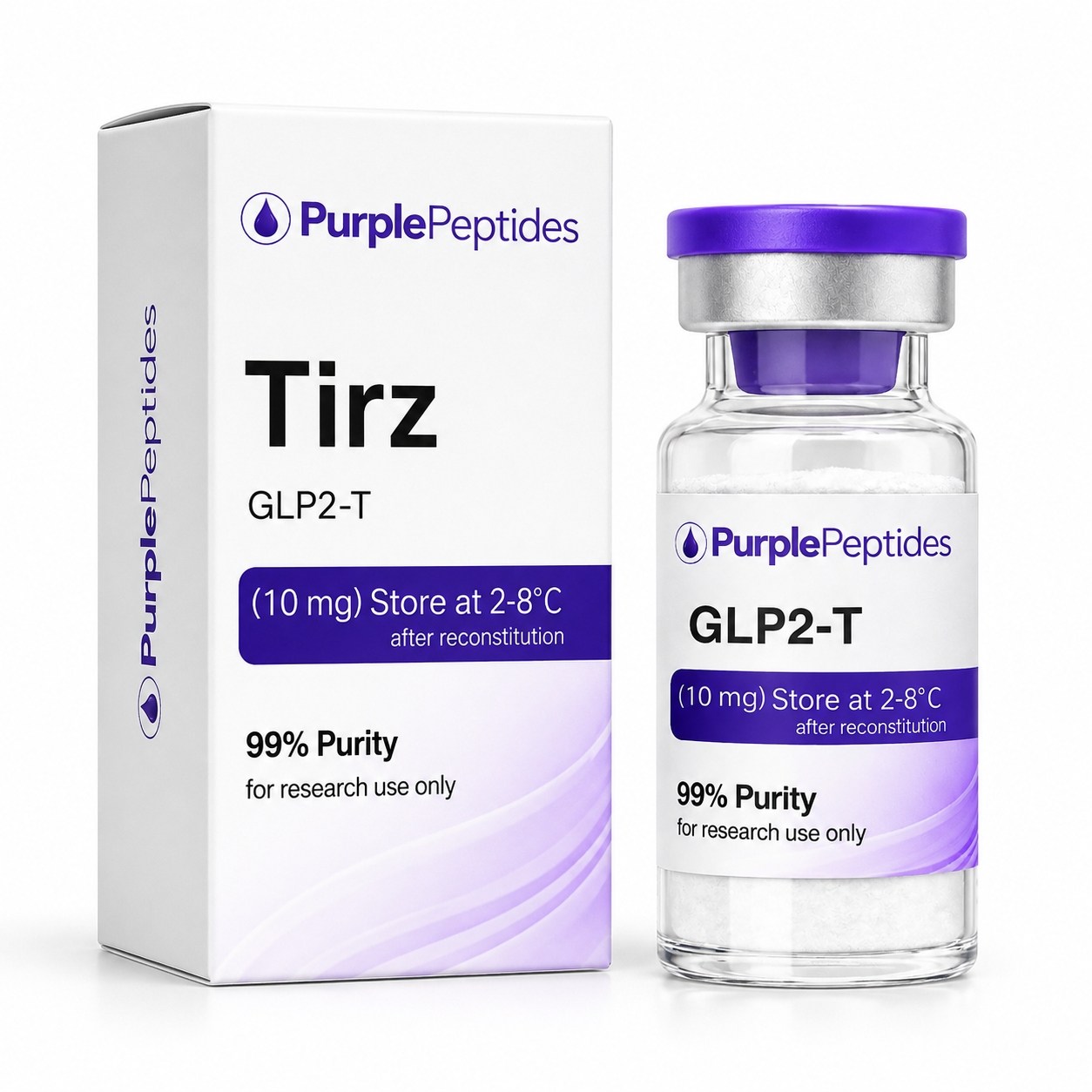
Tirz
What Is Tirz?
Tirz, also known as Tirzepatide, LY3298176, or GLP2-T in research-vendor settings, is a synthetic dual GIP and GLP-1 receptor agonist studied for its relationship with incretin signaling, glucose regulation, insulin-response pathways, energy-balance biology, and integrated endocrine communication.
Unlike single-receptor incretin compounds, tirzepatide is designed to activate both glucose-dependent insulinotropic polypeptide receptor signaling and glucagon-like peptide-1 receptor signaling. This dual-pathway activity makes it a compound of interest in laboratory, preclinical, and controlled clinical research focused on metabolic regulation, hormone crosstalk, insulin sensitivity, appetite-related signaling, and systemic energy balance.
Because Tirz interacts with two major incretin pathways, it provides researchers with a useful platform for studying how GIP and GLP-1 receptor activity may influence metabolic adaptation, glucose handling, lipid-related pathways, and endocrine signaling integration.
Certificate of Analysis
Third-party testing documentation available for purity and analytical verification.
GLP2-T / Tirzepatide Research Overview
GLP2-T, commonly known as Tirzepatide, is a synthetic acylated peptide research compound developed to engage both GIP and GLP-1 receptor pathways.
GIP receptor signaling is studied for its role in insulin response, nutrient handling, adipose-tissue signaling, beta-cell biology, and metabolic communication.
GLP-1 receptor signaling is studied for its relationship with glucose-dependent insulin secretion, glucagon regulation, gastric-emptying models, appetite-related signaling, and broader energy-balance pathways.
By combining both receptor activities into a single molecule, tirzepatide allows researchers to examine dual incretin signaling rather than isolated GLP-1 or GIP activity. This makes it valuable for research into metabolic regulation, glucose-response models, endocrine signaling, and body-composition-related pathways.
History and Development
The development of Tirz / Tirzepatide comes from decades of incretin biology research.
Early studies identified GLP-1 and GIP as important gut-derived hormones involved in glucose homeostasis and insulin-response signaling. GLP-1 receptor agonist research later became a major area of metabolic science, leading researchers to investigate whether combining GLP-1 activity with GIP activity could produce broader metabolic signaling effects.
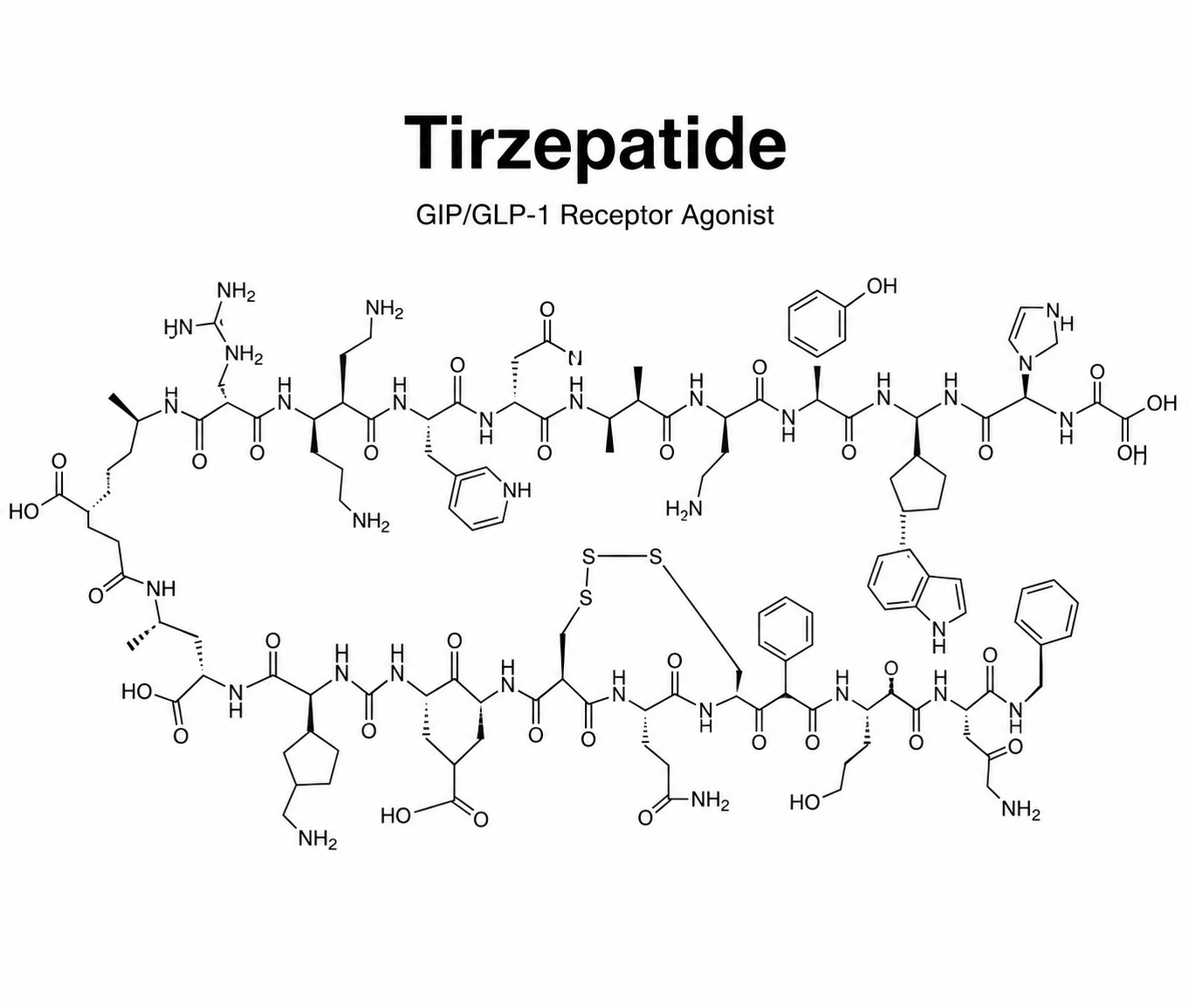
Tirzepatide, also known as LY3298176, was developed as a dual GIP and GLP-1 receptor agonist. Its structure is based primarily on the GIP peptide sequence and includes modifications that allow extended activity in research models.
This dual-agonist design reflects a major shift in metabolic peptide research: moving from single-receptor targeting toward multi-pathway endocrine signaling models.
Tirzepatide Profile
Tirzepatide Structure
Research Findings
Tirzepatide has been studied across metabolic, endocrine, cellular, molecular, and systemic research models. The main research interest centers on how dual GIP and GLP-1 receptor signaling may influence glucose regulation, insulin response, metabolic flexibility, and energy-balance pathways.
Key Areas of Investigation
- Incretin Research: GIP receptor activation, GLP-1 receptor activation, dual incretin signaling, and receptor crosstalk.
- Metabolic Research: Glucose regulation, insulin-response pathways, nutrient utilization, energy-balance signaling, and metabolic flexibility.
- Endocrine Research: Hormone communication, beta-cell response models, glucagon-related signaling, and integrated endocrine feedback.
- Cellular Research: Receptor activity, intracellular signaling, second-messenger pathways, and metabolic-response mechanisms.
- Body-Composition Research: Appetite-related pathways, adipose-tissue signaling, lipid metabolism, and energy-expenditure models.
- Systemic Research: Cardiometabolic markers, inflammatory-response pathways, hepatic metabolism, and biological resilience in metabolic models.
Mechanism-Based Research Interest
Tirz / GLP2-T is studied because it connects two important incretin systems:
- GIP receptor signaling
- GLP-1 receptor signaling
- Glucose-dependent insulin-response models
- Beta-cell function research
- Glucagon-regulation pathways
- Appetite and satiety-related signaling
- Lipid and adipose-tissue metabolism
- Energy-balance regulation
- Integrated endocrine communication
This dual-pathway activity makes Tirz a valuable research compound for studying how incretin receptor systems may work together to influence metabolic signaling and systemic energy regulation.
Investigational Research Context
Tirz / GLP2-T should be considered a research-use compound when supplied by Purple Peptides. Although tirzepatide has been studied extensively in pharmaceutical and clinical contexts, this product is supplied strictly for laboratory research only.
This product is not intended for human consumption, clinical use, veterinary use, diagnostic use, or self-experimentation.
Scientific References
View References
- Coskun T. et al. (2018) — LY3298176, a novel dual GIP and GLP-1 receptor agonist for the treatment of type 2 diabetes mellitus: from discovery to clinical proof of concept.
- Frias J.P. et al. (2018) — Efficacy and safety of LY3298176, a novel dual GIP and GLP-1 receptor agonist, in a randomized phase 2 trial.
- Willard F.S. et al. (2020) — Tirzepatide is an imbalanced and biased dual GIP and GLP-1 receptor agonist.
- Rosenstock J. et al. (2021) — Efficacy and safety of tirzepatide in people with type 2 diabetes: SURPASS-1.
- Frias J.P. et al. (2021) — Tirzepatide versus semaglutide once weekly in patients with type 2 diabetes: SURPASS-2.
- Jastreboff A.M. et al. (2022) — Tirzepatide once weekly for the treatment of obesity: SURMOUNT-1.
- Nauck M.A. & D’Alessio D.A. (2022) — Tirzepatide, a dual GIP/GLP-1 receptor co-agonist.
- Garvey W.T. et al. (2023) — Tirzepatide once weekly for obesity in people with type 2 diabetes: SURMOUNT-2.
Need Help?